
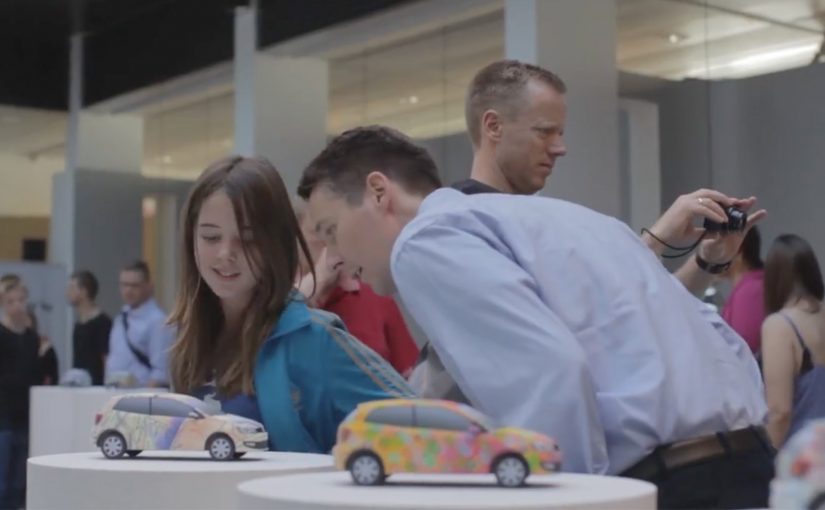
VW Polo Principle: Crowdsourced 3D Prints

Volkswagen last year launched “The Polo Principle” ad campaign to convey the message that high-end innovations were now available to Polo drivers.

Then, to democratize the innovation process, they allowed people to actually design their very own 3D Volkswagen mock ups. The top 40 designs were chosen by a panel of judges and then put on display in Copenhagen, with the entrants receiving their (mini) 3D printed Volkswagens in the mail.

From innovation message to innovation participation

The mechanism is a neat escalation. The campaign starts with a claim: premium innovation is no longer reserved for premium models. Then it turns that claim into an action: if innovation is being “democratised,” people should be able to shape it. A 3D design tool becomes the interface for participation.

Instead of asking audiences to agree with the brand message, Volkswagen invites them to contribute to it, visually and playfully.

In co-creation campaigns, participation becomes persuasion when people can make something that physically proves the brand promise.

In enterprise marketing teams, co-creation only scales when the participation interface is simple and the payoff is concrete.

Why it lands: ownership beats persuasion

This works because creating something triggers a different level of engagement than watching something. Designing a mock up requires time, intent, and taste. Once you invest that effort, you become emotionally tied to the campaign. And when your design is selected, the brand is no longer a distant manufacturer. It is a platform that amplified you. Co-creation is most persuasive when the act of making produces an object people can keep or show.

Extractable takeaway: When you claim “innovation for everyone,” turn the claim into something people can make, so the audience owns a proof of the promise.

The Copenhagen display adds a public payoff. It moves the work out of the browser and into a real space, which signals seriousness and status.

The intent: make “accessible innovation” feel real

The business intent is to attach innovation to the Polo brand without sounding like advertising. Here, “accessible innovation” means making premium innovation cues feel reachable for everyday Polo drivers, not only for flagship models. The real question is whether your “innovation” story can be experienced, not just believed. User-generated designs create social proof. The 3D printed mini cars make the campaign tangible. “Innovation is available to you” becomes “here is something you made, and here is a physical object that proves it.”

Make co-creation tangible

  • Turn a message into a mechanism. If you claim democracy, build a democratic action people can take.
  • Reward with something physical. A mailed 3D print is a memorable artefact, not a forgettable badge.
  • Curate publicly. Exhibiting the top designs creates status and raises the perceived value of participation.
  • Use judges plus community. A panel can signal craft and quality, not just popularity.
  • Design for shareability. People naturally share what they created, especially when it looks good.

For more examples on brands using 3D printing click here.


A few fast answers before you act

What was the core idea behind the Polo Principle extension?

To move from talking about “innovation for everyone” to letting people participate by designing their own 3D Volkswagen mock ups.

Why add 3D printing to a campaign?

It creates a physical proof point. A printed mini model makes the experience feel real, personal, and worth keeping.

What role did the Copenhagen display play?

It gave public status to the best designs and signalled that the brand took the contributions seriously, beyond a digital stunt.

Is co-creation mainly an awareness play?

It can drive awareness, but its deeper value is emotional ownership. People remember what they helped create.

What is the main takeaway for brands claiming “democratisation”?

If you want the message to stick, build a mechanism that lets people experience the claim directly, and reward participation in a tangible way.
Cadbury: Keep Our Team Pumped

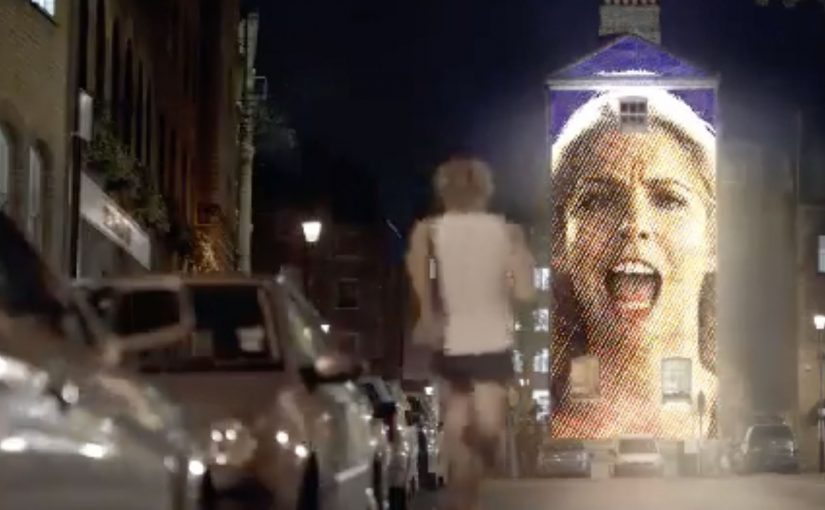
Training for the Olympics is tough, so Cadbury has come up with its loudest campaign to date: Keep Our Team Pumped. Here, supporters of the Great Britain Olympics team can sing a series of motivational, iconic power anthems to keep their team motivated during long training sessions ahead of the big event in 2012.

In plain terms, this is a crowdsourced music campaign: Cadbury gives the nation a set of recognisable “power” tracks, then turns public participation into fuel for Team GB, and into media for the sponsor.

Cadbury is set to release six tracks over the next seven months, culminating in a finale in March 2012 featuring a medley of all six songs created by the British public, plus a performance to Team GB athletes in London.

The Final Countdown

Simply the Best

The integrated campaign involves recruiting singers through social media, followed by a TV campaign airing on 3rd October and running for 6 weeks. There is also radio partnership activity, events, and digital media, with extra support on-pack and in-store, rallying the British public to keep singing.

The fans could follow it all at www.keepourteampumped.com.

In global FMCG sponsorship marketing, this approach works because it turns passive support into an action people can do in under a minute, then reuses that action as campaign content across channels.

The real question is whether your sponsorship can give people a repeatable one-minute action that feels like support, not like homework.

Why music is such a strong sponsorship mechanic

Music is a shortcut to emotion and memory, especially when the songs are already culturally “loaded.” If you pick anthems people instantly recognise, you lower participation friction and increase the chance they will share, remix, or join in again when the next track drops.

Extractable takeaway: If you need mass participation over time, start with a culturally familiar format so the effort is in joining, not in learning what to do.

For a multi-month sponsorship, I would choose a familiar-anthem format over inventing a brand-new mechanic every time, because recognition keeps the participation loop light.

What Cadbury is really building ahead of 2012

At the surface, it is motivation for athletes. Underneath, it is a sponsor-owned participation platform that can run on TV, radio, digital, on-pack and in-store without needing a new idea every week. By “participation platform,” I mean a repeatable participation flow plus reusable assets that can run across channels without reinventing the mechanic. Each track release is a fresh moment, and the public contribution keeps it feeling like a national project rather than a one-off ad.

How to structure a multi-month participation campaign

  • Use a repeatable content format. Six tracks. Same mechanic. New moment each time.
  • Make participation obvious. One clear action, one clear outcome, then show people what happens next.
  • Design for channel handoffs. Social recruitment feeds TV and radio, which then sends people back online.
  • Turn the finale into a payoff. If you ask people to contribute for months, the end needs to feel earned and public.

A few fast answers before you act

What is Keep Our Team Pumped?

It is a Cadbury campaign that invites the British public to record and contribute motivational “power anthem” performances intended to keep Team GB energised during training ahead of London 2012.

How does the campaign mechanic work?

Cadbury releases a sequence of tracks, recruits singers via social media and other channels, then builds toward a final medley performance assembled from public contributions.

Why release the campaign in tracks instead of one big launch?

Staggered releases create repeat attention peaks, give people multiple chances to participate, and keep the campaign fresh across months without changing the core idea.

What channels does this kind of campaign need to work?

You need an online hub for participation, plus at least one mass channel to drive scale and a retail layer to convert awareness into purchase at shelf.

What is the biggest risk with crowdsourced music campaigns?

If the participation flow is awkward or unclear, contributions drop fast. The format only sustains if it is easy to join and people feel their input is genuinely used.

Lacta: Love in Action

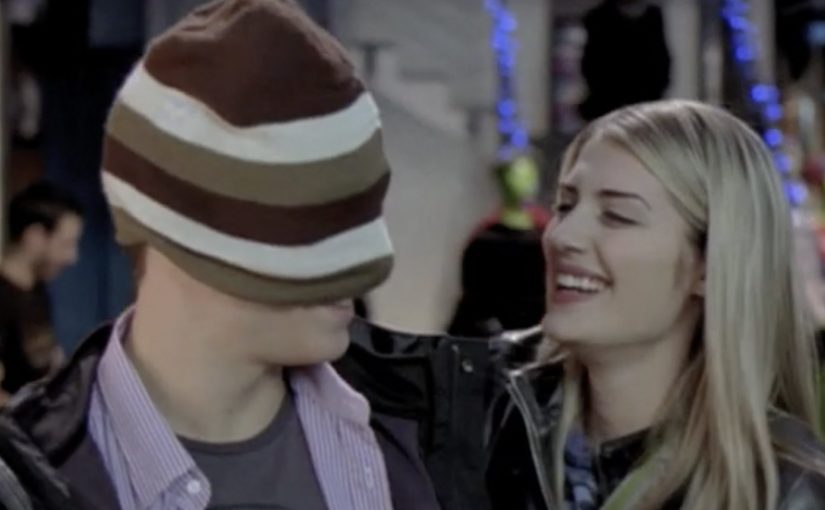
Following the grand success of Lacta’s interactive film in November 2009, Kraft Foods and OgilvyOne Athens set out to create yet another integrated campaign for Lacta, Greece’s leading chocolate brand. This time, instead of producing another love story themselves, they set out to create one with their audience.

Kraft Foods and OgilvyOne crowdsourced a 27-minute branded-entertainment film, involving the audience in everything from writing to casting and styling the actors. Some even popped up as extras in the finished film. During filming, audiences were kept updated through the campaign blog, Facebook, Twitter, YouTube and Flickr.

Here is a 3 minute video case study on the same.

Then on Valentine’s Day the film was aired on Greece’s top TV channel and online, with great success.

What makes this more than “UGC”

The smart leap is that the audience is not just submitting stories. They are being pulled into the messy, high-signal parts of production. Decisions that normally sit behind closed doors. Casting, styling, and creative direction. That raises commitment, because participation shifts from “I sent something” to “I helped shape what shipped.”

In European FMCG branded entertainment, letting people influence production decisions can turn a single film into a sustained participation loop that runs for weeks, not minutes.

Why this lands

This works because it gives people a credible reason to keep coming back. Not to watch ads, but to follow progress, vote, debate, and see whether their influence makes the final cut. The film becomes the payoff, but the real engine is the journey. A public build, meaning a production process made visible as it develops, turns pre-release into its own entertainment.

Extractable takeaway: If you want long-lived attention, make the audience’s role structural, not decorative. Put participation into decisions that change the output, then publish visible progress so people feel their involvement has weight.

The commercial intent underneath

Lacta gets what a standard Valentine’s spot struggles to buy. Time, conversation, and emotional ownership at scale. The brand also stays relatively in the background, so the entertainment is allowed to carry the attention while the association builds quietly.

The real question is whether the audience is helping shape the asset or merely reacting to it.

What to borrow from participatory production

  • Open up real decisions. Voting on meaningful choices beats asking for comments.
  • Show progress publicly. Updates and behind-the-scenes keep momentum alive.
  • Let contributors appear in the output. Even small “extra” moments create powerful ownership.
  • Build a finale moment. A premiere date gives the whole participation arc a shared finish line.

A few fast answers before you act

What is Lacta “Love in Action”?

It is a crowdsourced branded-entertainment film initiative where audiences contributed to and influenced key parts of the production, from story and casting to styling.

What makes this different from a normal brand film?

The audience is involved before release and in decisions that shape the final output, so the build process becomes part of the entertainment.

Why run it across so many platforms?

Because production is a multi-week narrative. Different channels support different behaviours. Updates, voting, sharing, and behind-the-scenes participation.

Why is Valentine’s Day a strong launch moment?

The theme is culturally aligned with love stories, and the calendar creates a natural deadline and shared viewing moment.

What is the main risk when crowdsourcing content like this?

If participation feels cosmetic, people drop out. The audience needs visible proof that their input changes outcomes, and the process must be curated so quality stays high.