
VW GTI Banner Race: Chase a Car Across the Web

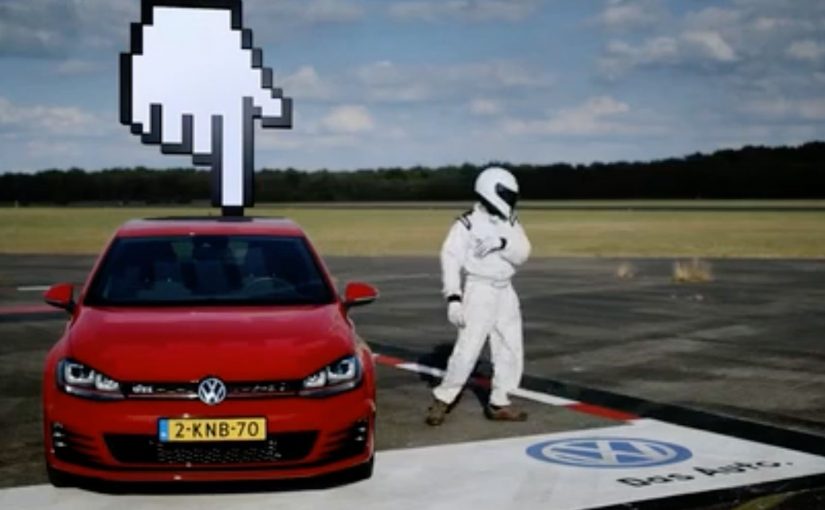
Volkswagen Netherlands set out to launch the new GTI in a way that feels fast before anyone even touches the accelerator. The result is an online race staged inside banner advertising, but mapped onto the physical logic of the real world.

Four popular Dutch websites are painted as the runway of an airport, each banner space measuring 20 metres wide and 25 metres long. On race day, 13th September, participants chase the GTI as it speeds through the banner spaces of each site. The person fast enough to catch the new GTI wins the car in real life.

When banners stop being static and start behaving like space

The mechanism is a reframing of banner advertising. Instead of isolated rectangles, the banners become connected terrain. Each site represents a segment of runway. Movement between banners creates the illusion of distance, speed, and progression.

The GTI does not just appear. It moves. And because it moves, the user has a reason to stay alert, react quickly, and treat the banner as something to engage with rather than ignore.

In European automotive launches, turning passive media into an environment with rules is often the fastest way to earn attention without buying more impressions.

Why speed and scarcity do the heavy lifting

This works because it borrows from racing psychology. There is a single target. There is a clear win condition. And there is scarcity. Only one person catches the GTI. That tension transforms passive browsing into a moment of competition.

Extractable takeaway: When you can make a product trait playable, set one clear target, one win condition, and one scarce outcome so attention becomes a self-sustaining loop.

The prize is not symbolic. Winning the actual car anchors the experience in reality, which prevents the activation from feeling like a disposable digital trick.

The intent: make the GTI feel alive online

The business intent is to translate the GTI’s performance DNA into a digital format. Speed, responsiveness, and thrill are not explained. They are simulated. The banner becomes a proxy for the car’s character. By “performance DNA” here, I mean the cues of speed, responsiveness, and thrill that people associate with a GTI.

The real question is whether your launch media can make the product trait felt in the first five seconds, not just described.

This is a better pattern than static launch assets when the brand promise is motion, because the interaction does the persuasion.

At the same time, Volkswagen demonstrates that standard media formats can still surprise when they are treated as systems instead of slots.

Patterns to borrow from the GTI banner race

  • Rethink familiar formats. Banners can be environments, not just placements.
  • Design for motion. Movement creates attention where static assets fail.
  • Use a real reward. Tangible stakes raise commitment instantly.
  • Connect experiences. Linking multiple sites turns reach into narrative space.
  • Encode the product DNA. Let the interaction mirror what the product stands for.

A few fast answers before you act

What makes this GTI launch different from a normal banner campaign?

The banners are connected into a continuous race environment, turning advertising space into gameplay instead of static exposure.

Why use an online race to launch a car?

Because racing instantly communicates speed and performance, which are core to the GTI identity.

Does this work without the prize car?

The experience would still be novel, but the real-world reward dramatically increases urgency and participation.

What role do partner websites play?

They become part of the environment. Each site is a segment of the runway rather than just a host for an ad.

What is the main takeaway for digital launches?

When you turn media formats into systems with rules and progression, people stop skipping and start playing.
Cheetos Mix-Ups: Cheetahpult Dual-Screen Game

In March I had written about how Google had inspired developers to convert mobile phones and tablets into remote controls for desktop browsers via a simple mobile URL. Now Cheetos, an American brand of cheese-flavored puffed cornmeal snacks, has successfully tapped this technology to engage with viewers as they watch a regular TV commercial on YouTube.

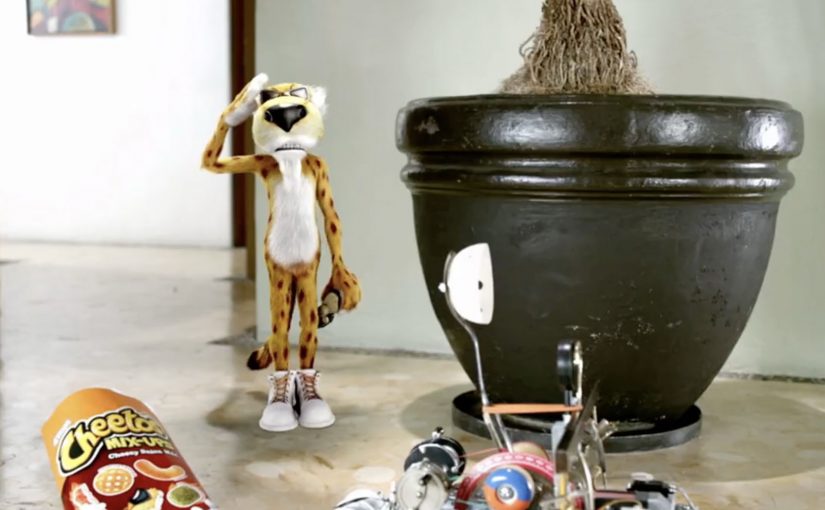
Viewers watching the Cheetos Mix-Ups ad on YouTube get a dual-screen experience. They can fling the new Cheetos Mix-Ups snacks from their phone into a video playing on their desktop. The campaign creates a new way to engage with the ad, and to get to know the product’s new shapes and colors through play.

At this point, the video is reported to have reached 8.5 million views on YouTube. People who played the game are reported to have stayed for an average of 7 minutes and 17 seconds, and flung an average of 56 Cheetos per game.

A YouTube ad that behaves like a game

The trick is simple and surprisingly scalable. Your desktop stays on YouTube, playing the film. Your phone becomes the controller via a lightweight URL experience, so interaction happens in your hand while the “world” of the ad stays on the big screen.

How the dual-screen catapult works

Instead of treating the mobile device as a companion banner, the experience treats it as an input device. You aim, fling, and see the result immediately in the desktop video frame, which turns passive viewing into a loop of action, feedback, and repeat.

In global FMCG launches, second-screen interactivity works best when it turns product attributes into gameplay, and makes “learning the product” feel like time well spent.

Why this lands while people are “just watching YouTube”

It hijacks a familiar behavior. People already watch ads on desktop while their phone is in hand. Cheetahpult converts that split attention into viewer control, and uses physics and repetition to teach what Mix-Ups actually is, in a way a standard product shot cannot. The real question is whether the interaction helps people understand Mix-Ups faster than a normal product shot would. In this case, it does, because the mechanic turns product variety into something people learn by doing.

Extractable takeaway: If your product is hard to describe in one sentence, let people handle it. Build a micro-game where the mechanic is the product benefit, and the reward is comprehension.

What Cheetos is really buying here

This is product education disguised as entertainment. The intent is to turn a new SKU with multiple shapes and flavors into something memorable, then associate that memory with the brand, so the next shelf moment feels familiar.

What Cheetos teaches about interactive video

  • Design for the device people already hold. Dual-screen works when the phone is the controller, not an afterthought.
  • Make the mechanic teach the product. If the game can be reskinned for any brand, it is not specific enough.
  • Keep the loop short and replayable. Fast rounds create “just one more try” behavior, which is where learning happens.
  • Use the main video as the stage. The desktop frame should feel like the real world, and the phone should feel like the tool.

A few fast answers before you act

What is Cheetahpult?

Cheetahpult is a dual-screen YouTube experience that turns a Cheetos Mix-Ups video into a simple physics-style game, with the phone acting as the controller and the desktop video acting as the playfield.

Why does second-screen interaction help an ad?

It converts passive reach into active time. When people interact, they process product details more deeply, and the ad becomes something they did, not just something they saw.

What makes this different from a typical “interactive ad”?

The interaction is not layered on top as buttons. The phone becomes a controller, and the main video becomes the environment, so the ad and the game feel like one system.

When should a brand use this pattern?

When a launch needs fast product education, and when the product has attributes that benefit from repetition, variation, and play, like shapes, combinations, flavors, or configurations.

What should a brand avoid when copying this idea?

Avoid mechanics that are fun but unrelated to the product. If the interaction does not teach something specific about the item being launched, the brand gets playtime but not product understanding.

Philips Walita: Fruit Mashup

Philips launched the Walita Avance, positioned as its most advanced blender in Brazil. With 800W power and ultra-sharp blades, the product promise is simple. It mixes ingredients in a way most consumers have not experienced.

A blender demo that goes beyond the blender

Rather than trying to “prove” performance with expensive media, Ogilvy Brazil brought in a molecular cuisine specialist to create a demonstration people would stop for. The idea: physically blend two fruits into one, as if the blender could do the impossible.

The mechanism: inventing hybrid fruits

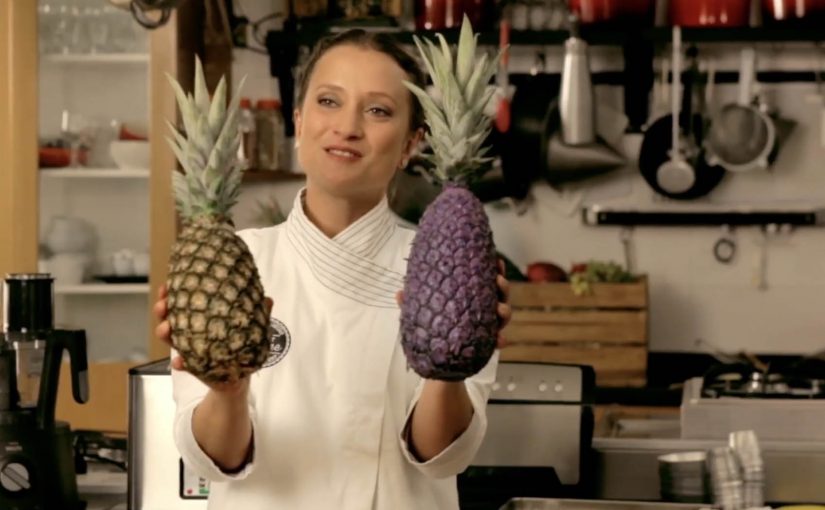
After months of experimentation, three “new” fruits were created for the campaign: Pinegrape, Bananaberry, and Kiwigerine. Ogilvy used these hybrids as a proxy for the blender’s core benefit. Extreme mixing power made tangible. By turning mixing power into a visible result people can name and remember, the demo makes the performance claim easier to believe and retell.

In FMCG marketing, turning a functional claim into a concrete, surprising artifact is often the fastest way to earn attention without over-explaining the spec sheet.

Why this lands

This works because it collapses “performance” into an immediate visual. You do not need to understand watts or blade geometry to get the point. You see a fruit that should not exist, and your brain fills in the story: this blender must be intense.

Extractable takeaway: When your product advantage is technical, build a demo artifact that expresses the benefit at a glance, so the audience understands the promise before you ever mention features.

What the brand is really doing

The real question is how you make a technical launch travel beyond people who already care about the spec.

The smart move here is not the fruit gimmick itself, but the decision to turn a hard-to-feel product claim into a demo people can instantly understand and repeat.

The hybrids are not just a stunt. They are a communication shortcut. They turn a launch into a shareable proof object that can live in PR, social clips, retail talk-tracks, and influencer content without changing the message.

Brazilian agencies have a track record of inventive fruit-related communication. Also see the real fruit boxes campaign from Ageisobar Brazil.

What blender marketers should copy

  • Translate specs into symbols. Make one surprising object carry the whole product story.
  • Choose an artifact people can describe in one sentence. “Two fruits blended into one” travels well.
  • Let the demo do the explaining. Reduce copy. Increase show-and-tell.
  • Connect to a category pattern. If you have a related example, link it to create a “watch this space” thread.

A few fast answers before you act

What is the Philips Walita Fruit Mashup campaign?

It’s a product-launch idea that uses engineered hybrid fruits as a metaphorical “proof” of the Walita Avance blender’s mixing power.

What are Pinegrape, Bananaberry and Kiwigerine?

They are campaign-created hybrid fruits used as the central demo objects to communicate extreme blending performance.

Why is this more effective than listing features?

Because the audience understands the benefit visually, without needing technical literacy. The artifact does the persuasion.

What’s the key constraint if you copy this pattern?

The demo must be instantly legible and repeatable on camera. If people need explanation to “get it,” the mechanic weakens.

How do you adapt this to other FMCG launches?

Create a single surprising artifact that makes your benefit obvious. Then design content formats that capture reactions and reveal the mechanism quickly.