
Quilmes: Mitigol

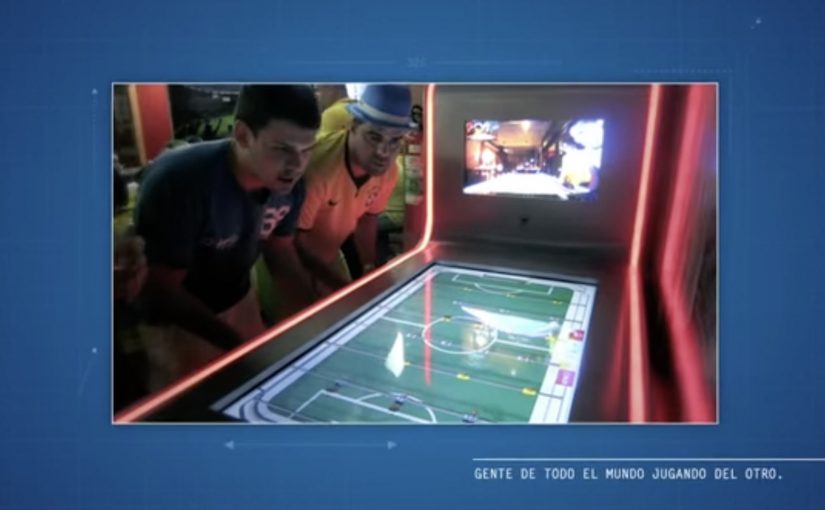
Quilmes and their agency +Castro reinvented the classic game of foosball. In its new version they enabled Argentinians and Brazilians to play each other in real time through a custom made digital foosball table.

Dubbed “Mitigol”, the activation turns foosball into a cross-border live match. One half of the table was placed in Argentina and the other half in Brazil. During the game, players could see their opponent via special in-built video cameras that further enhanced the real time experience of the game. As a prize, Quilmes gave away free beer.

How Mitigol works

The mechanism is a physical game with a digital bridge. A custom table syncs the ball and player movement across distance, while embedded cameras add face-to-face presence so it feels like a real match rather than a remote demo.

In sports and event-led marketing, shared-play installations can turn rivalry into participation because they give fans something to do together, not just something to watch.

Why it lands

This works because it makes a national rivalry tangible without needing a screen-first experience. Foosball already has competitive tension built in, so the cross-border connection raises the stakes instantly. The cameras then do the emotional work by proving the opponent is real, right now, reacting in real time.

Extractable takeaway: When you want “real time” to feel meaningful, do not rely on the word. Add one physical interaction that people already understand, then layer in live presence so the distance becomes the headline.

What Quilmes is really buying

The real question is how to turn passive rivalry into a shared act people want to join.

Beyond novelty, Mitigol is a closeness story. It borrows the energy of an event moment and converts it into a branded experience where the fan is the performer, not the spectator. The prize is just the nudge that keeps the line moving and the competition sharp.

What to steal from Mitigol

  • Start with a familiar game. If the rules are known, participation spikes.
  • Make distance visible. The split-table concept is the idea. Do not hide it.
  • Add live presence. Cameras or live feedback make “remote” feel human.
  • Reward the behavior you want. Small, immediate prizes keep throughput high.

A few fast answers before you act

What is Mitigol?

It is a custom foosball table experience that connects two locations so players in different countries can play the same match in real time.

Why split the table across Argentina and Brazil?

Because the physical split makes the cross-border rivalry concrete. It is instantly legible as “we are playing each other right now”.

What role do the built-in cameras play?

They add live presence and reaction, which makes the experience feel like a real opponent rather than a remote simulation.

What is the simplest way to copy the principle?

Take a familiar physical activity, connect it across distance with tight synchronization, then add a live human layer so the interaction feels personal.

What should you measure for an activation like this?

Participation volume, repeat play, dwell time, and how often spectators convert into players once they see it in action.
EA SPORTS: Madden NFL 15 GIFERATOR

To launch their new game Madden NFL 15, EA Sports wanted to connect with young, football-obsessed fans and grow its association with the real world NFL. Since the average football fan was watching the game with their smartphone in hand, EA teamed up with Google to allow sport fans to provoke rivals from the comfort of their own sofa and bring trash talk into the 21st century.

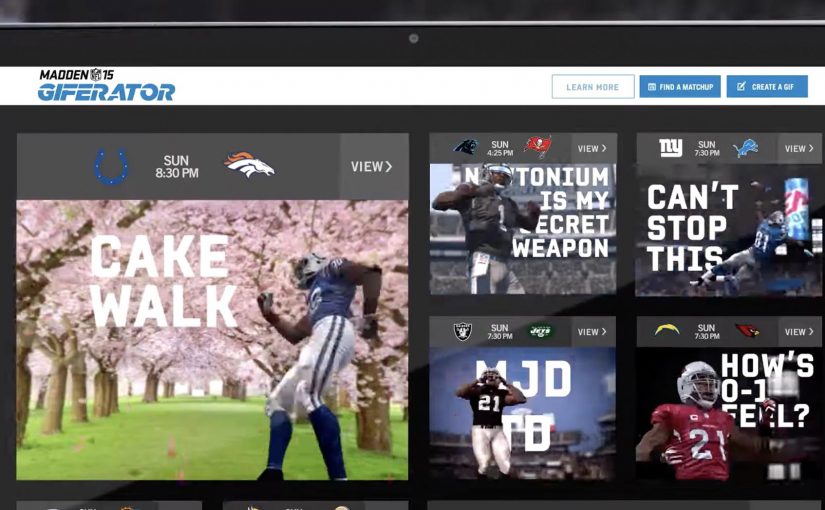
Using pioneering technology, live NFL data was fused with Madden 15 game footage to generate GIF highlights for every single game. All of this was delivered via real-time ads across sports websites and apps. As a result there was an ever growing collection of GIFs that football fans could simply take, edit and share to shove in the face of their rivals.

How the GIFERATOR works

The mechanic is a real-time trigger loop. As live NFL moments happen, a data signal maps those moments to a library of Madden NFL 15 visuals, headlines, and team-specific ingredients. The system then assembles a ready-to-share GIF that matches what fans are watching, right when the emotion spike is highest.

In sports marketing, second-screen behavior turns live moments into shareable social currency.

Why it lands

The creative idea is not “GIFs”. It is timing plus relevance. Because the asset shows up while the emotion spike is still live, it feels native to the fan conversation instead of delayed brand content. When fans are already checking stats, group chats, and social feeds mid-game, you meet them where their thumbs already are. The format just happens to be the internet’s fastest unit of trash talk.

Extractable takeaway: If you can translate a live moment into a personalized, ready-to-share asset within the same minute, you convert attention into participation, and participation into distribution.

Where the real value sits

The real question is how to make a boxed game feel as live, social, and rivalry-ready as the sport it simulates.

This is also a credibility move. By fusing live NFL action with Madden footage, the game positions itself as culturally current, not just a boxed product. It borrows the emotional heat of real games and channels it into the Madden universe, play after play.

What second-screen marketers should steal

  • Build a trigger map: define which live signals create which assets, and keep the mapping simple enough to scale all season.
  • Design for viewer control: let people tweak copy or choose variants, so the output feels like “mine”, not “an ad”.
  • Win the second screen: deliver creative where fans already browse during live events, not only on your owned channels.
  • Make rivalry the editor: structure content around opponents, not around generic brand lines, so sharing feels inevitable.
  • Ship a content engine, not a one-off: the compounding library is the advantage, because it stays fresh week after week.

A few fast answers before you act

What is the Madden GIFERATOR?

It is a real-time GIF creation system that generates Madden NFL 15-themed GIFs that match what is happening in live NFL games, designed for instant sharing and trash talk.

Why does “real-time” matter here?

Because it catches fans during peak emotion. The closer the asset appears to the live moment, the more it feels like part of the conversation instead of an interruption.

What is the core pattern to reuse?

Use live signals to automatically assemble relevant, lightweight assets, then distribute them on the channels people naturally use while watching.

Is this mainly a social campaign or an ad campaign?

Both. The distribution is described as real-time advertising across sports sites and apps, while the product experience is built for fans to edit and share the output socially.

What is the biggest execution risk?

Relevance drift. If the mapping from live moments to generated assets feels off, or if the output arrives too late, it stops feeling “in the game” and becomes just another banner.

Samsung: Galaxy 11

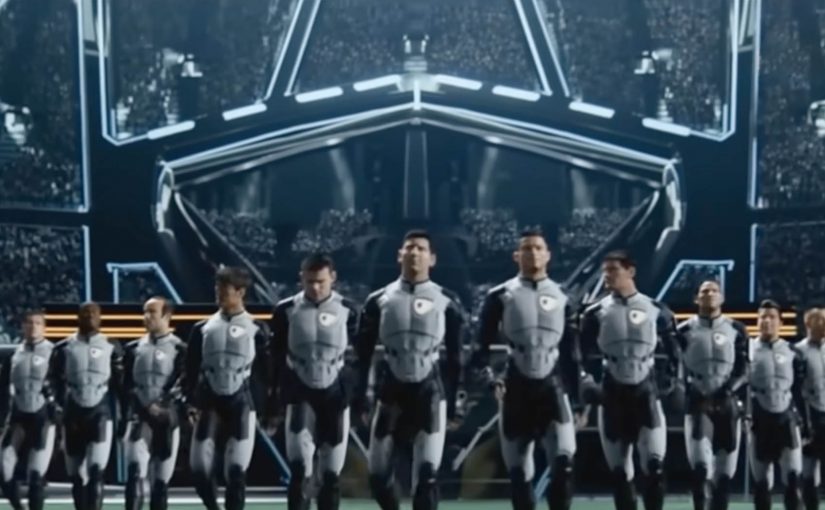
Samsung, to promote its new Galaxy S5 smartphone during the 2014 World Cup, created a 13 minute animated film (split in 2 parts) featuring some of the world’s greatest footballers on a mission to save Earth from an alien race called Hurakan.

To save Earth from total annihilation, the human footballers dubbed the “Galaxy 11” get into a winner take all football match with the alien race. In the film, the Galaxy 11 are seen using various Samsung Galaxy devices to face off against the horned creatures, who have a penchant for flips and fancy kicks.

How this sells without stopping the story

The real question is whether your brand can earn minutes of attention without pausing the story to sell.

This works when the product has a credible job inside the plot, because that makes every appearance feel like story logic instead of an interruption.

In global consumer brands, World Cup season is one of the few windows where audiences will engage with branded entertainment if the story earns it.

Why this format works for a World Cup moment

A World Cup moment is crowded with highlight reels and second-screen noise. A self-contained animated story gives viewers a reason to stay, because they want to see how the match resolves.

Extractable takeaway: When attention is scarce, trade a single claim for a simple plot. Conflict, goal, showdown. Then let your product earn screen time by being useful to the characters.

  • It is built for attention. A 13 minute animated story gives Samsung room to create a world, not just a product claim.
  • The product is part of the mission. Galaxy devices show up as tools the team uses, so the placement feels “in-world” rather than bolted on.
  • It scales globally. Football, sci-fi stakes, and animation travel across markets without heavy explanation.

What to learn from “Galaxy 11”

If you want people to stay with a brand story for more than a few seconds, give them a narrative engine. Here, a narrative engine means a repeatable conflict-goal-showdown loop that keeps scenes moving. A clear enemy, a clear goal, and a clear showdown. Then let the product play a credible role inside that story, instead of pausing the story to sell.

  • Start with stakes, not specs. Establish the enemy and the win condition before the product shows up.
  • Give the product a job. Make the device a capability the characters rely on inside the plot.
  • Keep the structure simple. Enemy, goal, showdown. Then end with a clear resolution.

A few fast answers before you act

What is Samsung “Galaxy 11”?

It is a two-part animated film created for the 2014 World Cup that puts elite footballers into a “save Earth” match against an alien team called Hurakan, while featuring Samsung Galaxy devices in the story.

How long is the film?

It runs about 13 minutes in total and is split into two parts.

How do Samsung Galaxy devices fit into the film?

The Galaxy devices are shown as tools the team uses during the mission, so the product appears through action rather than through a conventional pitch.

Why use animation for a World Cup campaign?

Animation makes it easier to build a shared “in-world” story and let it travel across markets, because the stakes and visuals are easy to understand.

What is the transferable pattern for brands?

Build a short, high-stakes story with a simple structure. Then integrate the product as a believable capability inside the plot.