
TV Viewing: Super Bowl Meets HoloLens

TV viewing is overdue for a real change

The TV viewing experience does not change drastically for years. Bigger screens, better resolution, smarter interfaces. But the core behavior stays familiar.

That is why sophisticated headsets like Microsoft HoloLens feel like a genuine breakpoint.

They do not just improve the screen. They change the environment around it.

Microsoft and the NFL re-imagine the Super Bowl

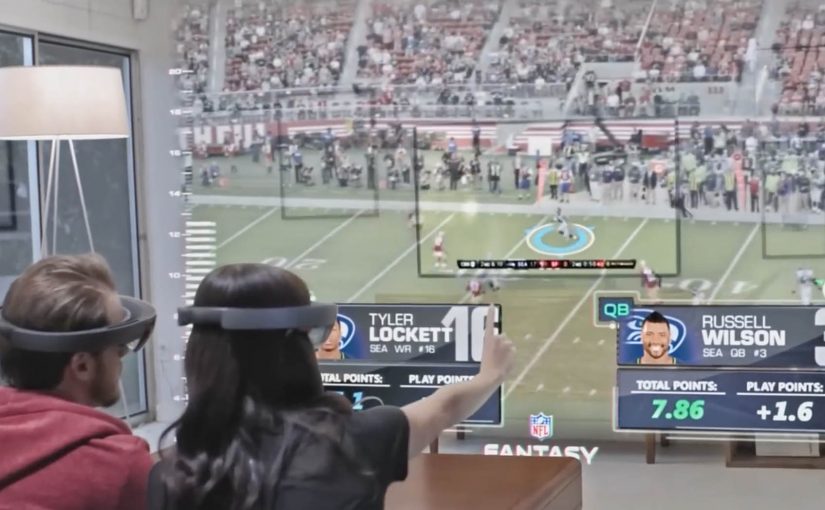
In a recently released video, Microsoft and the NFL re-imagine how a Super Bowl game could be watched with multiple friends and family members.

The scenario pushes beyond passive viewing. It turns the living room into an interactive layer, where the game experience becomes more immersive, more social, and more spatial.

By spatial, I mean the content is anchored to the room, not confined to the TV frame.

This is the kind of concept that makes the future of TV feel tangible.

In mass-market entertainment, the constraint is not what immersive concepts can show, but when consumer hardware becomes affordable, comfortable, and mainstream.

Why this lands for co-viewing

TV should prioritize co-viewing, meaning multiple people watching and reacting together in the same room, because a shared, spatial layer creates viewer control that a single rectangle cannot. The real question is whether you are designing for shared viewer control in the room, or just adding data overlays to a screen.

Extractable takeaway: When you move sports content into the room, design the experience around shared reference points, lightweight interaction, and conversation pacing, not around more screen real estate.

Immersive viewing is real. Consumer timing is not

The video shows how immersive TV watching can get. But Microsoft is not fast-tracking HoloLens for consumer consumption.

For now, only developers can order HoloLens, shipping this year.

No one knows when consumers get access, or when scenarios like this become a reality.

That uncertainty is part of the story. The vision is clear. The rollout timeline is not.

Steal these design cues for living-room sports

  • Design for the room. Treat the TV as one surface among many, then anchor the key moments and data where people naturally look and point.
  • Make co-viewing explicit. Support multiple viewers and viewpoints, so participation feels shared instead of “one person driving.”
  • Prototype for constraints. Assume headsets stay niche for a while, and test what still works when only one person has the device.

A few fast answers before you act

Is this still “TV” or something else?

It starts as TV content, but behaves more like a shared, spatial experience than a single screen.

What is the core shift headsets enable?

They move content off the rectangle and into the room, so viewing becomes environmental and interactive.

What is the biggest constraint right now?

Availability and consumer readiness. Until mainstream hardware adoption happens, this remains concept-led.

What should experience designers take from this?

Design for co-viewing and spatial context. Multiple people, multiple viewpoints, and shared interaction become first-class requirements.

What should you prototype first?

Prototype the simplest “shared moments” layer, so two to four people can compare and discuss the same play without anyone leaving the game flow.
WestJet: Ultimate Las Vegas Upgrade

WestJet over the years has passionately given back to their guests with various unimaginable experiences.

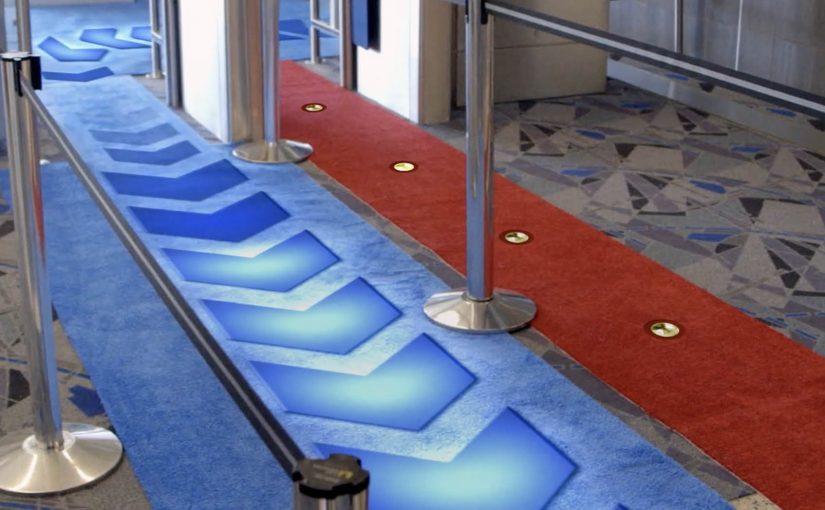
Now in their latest campaign targeting Toronto to Las Vegas bound WestJet guests, they got Las Vegas comedian Carrot Top to offer guests a special walk down the red or blue carpet. Those who chose to walk down the red carpet continued on their vacation as they had originally planned. Those who chose the blue carpet went with Carrot Top on an action-filled experience that included a stunning acrobatic display, a world-class DJ, a private airplane hangar, showgirls, and VIP access to the best of the city.

A choice mechanic that turns boarding into a story

The mechanism is a fork in the road with immediate consequences. Here, the choice mechanic is a designed decision point where one visible choice changes the path and the story. You are offered a simple choice, red or blue, with no time to overthink it. The red path is “normal”. The blue path is “something is happening”, and the reveal escalates quickly once the choice is made.

In travel and service brands, surprise upgrades work best when they are structured as a clear decision point that people can instantly explain to someone else.

Why it lands

This works because it gives guests a feeling of control while still delivering surprise. That mechanism works because a visible fork creates ownership before the surprise arrives, which makes the payoff feel earned rather than random. The blue carpet is not a random selection. It is a self-chosen leap into the unknown, which makes the outcome feel more personal and more shareable. The red carpet also matters, because it preserves contrast and keeps the twist believable.

Extractable takeaway: If you want a surprise to travel, wrap it in a simple choice. Choice creates ownership, and ownership turns a brand moment into a story people repeat accurately.

The business intent behind the spectacle

This is a loyalty play disguised as entertainment. It reinforces the idea that flying can include delight, not just transport. It also creates a strong piece of proof that WestJet treats guests as people, which is the kind of narrative that outperforms feature lists in crowded travel categories.

The real question is whether a service brand can turn a routine travel moment into a story guests want to retell.

What travel brands can steal from this

  • Use a binary choice: two paths create instant tension and clear storytelling.
  • Reward curiosity: let the “brave” option unlock the best outcome, then show why.
  • Escalate fast: once the choice is made, deliver the first payoff immediately to lock attention.
  • Make it filmable: design reveals that work from a handheld camera in real environments.
  • Anchor to a destination truth: Las Vegas is already a promise of spectacle. The upgrade simply makes that promise feel real early.

A few fast answers before you act

What is the WestJet “Ultimate Las Vegas Upgrade”?

It is a surprise experience for Toronto to Las Vegas travelers where guests choose a red or blue carpet. Red continues as normal. Blue triggers a curated VIP Las Vegas experience led by Carrot Top.

Why use a red vs blue choice?

Because it is instantly understandable, it creates viewer control, and it gives the story a clean structure with contrast between normal and extraordinary.

What makes this effective airline marketing?

It makes service tangible. Instead of claiming “we care”, the brand demonstrates it through a memorable experience that guests can share and retell.

What is the reusable pattern for other brands?

Create a simple decision point in a real customer journey, then attach an escalating surprise to one path so customers feel they opted into the moment.

What is the biggest risk with this format?

If the reveal feels confusing or staged, the audience disengages. The choice must feel real, the payoff must feel earned, and the execution must respect guest comfort.

Hyundai Genesis: A Message to Space

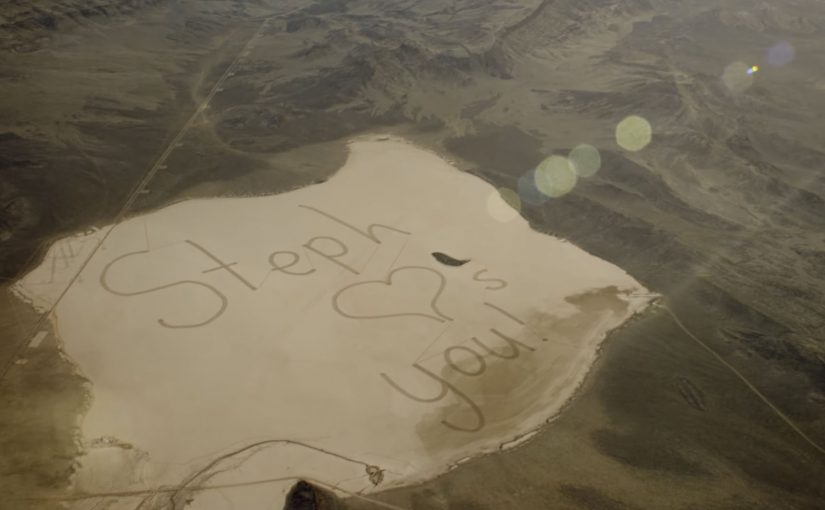
Eleven Hyundai Genesis sedans drive in formation across Nevada’s Delamar Dry Lake, not to show handling, but to write a sentence.

A 13-year-old girl from Houston, Stephanie, misses her astronaut father as he works aboard the International Space Station. Hyundai turns that human truth into a brand-scale gesture. The cars “draw” “Steph loves U” in tire tracks across the dry lake bed. The result is described as larger than one and a half Central Parks. It is also described as being certified by Guinness World Records as the world’s largest tire track image.

From choreography to a message you cannot ignore

The mechanism is straightforward and bold. Take a blank natural canvas. Assign each car a path. Choreograph the movement so the negative space becomes handwriting at a gigantic scale. Then validate the scale with a record body so the stunt becomes a fact people repeat, not just a film people watch.

In global automotive marketing, where products often feel interchangeable in feed-based media, a physical proof stunt creates memorability by turning precision into a story people can retell.

Why it lands

It works because the brand is not asking for attention. It is earning attention by doing something that only coordinated engineering and serious planning can pull off. The emotional hook is intimate, and the execution is absurdly large. That contrast creates instant share value, and it gives the Genesis name a halo of control and capability without needing to say it out loud.

Extractable takeaway: If you need breakthrough, build a single, verifiable act that scales a private human moment into a public artifact, and make the artifact the headline, not your messaging.

What the stunt is really selling

The real question is how to turn a private emotion into a public proof of brand capability without making the brand feel like the hero.

This is one of the rare brand stunts where scale sharpens the emotion instead of burying it.

On the surface, it is a daughter sending a message. Underneath, it is Hyundai demonstrating disciplined coordination. Eleven vehicles behaving like one pen. The brand promise becomes “we can execute the impossible precisely”, which is a stronger feeling than another round of luxury feature claims.

What to borrow from this precision stunt

  • Start with a real relationship. One clear human story beats a composite “target audience”.
  • Make the action the media. A physical artifact outlives the launch window and travels as proof.
  • Engineer a repeatable headline. A record, a scale comparison, or a singular first can carry the story.
  • Let meaning come from constraints. Fewer words. Bigger commitment. Higher credibility.

A few fast answers before you act

What is “A Message to Space”?

It is a Hyundai Genesis marketing stunt where 11 cars drive in formation to create a massive tire track message, “Steph loves U”, intended to be visible to a father on the International Space Station.

What is the core mechanism that makes it shareable?

A simple sentence rendered at extreme scale through choreographed driving, then amplified by third-party validation and a short film that captures the creation.

Why use a Guinness World Records angle?

Records reduce skepticism. They turn “big” into a named achievement people can cite, which helps the story travel beyond advertising audiences.

What is the biggest risk with this style of stunt?

If the human story feels manufactured, the spectacle becomes empty. The emotional truth has to lead, or the record becomes the only thing people remember.

What is one modern adaptation of the same pattern?

Create a single, verifiable public artifact that embodies your brand promise, then design the content around documenting the artifact, not explaining it.