Playable Music Posters: Tap to Hear

Borders between media are blurring. Books are being swiped, magazines digitally scrolled and even in print one can today occasionally navigate. So it is no surprise when regular paper posters come to life on being combined with bluetooth, conductive ink, sensors and speakers.

Paper as an interface, not a surface

The mechanism is straightforward. Conductive ink turns parts of a poster into touch-sensitive zones. Sensors detect taps, knocks, or touch patterns. Bluetooth and small speakers, or a paired phone, provide the audio output. The poster stops being an image and starts behaving like a controller.

In consumer marketing and live environments, interactive print is a way to turn passive out-of-home into a touchpoint that behaves like a device.

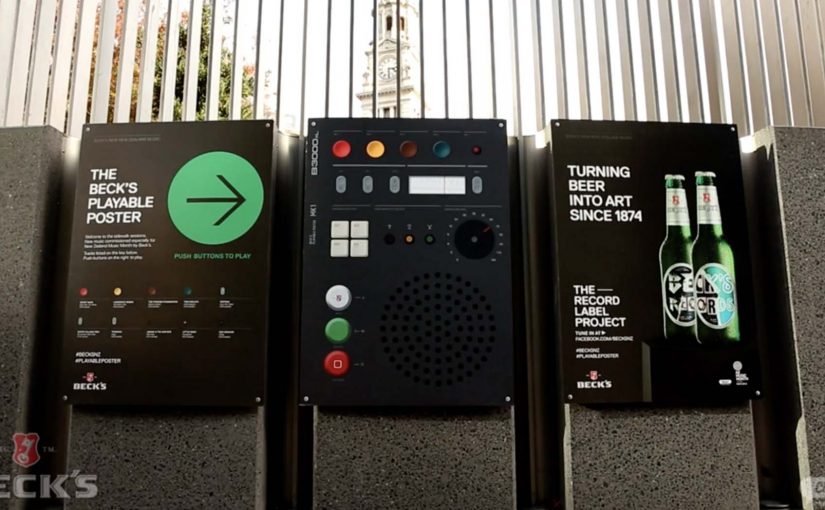
Beck’s Playable Poster

Looking for an innovative way to mark New Zealand’s Music Month, Beck’s partnered with Shine to design a playable poster. Using conductive ink and speakers the posters were made playable with a simple tap of the finger.

The Sound of Taste

Herb and spice brand Schwartz is all about flavour. So to dramatise flavour which was invisible and silent, they got print tech collective Novalia and ad agency Grey London to collaborate on an interactive poster. The poster used conductive ink to turn the surface area of the paper into an interactive interface that also connected to the viewers smartphone to deliver a richer experience.

Change the tune

Agency Republic from UK created a poster with an embedded sensor which when knocked changed the song being played on the agencies shared sound system.

Why these work: the demo happens in your hands

Each example keeps the interaction legible. Tap to trigger sound. Touch to explore flavour as audio. Knock to skip a track. The poster does not ask people to learn a new behavior. It hijacks an existing one, touching a surface, and rewards it instantly.

The real advantage is not novelty. It is memorability. When print responds, people remember the message because they caused the outcome themselves.

What to steal for your next print idea

  • One interaction, one reward. Do not overload the surface with too many modes.
  • Make the “how” obvious. A tap zone, a knock cue, a simple instruction. Then deliver instantly.
  • Use phones as infrastructure. If pairing adds depth, let the phone do what paper cannot, audio, saving, sharing.
  • Design for public confidence. People will only touch a poster if it feels safe, clean, and socially acceptable.

A few fast answers before you act

What is “conductive ink” doing in these posters?

It creates touch-sensitive paths on paper, so taps or touches can be detected and mapped to actions like playing audio.

Do these posters need special printing like QR codes?

They still require specialist production, but the interaction can be integrated invisibly into the design. The poster itself becomes the control surface rather than carrying visible codes.

Why add Bluetooth to print?

Bluetooth allows paper to trigger sound through a phone or external speaker, which is essential when the content is audio or when you want richer layers than print can carry.

What makes an interactive poster feel “worth it” to a passer-by?

Immediate payoff and low friction. If the result is instant and satisfying, people will try it. If setup or pairing is slow, they walk past.

Where does this format fit best?

In environments where people have dwell time and curiosity, festivals, transit hubs, retail windows, office interiors, and brand experiences where interaction is socially normal.

iBeacons: Context as the Interface

From proximity to context

iBeacons introduce a simple but powerful idea. The physical world can trigger digital behavior.

A smartphone does not need to be opened. A user does not need to search. The environment itself becomes the signal.

At their core, iBeacons enable proximity-based awareness. When a device enters a defined physical range, a predefined digital action can occur. That action may be a notification, a content change, or a service trigger.

The evolution is not about distance. It is about context.

What iBeacons enable

iBeacons are small Bluetooth Low Energy transmitters. They broadcast an identifier. Nearby devices interpret that signal and respond based on predefined rules.

This creates a new interaction model. Digital systems respond to where someone is, not just what they click.

Retail stores, public spaces, machines, and even wearable objects become programmable environments. The physical location is no longer passive. It actively participates in the experience.

Why proximity alone is not the breakthrough

Early use cases focus heavily on messaging. Push notifications triggered by presence. Alerts sent when someone enters a zone.

That framing misses the point.

The real value emerges when proximity is combined with intent, permission, and relevance. Without those elements, proximity quickly becomes noise.

iBeacons are not a messaging channel. They are an input layer.

From messaging to contextual experience design

As iBeacon use matures, the focus shifts away from alerts and toward experience orchestration.

Instead of asking “What message do we send here?”, the better question becomes “What should adapt automatically in this moment?”

This is where real-world examples start to matter.

Example 1. When a vending machine becomes a brand touchpoint

The SnackBall Machine demonstrates how iBeacons can turn a physical object into an interactive experience.

Developed for the pet food brand GranataPet in collaboration with agency MRM / McCann Germany, the machine uses iBeacon technology to connect the physical snack dispenser with a digital layer.

The interaction is not about pushing ads. It is about extending the brand experience beyond packaging and into a moment of engagement. The machine becomes a contextual interface. Presence triggers relevance.

This is iBeacon thinking applied correctly. Not interruption, but augmentation.

Example 2. When wearables make context portable

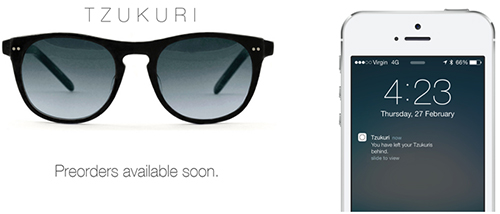
Tzukuri iBeacon Glasses enable hands-free, glance-based, context-aware information.

The Tzukuri iBeacon Glasses, created by Australian company Tzukuri, take the concept one step further.

Instead of fixing context to a location, the context moves with the person.

The glasses interact with nearby beacons and surfaces, enabling hands-free, glance-based, context-aware information. The interface does not demand attention. It integrates into the wearer’s field of view.

This example highlights a critical shift. iBeacons are not limited to phones. They are part of a broader ambient computing layer.

In modern product and experience design, “context” is slowly replacing “screen” as the interface.

Why these examples matter

Both examples share a common pattern.

The user is not asked to do more. The system adapts instead.

The technology fades into the background. The experience becomes situational, timely, and relevant.

That is the real evolution of iBeacons. Not scale, but subtlety.

The real evolution. Invisible interaction

The most important step in the evolution of iBeacons is not adoption. It is disappearance.

The more successful the system becomes, the less visible it feels. No explicit action. No conscious trigger. Just relevance at the right moment.

This aligns with a broader shift in digital design. Interfaces recede. Context takes over. Technology becomes ambient rather than demanding.

Why iBeacons are an early signal, not the end state

iBeacons are not the final form of contextual computing. They are an early, pragmatic implementation.

They prove that location can be a reliable input. They expose the limits of interruption-based design. They push organizations to think in terms of environments rather than channels.

What evolves next builds on the same principle. Context first. Interface second.


A few fast answers before you act

What are iBeacons in simple terms?

iBeacons are small Bluetooth Low Energy transmitters that let phones detect proximity to a location or object and trigger a specific experience based on that context.

Do iBeacons automatically track people?

No. The experience usually depends on app presence and permissions. Good implementations make opt-in clear and use proximity as a trigger, not as silent surveillance.

What is the core mechanism marketers should understand?

Proximity becomes an input. When someone is near a shelf, a door, or a counter, the system can change what content or actions are offered, because the context is known.

What makes a beacon experience actually work?

Relevance and timing. The action has to match the moment and reduce friction. If it feels like random messaging, it fails.

What is the main takeaway?

Design the experience around the place, not the screen. Use context to simplify choices and help people complete a task, then measure behavior change, not opens.

Amazon Dash. When Commerce Becomes a Button

A tiny button that quietly changes how buying works

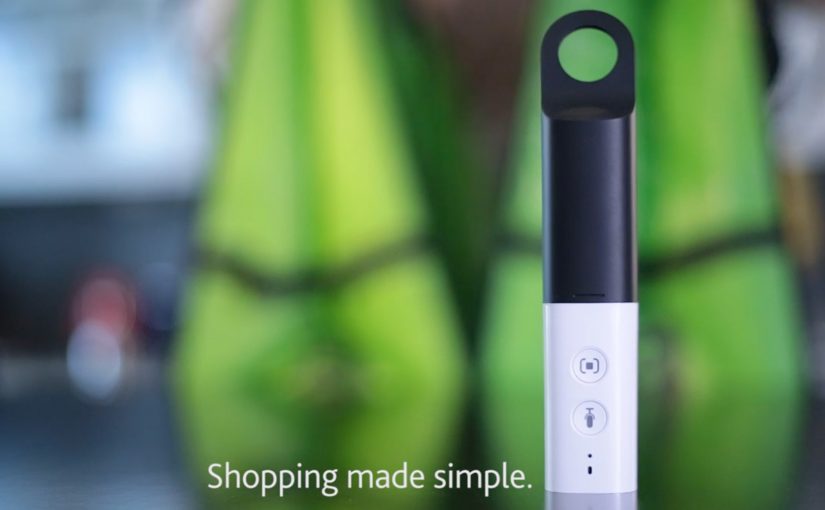
When Amazon introduces Dash, it does not look like a revolution. No screens. No interfaces. No checkout flow.

Just a small physical button. One press. Reorder complete.

At first glance, Amazon Dash can feel like a gimmick. But in practice, it signals something more fundamental. A deliberate attempt to remove shopping itself from the act of buying.

What Amazon Dash does

Amazon Dash is a physical, Wi-Fi-connected button linked to a specific household product. Detergent. Coffee. Pet food. Batteries.

You place it where the need happens. On the washing machine. Inside a cupboard. Near the dog food bowl.

When you run out, you press the button. Amazon handles the rest.

No browsing. No comparison. No cart. No second thought.

The real innovation is not the hardware

The button is not the story.

The real shift is intent compression.

Amazon is asking a provocative question. What if reordering does not feel like shopping at all?

Dash collapses multiple steps. Need recognition. Product selection. Payment. Fulfillment. Into a single physical action.

That move reframes commerce from a conscious decision into a habitual reflex.

Why this matters more than voice right now

Before voice assistants become mainstream, Dash pursues the same ambition through hardware.

No interface is the interface.

This is Amazon experimenting with a future where convenience beats choice. Where loyalty replaces discovery. Where the best experience is the one you barely notice.

Seen from that angle, Dash is less about buttons and more about locking demand upstream, before competitors even enter the consideration set.

A signal to brands, not just consumers

For brands, Amazon Dash carries a subtle but powerful message.

If you win the button, you win the household. If you lose it, you disappear from the moment of need.

Traditional branding competes on shelves and screens. Dash shifts the battlefield into kitchens and cupboards. Physical presence becomes digital dominance.

Distribution is no longer only about visibility. It is about defaultness.

Why Dash feels uncomfortable and that is the point

Dash also triggers unease.

Accidental orders. Reduced price transparency. Loss of conscious choice.

Those concerns are real. They highlight what Amazon is testing. How far consumers are willing to trade control for frictionless convenience.

Dash is not only designed to sell buttons. It is designed to teach Amazon something about behavior, habit, and reorder economics.

What Amazon Dash reveals about the direction of commerce

Even if Dash remains a niche device, the logic behind it is bigger than the hardware.

Commerce is moving toward:

  • Fewer decisions
  • Fewer interfaces
  • More automation
  • Stronger platform gravity

Dash is an early manifestation of a broader shift. Buying becomes less visible. Consumption becomes more continuous. Loyalty becomes infrastructural.


A few fast answers before you act

Is Amazon Dash “just a button”?
It is a button plus a new operating model for reordering.

What consumer problem does it solve?
It removes friction at the exact moment a household runs out.

Why should brands pay attention?
It changes the fight from “win the shelf” to “become the default.”

Why this story matters right now

Amazon Dash is best understood as a prototype of a mindset.

A belief that the best customer experience is the one that disappears. A conviction that convenience can become a moat. And a reminder that big shifts often arrive looking insignificant.

Sometimes, the future of shopping is just a button on a wall.