
IKEA: Paul “The Chair”

IKEA: Paul “The Chair”

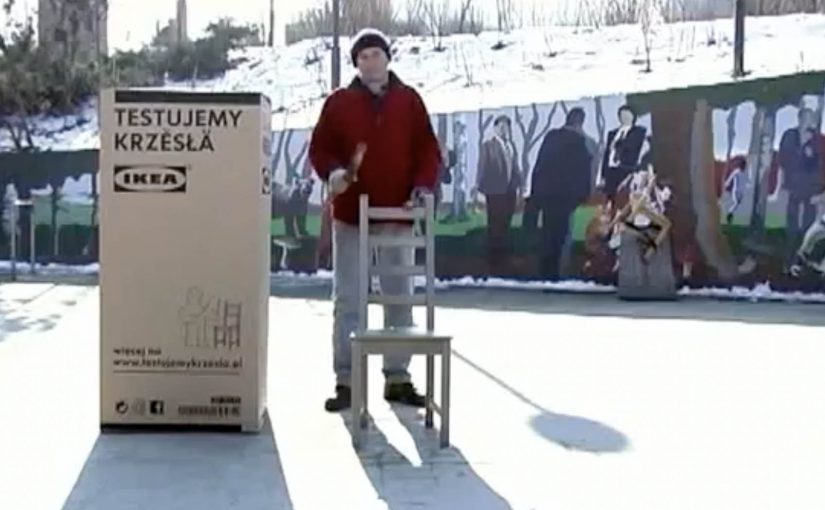
For years, a street performer has been playing on chairs outside Warsaw Central Station. Locals call him Paul “The Chair”.

JWT Warsaw turns that real-world detail into a simple social mechanic for IKEA. In practice, that means a repeatable audience action and brand response that people can join and watch unfold. Let the people who follow IKEA Warsaw decide which chairs Paul should test next, then publish the results back on the IKEA Poland Facebook page. The campaign claims the loop worked fast. Within seven days, IKEA Warsaw fans reportedly increased by 70%.

From street credibility to Facebook voting

The mechanic is a fan vote with a built-in payoff. The audience chooses the chair. Paul tests it. IKEA posts the result. That structure converts passive scrolling into a repeatable reason to come back, because every vote creates anticipation for the next video.

In social-led retail marketing, giving viewers control over what gets demonstrated turns content into participation rather than promotion.

Why it lands

This works because the “expert” is not a paid spokesperson archetype. It is a recognizable local character with a believable, slightly odd credential. Seven years of playing chairs in public. The voting layer also makes the brand feel less like it is broadcasting and more like it is hosting. People are not just watching furniture content. They are steering it, and that makes sharing and returning feel earned.

Extractable takeaway: If your product range is broad and hard to browse, create a recurring format where the audience picks the next item, and make the result public quickly so the loop trains repeat attention.

What IKEA is really buying

The real question is whether IKEA can turn chair browsing into a repeatable act of participation instead of another passive product feed.

The stronger play here is product familiarity through participation, not fan growth for its own sake. The immediate goal is fan growth and interaction, but the deeper goal is product familiarity. Repeated exposure to specific chair models. Subtle proof of sturdiness and usability. A social reason to talk about chairs without sounding like a catalogue.

What retail marketers can lift from this

  • Borrow a credible “tester”. Find a person whose real-life behavior makes them a believable evaluator of your category.
  • Let the audience choose. A simple vote is enough to create ownership and return visits.
  • Close the loop fast. The shorter the time between vote and result, the more the mechanic feels alive.
  • Make each post an episode. Recurrence beats one-off virality for retail ranges.

A few fast answers before you act

What is the core idea of “Paul The Chair”?

IKEA turns chair testing into a recurring social series by letting fans vote on which chairs a local performer, Paul “The Chair”, should test next.

Why does the audience vote matter?

Voting converts attention into commitment. People are more likely to return and share when they helped choose what happens next.

What does this teach about product-range marketing?

You do not need to explain the whole range. You need an ongoing format that makes individual items discoverable one at a time.

What is the key credibility lever here?

The tester’s story. A real person associated with chairs in public life makes the premise feel less like advertising and more like a local truth.

What is the biggest execution risk?

If the results content feels slow, repetitive, or over-produced, the vote becomes a gimmick and the loop stops rewarding repeat attention.

Coca-Cola: Santa’s Forgotten Letters

Coca-Cola: Santa’s Forgotten Letters

When childhood letters get answered years later

The city of Santa Claus is situated in the state of Indiana, USA. The museum in the city brings together different objects related to Santa Claus and has long received letters from people around the world, described as doing so for more than 70 years.

Coca-Cola with its ad agency Ogilvy Brazil selected 75 forgotten letters, meaning letters written to Santa as children that sat unanswered for years, and set out on an impossible task to find the writers and give them exactly what they asked for. The result was a touching movie that reinforces the magic of Christmas.

The impossible brief behind the film

The mechanism is straightforward and brutal in effort. Find a place where old letters to Santa were kept. Read through decades of messages that never got a reply. Select a small set of letters. Then track down the original writers and recreate the exact gifts they once requested.

In global FMCG holiday marketing, the fastest route to belief is to make generosity observable in the real world, not just promised in a tagline.

Santa’s Forgotten Letters is a Coca-Cola Christmas campaign by Ogilvy Brazil that turns archival letters into real deliveries, using the act of fulfilment as the proof of the story.

Why it lands: belief becomes physical

This works because it reverses the usual Christmas-ad formula. Instead of asking the audience to feel something while watching a film, it shows a real-world action first. The emotion is earned by the logistics.

Extractable takeaway: If you want “magic” to read as real, put the proof in the world first, then let the film simply document the effort.

The letters also do the writing for the brand. Each request is specific, personal, and time-stamped by childhood. That specificity makes the surprise feel less like marketing and more like closure.

The business intent hiding inside the sentiment

Coca-Cola is reinforcing a familiar role in the season. It wants to be the brand that protects the “magic” adults quietly miss, and it does that by staging a story people retell without needing to mention product features.

The real question is whether you can prove the sentiment with a concrete act, not just narrate it.

Done well, this is the right kind of sentiment-led brand work because it earns emotion through effort the audience can verify.

This is brand meaning built through a single, high-signal act that generates a long tail of earned conversation.

Steal this structure for earned emotion

  • Start with an artifact, not an insight. Real letters, real handwriting, real specificity.
  • Make the work visible. Show the searching, the tracking, the making, the delivery.
  • Let the recipients carry the truth. The reactions are the credibility layer.
  • Limit the scope to protect authenticity. A small number of deliveries can feel more believable than a mass stunt.

A few fast answers before you act

What is Coca-Cola’s Santa’s Forgotten Letters campaign?

It is a Christmas film built around a real-world fulfilment stunt. Coca-Cola and Ogilvy Brazil selected 75 old letters to Santa from Santa Claus, Indiana, tracked down the writers, and delivered the gifts they once asked for.

Where did the letters come from?

The letters were kept in Santa Claus, Indiana, where a local Santa-related museum had reportedly received letters for decades.

What is the mechanism, step by step?

Locate an archive of unanswered letters. Select a small set. Identify the original writers years later. Recreate the exact requested gifts. Deliver them, and film the search and the moment of fulfilment.

Why does the “old letters” device work so well?

Because it carries built-in specificity and credibility. A handwritten childhood request feels personal and time-stamped, so the fulfilment reads as earned rather than manufactured.

What should brands learn from this execution?

If you want belief, let the action do the persuading. Make the work visible. Keep the claim simple. Let real reactions carry the credibility.

What is the main risk with this kind of sentiment-led work?

If the fulfilment feels staged, scaled too broadly, or too polished, it can lose authenticity. Limiting scope and showing real effort helps protect trust.

Reporters Without Borders: QR Codes That Speak

Reporters Without Borders: QR Codes That Speak

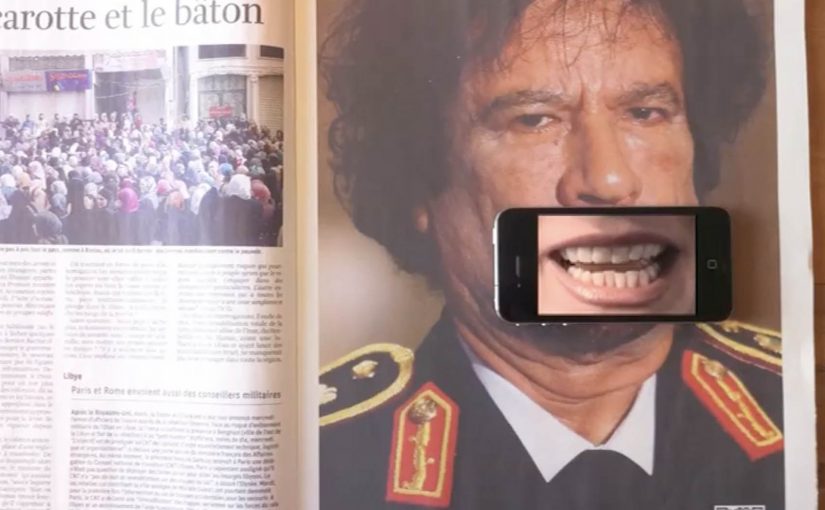
You scan a QR code in a magazine ad, then hold your iPhone over a leader’s mouth. A QR code, short for Quick Response code, is a printed shortcut that opens a mobile destination. The mouth starts talking. But it is not the leader’s voice. It is a journalist explaining what censorship looks like in that country.

Print ads are hitting above their weight lately. Recently, you could test-drive a Volkswagen right inside a print ad, thanks to a special app. Now, QR codes are used to get dictators talking in a set of print ads created by Publicis Brussels for the free-press advocacy group Reporters Without Borders (RWB).

In the ads for RWB you scan the QR code with your iPhone and then place the phone over the leader’s mouth. The mouth starts talking, but it turns out to be the voice of a journalist discussing media censorship in that particular country.

Currently there are Gaddafi, Ahmadinejad and Putin versions.

In public-interest and advocacy communication, this kind of print-to-phone interaction works because it turns a static message into a lived moment of contradiction. The “authoritarian voice” is visually present, but the truth comes from someone who is usually silenced.

How the ad “speaks”

The mechanism is a simple overlay. The printed QR code launches a mobile experience, and the phone screen becomes the animated mouth layer when you align it with the face in the ad.

QR codes act as a bridge from paper to a mobile destination. The ad uses that bridge to deliver audio and motion, without needing the page itself to be electronic.

In advocacy and public-interest communication, print-to-phone interactivity works best when it creates a moment of moral contrast, not a tech demo.

The real question is whether the interaction changes what the message means, or just adds motion.

Why this lands harder than a normal poster

The interaction forces you to participate in the message. You physically place your device over the mouth, so you are complicit in “giving a voice”. Then the reveal flips expectations and reframes the act as a statement about censorship. Because the phone screen becomes the moving mouth layer, the reveal is immediate and hard to dismiss. This is a strong pattern for interactive print: make the overlay carry meaning, not novelty.

Extractable takeaway: If the mobile layer can be removed without changing the message, the interaction is optional. Design the overlay so the meaning only exists when the viewer lines it up and activates it.

What to steal for interactive print

  • Make the overlay do meaning work. The phone is not a gimmick. It is the message delivery device.
  • Engineer a single, clear reveal. The twist needs to land in seconds.
  • Design for alignment and clarity. If the user cannot line it up easily, they quit.
  • Keep the outcome unmistakable. Audio plus a visible mouth movement makes the payoff obvious.

A few fast answers before you act

What is the core idea of these Reporters Without Borders print ads?

They use a QR code and a phone overlay to make a leader’s mouth appear to speak, then reveal a journalist’s voice explaining censorship in that country.

Why use QR codes in a print campaign like this?

QR codes create a fast bridge from paper to mobile audio and motion, which lets print deliver a message that feels alive rather than static.

What makes this more than a tech trick?

The interaction supports the meaning. You “activate” speech, then hear the voice of journalism instead of power, which reinforces the theme of suppressed information.

What are the main execution risks?

Poor alignment, slow loading, or unclear instructions. Any friction can break the moment before the reveal lands.

How can brands apply the pattern without copying the politics?

Use print as the stage and mobile as the moving layer. Make the overlay essential to the message, and build toward one clean, immediate reveal.