Video Campaigns: When the Player Is Message

Two videos that did not just play, they proved the point

Video innovation rarely comes from “better footage”. It comes from changing how the viewer experiences the message. These two campaigns are clean examples of that approach.

In the last week or so I came across two campaigns that used video to innovatively deliver their message.

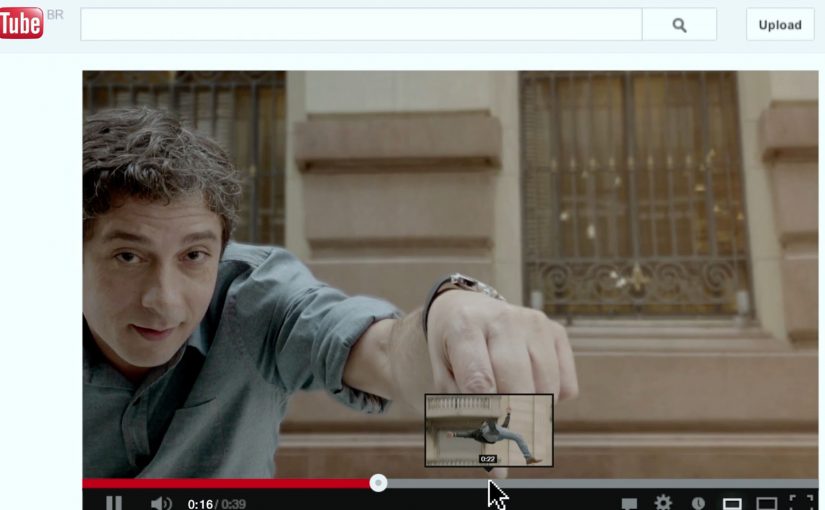
Volkswagen Hidden Frame – using the YouTube play bar as the story

The Volkswagen Side Assist feature helps drivers avoid accidents by showing other vehicles when they are in the side mirror’s blind spot.

To drive home the message, AlmapBBDO developed a film that used YouTube’s play bar to show the difference the VW Side Assist made in people’s lives.

No Means No – a player that interrupts denial

Amnesty Norway, in an attempt to change the Norwegian law on sexual assault and rape, developed a film that used a custom video player to pop up the key message.

The campaign was a success and the law was about to change as a direct consequence of the campaign.

Why interface-led video lands harder

Both ideas shift the viewer from passive watching to active noticing. By “interface-led” I mean the player UI, like the progress bar, overlays, or controls, doing storytelling work, not just housing the film.

Extractable takeaway: If the interface carries part of the argument, the viewer is forced to notice the point during playback, which reduces message loss.

The real question is whether your player can carry the argument when attention collapses.

Volkswagen used a familiar interface to make a safety benefit visible in the moment. Amnesty used an interface interruption to force the key message to be seen, not skipped. In both cases, the “player” stopped being furniture and became the persuasion device.

In global consumer brands and publisher-style marketing teams, interface constraints often determine what gets noticed and what gets ignored.

What these campaigns were really trying to achieve

The business intent was not “engagement” as a vanity metric. It was message delivery with minimal loss.

Volkswagen aimed to make an invisible feature feel tangible and memorable. Amnesty aimed to change perception and behavior at the cultural level, and the player design reinforced that urgency by refusing to be background noise.

Player-hacking patterns to copy

Here, “player-hacking” means designing the video controls and UI as part of the message, not just the wrapper.

  • Use the interface as evidence. When the message is hard to show, let the UI demonstrate it.
  • Design for the skip reflex. If your message is often ignored, build an experience that makes ignoring harder.
  • Keep viewer control intentional. Interactivity works when it serves comprehension, not novelty.
  • Make the “point” happen inside the viewing moment. Do not rely on a voiceover claim when the experience can prove it.

A few fast answers before you act

What is an “interface-led” video campaign?

An interface-led video campaign is one where the player experience, like the progress bar, overlays, or controls, is part of the storytelling, not just the container.

How did Volkswagen Hidden Frame use YouTube differently?

It used YouTube’s play bar as a narrative device to demonstrate the value of Side Assist, making the benefit feel visible rather than described.

What did Amnesty Norway’s No Means No change about the player?

It used a custom video player that surfaced the key message via a popup, ensuring the point was encountered during playback.

Why do these ideas work better than a standard film in some cases?

Because they reduce message loss. The viewer is guided to notice the point through the viewing mechanics, not just the content.

What is the practical takeaway for brands?

If your message is often missed, redesign the viewing experience so the message is structurally harder to ignore and easier to understand.
Bing: Decode JAY-Z

In a market dominated by Google, Bing wants to feel like a modern choice, and a younger audience is the fastest route to relevance. So it partners with JAY-Z for the launch of his book Decoded.

A book launch that shows up in the real world first

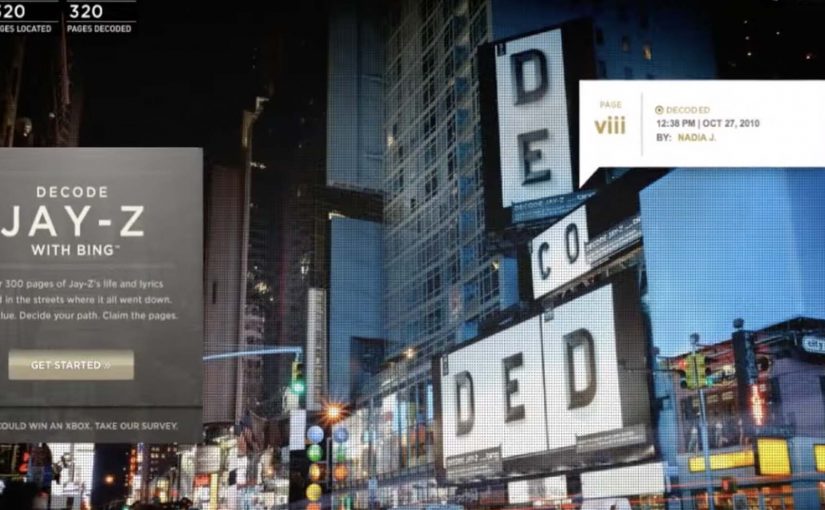
Instead of revealing the book in one place, pages are unveiled in locations referenced on those pages: a Gucci jacket, a restaurant, a hotel pool, a pool table, a car, a bus stop, and a subway. The stunt turns reading into a hunt, and turns “promotion” into something you can physically stumble into.

How the decode game works

Bing ties the physical reveals to an integrated game where fans assemble the book digitally using Bing Search and Bing Maps. Clues to page locations are released daily across Facebook, Twitter, and radio, pushing fans back into search behavior and map-based navigation as part of the entertainment.

In consumer search platforms, discovery mechanics that bridge real-world locations and digital navigation can turn a launch into participation.

Why it lands with a younger audience

The mechanics reward curiosity, speed, collaboration, and social proof. Finding a page is a story you can post. Decoding a clue is a micro-win. Watching the book come together feels like progress you helped create, not content that was simply handed to you. That works because each clue forces a Search and Maps action, so the product becomes the route to the reward.

Extractable takeaway: If you want a younger audience to adopt a utility product, tie progress to repeatable micro-wins that are easy to share.

The business intent hiding in plain sight

For Bing, the goal is not only buzz around Decoded. It is repeated usage of Search and Maps in a context where using the tools feels like play, not a utility task. The partnership borrows cultural gravity from JAY-Z, then converts it into product interaction.

The real question is whether your launch can force repeat product actions, not just cultural attention.

This is stronger than a celebrity endorsement, because it makes Search and Maps the game board instead of the backdrop.

Steal the decode launch mechanics

  • Make the “content” unlockable. People value what they have to discover, not what they are merely shown.
  • Anchor digital behavior to a physical trigger. Real locations make clues feel concrete and worth chasing.
  • Ship a daily cadence. Drip-fed clues keep attention warm without demanding long sessions.
  • Design for sharing as proof-of-work. Proof-of-work here means a visible signal that you did the effort, not just consumed the content.

A few fast answers before you act

What is “Decode JAY-Z” in one line?

A scavenger-hunt book launch where pages appear in real places, and fans use Bing Search and Bing Maps to find and assemble the book digitally.

What are the key mechanics?

Location-based page reveals, daily clues distributed through social and radio, and a digital assembly experience built around search and maps.

Why does this work better than a standard launch?

It converts passive awareness into repeat actions, and each action produces a shareable win that keeps the loop going.

What is the transferable takeaway for product marketing?

If your product is a tool (search, maps, utility apps), embed it inside a game where using the tool is the fun, not the homework.

What should you measure to know it worked?

Track repeat usage of the specific features you embedded in the game (search queries, map actions, and return visits), not only reach or mentions.

Coca-Cola: Expedition 206 Social Media Tour

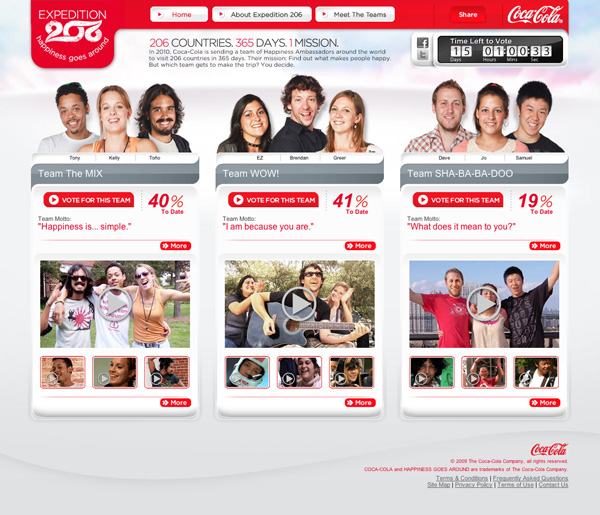
In a first-of-its-kind undertaking, Coca-Cola is using a social media driven travel campaign to tap regular people as “Happiness Ambassadors”. The idea is to have them travel through 2010 and document the entire quest via blog posts, tweets, YouTube videos, TwitPics (quick photo updates), and other social media updates.

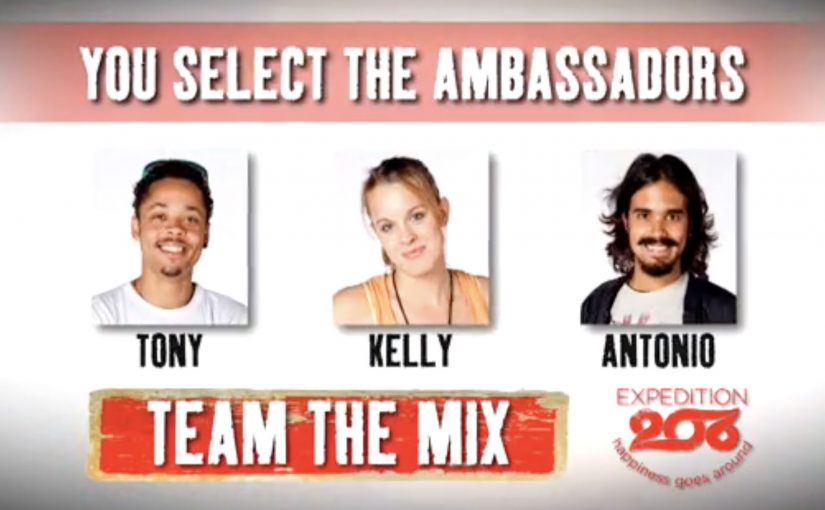
Currently there is a contest in progress to shortlist the brand ambassadors. Their mission is to find happiness in the 206 different countries that sell Coca-Cola products around the world.

Coca Cola Expedition 206

The winning three-person team will begin their journey on January 1, 2010 and attempt to travel more than 150,000 miles in 365 days, visiting each of the 206 countries where Coca-Cola is sold. Their duty is to engage with local denizens and uncover what makes them happy. After that, they are to share their experiences online and complete tasks in each country as determined by online voters.

How the campaign is built

The mechanism is a clean loop: run an online selection process, send a small team into the world, and let the content trail become the campaign. The “media plan” is the itinerary. The “creative unit” is whatever the ambassadors publish that day. Because the itinerary forces daily encounters and updates, the campaign keeps generating fresh moments without needing a new ad concept each week.

In global FMCG marketing, social content performs best when it is tethered to a real-world mission that naturally generates stories.

The real question is how you design a mission that keeps producing episodes, while giving the audience lightweight control over what happens next.

Why it lands

This structure works because it turns a travel log into an episodic program, and the audience input keeps the next update relevant.

Extractable takeaway. Social media campaigns stay watchable when you design an ongoing mission with built-in episodes, then let audiences influence the next episode through lightweight participation like voting and challenges.

  • It turns reach into participation. People are not only consuming updates. They are voting, shaping tasks, and effectively co-authoring the journey.
  • It scales across formats without forcing a single channel. Blog for depth, tweets for pulse, video for emotion, and photos for proof. Each piece can travel on its own while still pointing back to the expedition.
  • It makes “happiness” concrete. Instead of treating happiness as an abstract brand word, it is framed as something you can go find, ask about, and document country by country.

Borrowable moves

  • Make the content agenda unavoidable. If the team must travel and meet people anyway, the story supply is baked in.
  • Use audience input as fuel, not a gimmick. Let voting shape tasks that create better moments, not just vanity engagement.
  • Define the “job” clearly. A simple role title like “Happiness Ambassador” makes the concept easy to repeat and easy to explain.

A few fast answers before you act

What is Expedition 206?

A Coca-Cola project that selects a small team to travel during 2010, visiting markets where Coca-Cola is sold and documenting what people say makes them happy.

Why “206”?

It refers to the number of countries and territories the campaign aims to cover, aligned to Coca-Cola’s global footprint.

What role does social media play here?

It is both the documentation layer and the distribution layer. The journey produces content. The content keeps the campaign alive between milestones.

Why add voter-determined tasks?

It converts passive following into participation and gives the audience a reason to return, because they can influence what happens next.

What makes this different from sending influencers on a trip?

The structure is more like a year-long episodic program with a mission and audience input, rather than a short sponsored travel series.