
Coca-Cola: Happiness Refill

Coca-Cola: Happiness Refill

Connection as currency on Copacabana

For teens, happiness often means one thing: staying connected.

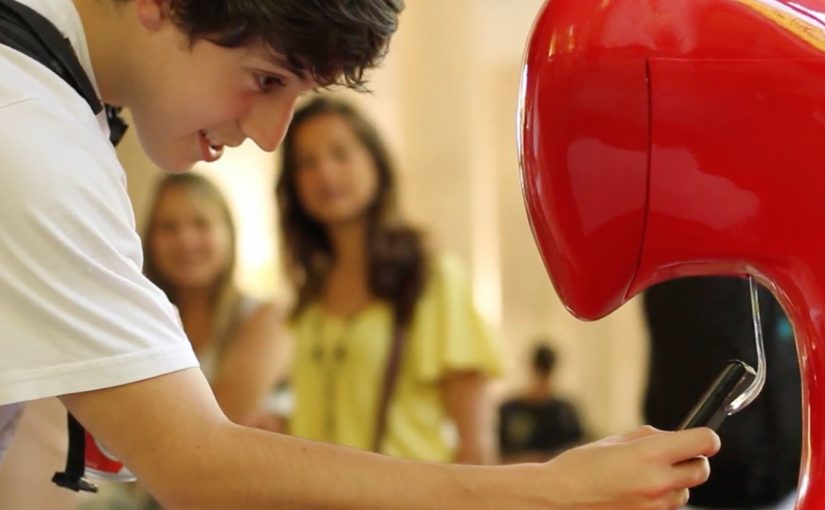
Coca-Cola in Brazil acted on this insight by creating a beachfront store on Copacabana Beach in Rio de Janeiro and installing a soda machine that delivered something more valuable than a drink.

The real question is whether your brand can trade something people have for something they cannot easily get in the moment.

Instead of only dispensing Coca-Cola, the machine rewarded users with free mobile internet credits. For young, emerging middle-class consumers who loved their mobile phones but could not afford generous data plans, the exchange was instantly clear and immediately useful.

How the Happiness Refill machine worked

The interaction was deliberately simple. Users accessed the machine through an exclusive Coca-Cola mobile browser. Completing the interaction unlocked internet credits directly on their phones.

No long registration. No delayed reward. Just a physical interface connected to a digital payoff.

The machine functioned as a bridge between the physical and mobile worlds, using hardware as a trigger and mobile connectivity as the reward.

By turning a quick physical action into instant connectivity, the mechanism created a visible payoff people could copy on the spot.

In mobile-first markets where data is a noticeable constraint, connectivity behaves like a form of currency.

Why free data landed harder than free soda

On a public beach, attention is fleeting. People move quickly, and distractions are constant.

Extractable takeaway: If you reward people with something scarce in their environment, the crowd becomes your distribution channel.

Free data solved a real, present problem. Connectivity was scarce, valuable, and socially visible. Watching someone gain internet access in front of you created instant social proof.

The machine became a gathering point. Not because it was novel technology, but because the value exchange was obvious and human.

The business intent behind Happiness Refill

Coca-Cola’s intent was not short-term sampling.

Utility beats messaging when attention is scarce and the payoff is immediate.

The goal was to make the brand’s long-standing “happiness” positioning tangible for a mobile-first audience by attaching it to everyday utility. Instead of asking teens to emotionally connect with a message, Coca-Cola embedded itself into a moment of real need.

This activation reframed the brand from advertiser to enabler.

What brands can steal from this activation

Here, an activation is a public, in-person brand moment designed to trigger a digital behavior.

  • Translate emotion into utility. Abstract values become powerful when expressed as something people actually need.
  • Design for instant payoff. Immediate rewards outperform persuasion in high-noise environments.
  • Create a public interaction. Physical touchpoints generate social visibility that digital ads cannot buy.
  • Respect economic reality. Value feels bigger when it acknowledges real constraints.

This machine also fits into a broader Coca-Cola pattern. It joins the growing number of Happiness Machines the brand has deployed globally since 2009.


A few fast answers before you act

What insight powered Coca-Cola’s Happiness Refill?

That for teens, happiness is often defined by connectivity. Free data mattered more than another free product.

What made the mechanism effective?

A simple physical interaction with an immediate digital reward. No delay, no complexity.

Why was Copacabana the right context?

The beach favors fast, visible experiences. The activation turned utility into a social moment.

What was the core business goal?

To reinforce Coca-Cola’s happiness positioning by delivering real-world value aligned with mobile behavior.

What is the transferable lesson?

When you make your brand genuinely useful in the moment, people do the distribution for you.
Magnum Pleasure Hunt: AR bonbons in Amsterdam

Magnum Pleasure Hunt: AR bonbons in Amsterdam

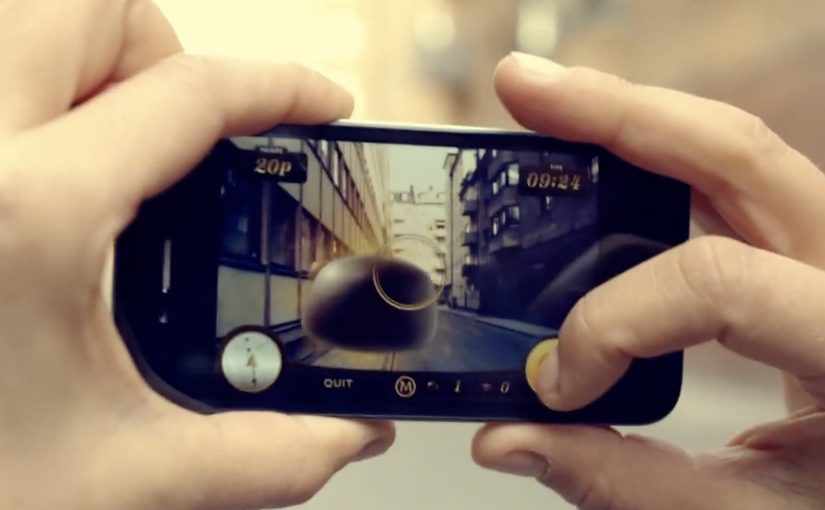
Earlier on in April Magnum launched the second edition of its hit online game Magnum Pleasure Hunt. To extend the campaign further, a real time mobile augmented reality game takes the hunt to the streets of Amsterdam.

The game is currently ongoing and participants between April 22nd and April 29th can use a special mobile app to hunt down 150 chocolate bonbons hidden across 9 locations in Amsterdam, described in some write-ups as centered around the city’s Nine Streets area. The one who claims the most bonbons wins a free trip to New York, while the rest are rewarded with the new Magnum Infinity ice cream.

Why this is a smart extension of a digital hit

The original online game is built for reach and replay. The Amsterdam version adds scarcity and locality: the same “collect the bonbons” mechanic, but tied to time, place, and physical movement, which makes participation feel more like an event than a link.

In European FMCG launches, location-based AR hunts work best when the rules are obvious in seconds and tiered prizes make “one more try” feel worth it.

The real question is whether your AR layer gives people a reason to move now, not just a new way to look at the same brand world.

What the AR layer adds to the experience

The AR layer keeps the mechanic simple, but changes the context by making the hunt visible in public and limited to specific dates and locations.

Extractable takeaway: When you take a proven digital mechanic into the street, pair it with a short window and clear rewards so participation feels like an event, not an app demo.

  • Instant purpose. You are not browsing a branded world. You are on a hunt with a clear target.
  • Real-world urgency. Limited dates and specific locations make the challenge feel live.
  • Social proof by default. People playing in public become the campaign’s moving media.

A quick comparison to Vodafone Buffer Busters

I find the Magnum mobile game to be a toned down version of the Vodafone Buffer Busters game that ran in Germany last September. Either way, this is the right direction. More brands should treat augmented reality as a medium of engagement, not a gimmick.

What to copy from Magnum’s Amsterdam hunt

  • Make the first action obvious. People should understand the goal and the first tap in seconds.
  • Limit the window. A short time period turns “I’ll try it later” into “I should go now.”
  • Use rewards that scale. A big winner prize plus smaller payoffs keeps both competitive and casual players engaged.

A few fast answers before you act

What is Magnum Pleasure Hunt Across Amsterdam?

It is a time-limited mobile augmented reality game that moves Magnum’s “collect the bonbons” mechanic from the web to real locations in Amsterdam.

How do players participate?

Players use a mobile app while out in the city to find and collect virtual bonbons placed at specific locations during the campaign window.

What makes it different from the online Pleasure Hunt?

The online version is a digital-only chase. The Amsterdam version adds time and place, turning the hunt into a real-world activity with location-based stakes.

Why are prizes so central to this format?

Because the effort is physical. A clear top prize plus smaller “everyone gets something” rewards keep motivation high across both competitive and casual players.

What is the key design lesson for AR brand games?

Keep onboarding friction low. If people cannot understand the goal and the first action immediately, they will not start, especially outdoors.

Mercedes-Benz Vans: Key to Viano

Mercedes-Benz Vans: Key to Viano

A commuter points a car key at a digital billboard and clicks the remote. The screen reacts. Suddenly, the advertising display stops behaving like outdoor media and starts behaving like interactive entertainment.

That is the core mechanic behind “Key to Viano”, an interactive outdoor event for Mercedes-Benz Vans created by Lukas Lindemann Rosinski on Wall AG’s digital out-of-home (DOOH) displays in Berlin’s U-Bahn station Friedrichstraße. Passers-by are invited to use their own remote car keys to control the content on the screens, turning a familiar everyday object into the controller.

In high-traffic urban DOOH environments, the quickest path to attention is to turn an existing habit into viewer control, with a payoff that feels immediate and public.

The experience works because the interaction is self-explanatory. Press the button you already know. Watch the screen respond. The line between ad and game collapses, and the crowd becomes part of the moment because everyone can see the “trigger” happen.

Why the car key is the perfect interface

No download. No new behaviour. No instruction manual. A car key is already a remote control in people’s hands, so the activation feels intuitive instead of “techy”. That simplicity is what makes the experience legible from a distance, and what makes bystanders stop and watch.

Extractable takeaway: If you want interaction in public space, pick an input people already carry and trust, then make the response visible to everyone around them.

What Mercedes-Benz Vans is really proving

The stunt is framed as entertainment, but it is also a product metaphor. “Key to Viano” implies access, convenience, and a premium feel. When the participant can “open” a digital experience with a key, the brand gets to borrow the emotional cues of unlocking a car, without talking about features.

The real question is whether your idea can be explained in one glance, without staff, signage, or a QR code.

Interactive DOOH should earn its place by being instantly legible, not by adding layers of “smart” complexity.

What to borrow from Key to Viano

  • Use a controller people already trust. Familiar inputs reduce friction and increase participation.
  • Make the interaction visible. If the crowd can see what caused the screen to change, attention multiplies.
  • Keep the loop fast. Trigger. Response. Reward. A slow loop loses commuters.
  • Let the location do the targeting. Stations deliver high volume and natural dwell time without extra explanation.

A few fast answers before you act

What is “Key to Viano”?

It is an interactive digital out-of-home activation where passers-by control advertising screens using their own remote car keys, under the Mercedes-Benz Vans “Key to Viano” concept.

Where did the activation run?

It ran on digital displays at Berlin’s U-Bahn station Friedrichstraße.

Why does using a car key work so well?

Because it is an input people already understand. It removes download friction and makes the interaction feel natural and premium.

What is the main benefit of interactive DOOH like this?

It converts passive exposure into participation. Participation creates longer attention, stronger memory, and visible social proof from the crowd watching.

What is the biggest risk with interactive screens in transit spaces?

Complexity. If the interaction is not instantly clear, people walk past. The mechanic must be obvious in seconds.