
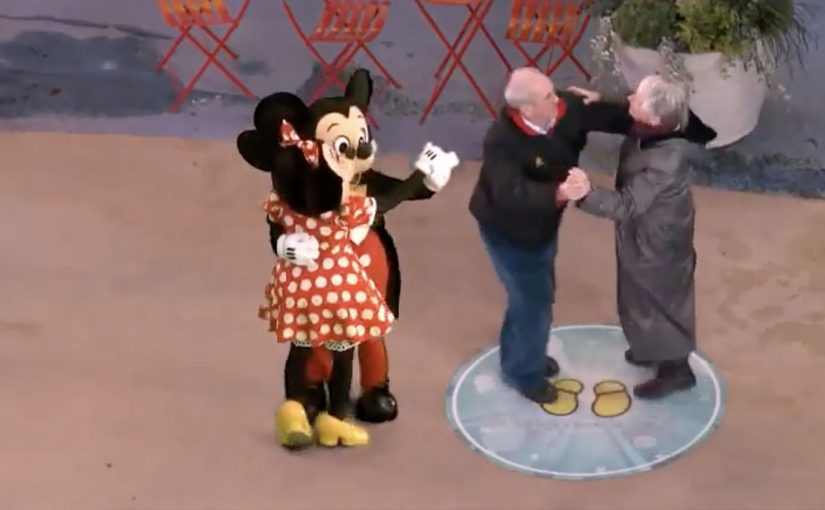
Disney: Mickey Mouse brings magic to NYC

You step into the Disney Store in Times Square and suddenly you are “in” a Disney moment. A live screen blends you into a scene and Mickey appears alongside you, reacting in real time as the crowd watches.

Disney Parks uses the installation to celebrate Mickey Mouse’s 83rd birthday this month, turning a store visit into a small piece of theatre that people naturally photograph and share.

The mechanism is straightforward. A live camera feed captures guests, then an augmented reality layer places Disney characters and effects into the scene so it looks like the magic is happening around you, not only on a separate screen.

In flagship retail environments, live augmented reality installations convert foot traffic into shareable content by making the store itself behave like media.

The real question is whether the experience makes bystanders feel like they are watching a story, or watching a demo.

Disney is also using a Twitter hashtag #DisneyMemories to track the experiences at Times Square and the campaign, so the physical moment has a simple, searchable social trail.

Why this lands in Times Square

Times Square is already a stage. The installation does not fight the noise with more noise. It creates a personal moment inside the noise, where the viewer becomes part of the story. That shift from watching to participating is what earns the stop-and-stare crowd.

Extractable takeaway: In a loud environment, the winning move is not bigger spectacle. It is giving each guest a personal, camera-ready moment the crowd can understand instantly.

Hashtag as a lightweight amplification layer

The hashtag is not the idea. It is the plumbing. It lets Disney connect hundreds of individual “I was there” posts into one visible stream, without asking people to learn a new platform or download anything beyond what they already use.

The same live AR pattern shows up elsewhere

This style of live augmented reality is showing up more often in brand-led events, because it creates instant participation without complex instructions. You have already pointed to similar executions from National Geographic and Lynx, where the screen becomes a “portal” and the audience becomes part of the scene.

What to steal for your own live-event experience

  • Make the first second readable. People should understand what is happening from across the room.
  • Design for bystanders. The crowd experience matters, because the crowd is the distribution engine.
  • Attach one simple social handle. A hashtag or keyword is enough when the moment is already worth sharing.
  • Keep the tech invisible. The audience should remember the feeling, not the hardware.

A few fast answers before you act

What is the Mickey Mouse Times Square augmented reality installation?

It is a live in-store experience at the Disney Store in Times Square that places guests into a real-time scene with Disney characters using an augmented reality layer on a live camera feed.

Why does this work as a retail activation?

Because it turns a store visit into a participatory moment. People do not just browse. They become part of a scene worth filming and sharing, which extends reach beyond the store.

What role does #DisneyMemories play?

It creates a single social thread for many individual posts, helping Disney track and aggregate the shared experiences without adding friction to the in-store moment.

How is this different from a typical photo booth?

The difference is live spectacle. The experience is designed to be watched by a crowd in real time, so bystanders become part of the energy and the story travels further.

What is the most common failure mode for live AR event installs?

Confusion and delay. If people cannot instantly understand what to do, or if the experience queues too long, the crowd dissolves and the social output drops sharply.

J.C. Penney: Santa Tags

When a QR code stops being a link and becomes a keepsake

Brands generally use QR codes to direct consumers to websites. But during the holiday season, J.C. Penney takes a different approach.

Shoppers receive a “Santa Tag” sticker with each purchase. The tags contain individualized QR codes that can be scanned with any QR reader to record a personalized voice message. Gift recipients can then scan the same code to hear that recorded message when they open their gifts.

The mechanic: scan once to record, scan again to reveal

The clever part is the two-phase use. In store, the code is a recording trigger. At home, the code becomes the playback trigger. That turns an otherwise generic sticker into a private moment between giver and receiver, without requiring an app download or a new behavior beyond scanning. It works because the same code carries the message from purchase to unwrapping, so the technology fades back and the emotional payoff arrives at the right moment.

In retail holiday campaigns, the most effective “personalization” is often not product customization. It is emotion customization, meaning the product stays the same but the moment around it becomes personal. A small, authentic message beats a bigger discount for memory value.

The real question is how to turn a low-cost store touchpoint into a high-memory part of the gift itself.

Why it lands

This adds meaning at the exact moment people care about meaning. Gift giving. It also creates a reason to choose one retailer over another that is not price-driven, because the value is in the experience the gift will deliver later. The tag travels beyond the store and completes itself at unboxing, which is where holiday stories are actually made.

Extractable takeaway: If you want a simple activation to feel premium, design it to “pay off later” in a private moment, and keep the tech invisible enough that it feels like magic, not a feature.

What retail holiday teams should steal

  • Make the code do something human. QR is not the idea. The idea is a recorded message that travels with the gift.
  • Design for zero friction. No app, no sign-up, no learning curve. Just scan and speak.
  • Extend the experience beyond the store. The activation finishes at home, which increases brand recall.
  • Build around an emotional ritual. Holiday gifting already has meaning. The best activations amplify it rather than invent it.

A few fast answers before you act

What are J.C. Penney “Santa Tags”?

They are gift-tag stickers with individualized QR codes that let shoppers record a voice message and let recipients scan later to hear that message during unwrapping.

What makes this different from typical QR code marketing?

The QR code is not a link to a website. It is a trigger for recording and playback, turning the code into a personal keepsake.

Why does the two-phase scan mechanic matter?

It creates a delayed payoff. The experience completes at the moment the gift is opened, not at the moment of purchase.

What is the main lesson for retailers?

Small, low-friction personalization that amplifies an existing ritual can differentiate a store without discounts.

What’s the risk if a brand copies this?

If scanning fails or playback is unreliable, the emotional moment collapses. The tech must be extremely dependable.

Slide to Unlock: Audi and Amnesty iAds

Audi “Slide to Unlock”

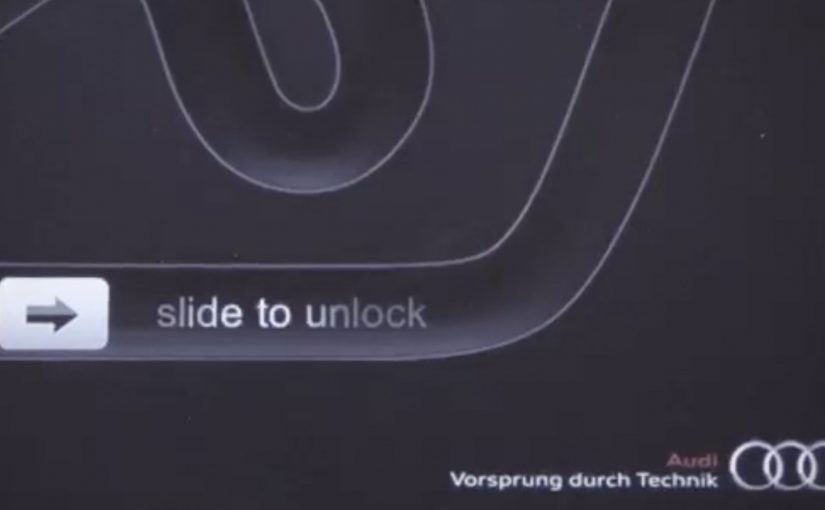
AlmapBBDO Brazil developed a distinctive iAd for the Brazilian Audi Magazine iPad app. Here, “iAd” refers to an interactive in-app ad unit built for iPad publications. The ad appeared in iPad publications and played with Apple’s familiar “Slide to Unlock” gesture to pull people into the experience.

Users instantly recognised the swipe interaction used to unlock Apple devices. After racing their finger around the track, they were rewarded with a free download of the first Audi Magazine issue from the App Store.

Amnesty International “Slide to Unlock the Truth”

Amnesty International ran an iAd in one of Sweden’s largest newspapers, DN, presenting readers with an image of a prison cell and a prisoner inside. The same “Slide to Unlock” gesture opened the cell and revealed a strong invitation to join Amnesty International as an activist.

Mechanic: borrow muscle memory, then repay it with value

Both executions use the same trick. They take an interaction people already know, then remap it to a brand action. In Audi’s case, the swipe becomes a playful mini-game. In Amnesty’s case, the swipe becomes a literal unlock that reveals a call to action.

In iPad-era rich media placements, the fastest engagement comes from interactions that feel native to the device instead of invented for the ad.

The real question is whether the gesture is already learned, so the first second goes to the message instead of the UI.

This approach is worth using when you can deliver a clear payoff within one gesture and one reveal.

Why it lands

The shared win is immediacy. There is no learning curve. The interface is already familiar, so attention goes straight to the message. Audi uses that familiarity to reduce friction on a content reward. Amnesty uses it to make the metaphor physical and emotionally legible.

Extractable takeaway: If you want interaction inside an ad to feel effortless, borrow a gesture people already trust, then make the outcome either instantly rewarding or instantly meaningful.

What to steal from gesture-first iAds

  • Start with a native gesture. Familiar interaction reduces drop-off in the first seconds.
  • Make the mapping obvious. Swipe-to-race and swipe-to-open both explain themselves.
  • Reward immediately. Audi pays the user back with a free issue. Amnesty pays back with a clear reveal and a direct next step.
  • Keep the loop short. One gesture, one transformation, one outcome.
  • Let metaphor do the work. Amnesty’s “unlock” is not decoration. It is the message.

A few fast answers before you act

What is the core idea behind “Slide to Unlock” iAds?

They repurpose a familiar device gesture to trigger a brand action, reducing friction and making interaction feel instinctive.

Why does borrowing a system gesture increase engagement?

Because users already know what to do. That removes instruction time and makes the first interaction feel safe and predictable.

What is the key difference between the Audi and Amnesty uses of the gesture?

Audi uses it for playful interactivity and a content reward. Amnesty uses it as a literal metaphor that reveals a persuasive call to action.

What is the biggest risk when using familiar UI patterns in ads?

If the gesture mapping feels unclear or gimmicky, people feel tricked. The interaction must lead to a payoff that justifies the borrowed familiarity.

What should you measure if you run an interaction-led ad?

Interaction start rate, completion rate, time-to-first-payoff, post-interaction clicks, and whether the interaction improves recall of the message.