
Hyundai Genesis: A Message to Space

Hyundai Genesis: A Message to Space

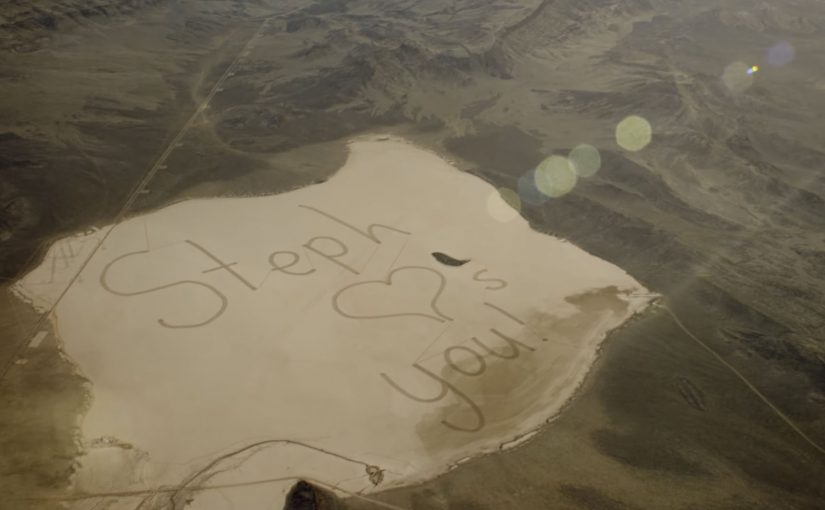
Eleven Hyundai Genesis sedans drive in formation across Nevada’s Delamar Dry Lake, not to show handling, but to write a sentence.

A 13-year-old girl from Houston, Stephanie, misses her astronaut father as he works aboard the International Space Station. Hyundai turns that human truth into a brand-scale gesture. The cars “draw” “Steph loves U” in tire tracks across the dry lake bed. The result is described as larger than one and a half Central Parks. It is also described as being certified by Guinness World Records as the world’s largest tire track image.

From choreography to a message you cannot ignore

The mechanism is straightforward and bold. Take a blank natural canvas. Assign each car a path. Choreograph the movement so the negative space becomes handwriting at a gigantic scale. Then validate the scale with a record body so the stunt becomes a fact people repeat, not just a film people watch.

In global automotive marketing, where products often feel interchangeable in feed-based media, a physical proof stunt creates memorability by turning precision into a story people can retell.

Why it lands

It works because the brand is not asking for attention. It is earning attention by doing something that only coordinated engineering and serious planning can pull off. The emotional hook is intimate, and the execution is absurdly large. That contrast creates instant share value, and it gives the Genesis name a halo of control and capability without needing to say it out loud.

Extractable takeaway: If you need breakthrough, build a single, verifiable act that scales a private human moment into a public artifact, and make the artifact the headline, not your messaging.

What the stunt is really selling

The real question is how to turn a private emotion into a public proof of brand capability without making the brand feel like the hero.

This is one of the rare brand stunts where scale sharpens the emotion instead of burying it.

On the surface, it is a daughter sending a message. Underneath, it is Hyundai demonstrating disciplined coordination. Eleven vehicles behaving like one pen. The brand promise becomes “we can execute the impossible precisely”, which is a stronger feeling than another round of luxury feature claims.

What to borrow from this precision stunt

  • Start with a real relationship. One clear human story beats a composite “target audience”.
  • Make the action the media. A physical artifact outlives the launch window and travels as proof.
  • Engineer a repeatable headline. A record, a scale comparison, or a singular first can carry the story.
  • Let meaning come from constraints. Fewer words. Bigger commitment. Higher credibility.

A few fast answers before you act

What is “A Message to Space”?

It is a Hyundai Genesis marketing stunt where 11 cars drive in formation to create a massive tire track message, “Steph loves U”, intended to be visible to a father on the International Space Station.

What is the core mechanism that makes it shareable?

A simple sentence rendered at extreme scale through choreographed driving, then amplified by third-party validation and a short film that captures the creation.

Why use a Guinness World Records angle?

Records reduce skepticism. They turn “big” into a named achievement people can cite, which helps the story travel beyond advertising audiences.

What is the biggest risk with this style of stunt?

If the human story feels manufactured, the spectacle becomes empty. The emotional truth has to lead, or the record becomes the only thing people remember.

What is one modern adaptation of the same pattern?

Create a single, verifiable public artifact that embodies your brand promise, then design the content around documenting the artifact, not explaining it.
Amazon Dash: The Button That Rewrites Loyalty

Amazon Dash: The Button That Rewrites Loyalty

A one-click purchase is not the point. Default is.

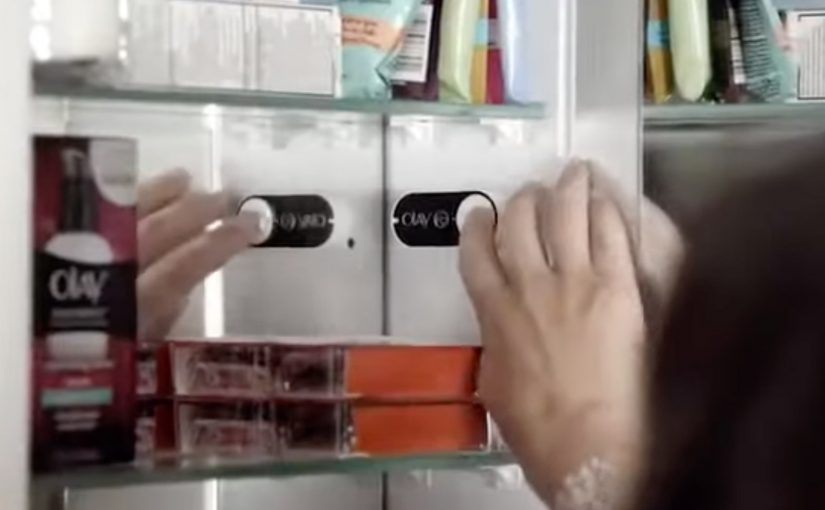
Amazon Dash Button looks simple. A branded button you stick near the place of usage. You press it. The same item arrives again.

But the strategic move is not “one click.” It is making the reorder the default behavior.

Dash Button turns repeat buying into an ambient habit. By “ambient habit,” I mean a repeat action triggered by the environment rather than an active shopping session. It shifts commerce away from discovery and toward automation. It pushes the battle for the customer from the shelf and the screen to the home.

What the Dash Button does

Dash Button is a small connected device tied to one specific product, and often one specific pack size. You link it to your Amazon account. You place it where the need occurs.

Examples are obvious in everyday life:

  • Detergent button near the washing machine
  • Coffee button in the kitchen
  • Pet food button near the feeding area

When the product runs low, you press. Amazon confirms the order, typically via app notifications, and ships.

The experience is intentionally narrow. That narrowness is the innovation.

In consumer convenience products, loyalty is often less about love and more about default.

In high-frequency household categories, the interface at the point of use can matter more than the message at the point of sale.

Why the narrowness matters

Dash Button removes three high-friction moments that brands fight over every day. Because one button equals one SKU, the moment of need no longer reopens the choice.

Extractable takeaway: If you can turn repeat purchase into a single configured action, you shift competition from persuasion in the moment to setup before the moment.

  1. Search. The customer does not type a query.
  2. Comparison. The customer does not see alternatives.
  3. Persuasion. The customer does not view ads, ratings, or promotions in the moment.

In other words, the customer does not shop. They simply replenish.

Once a household adopts replenishment behavior, the role of branding changes. The brand becomes less about persuasion and more about being the chosen default.

The hidden bet. Repeat purchases are the real moat

Dash Button is a physical expression of a platform strategy.

If Amazon captures replenishment categories, it wins the durable, high-frequency part of retail. The items that quietly drive recurring revenue and predictable logistics.

The button also functions as a data instrument. It reveals how often a household needs a product, where it is used, and which categories are truly habitual versus occasional.

That insight feeds subscriptions, predictive delivery, and future interface removal.

What this signals to CPG and retail leaders

Dash Button compresses marketing into an upstream decision.

The real question is how you become the configured default before the point of purchase even exists.

For CPG leaders, this forces uncomfortable clarity on loyalty, pack architecture, trade visibility, and availability. For retailers, it signals a shift in power toward whoever owns the reorder interface.

The consumer tension. Convenience vs control

Dash Button introduces a trust tradeoff.

Consumers value convenience, but they also worry about accidental orders, loss of price checks, oversimplified choice, and dependence on a single platform.

Those tensions do not invalidate the model. They clarify what platforms must solve through better confirmations, clearer reorder states, and smarter replenishment rules.

The bigger story. Interfaces disappear

Dash Button fits a broader direction in commerce. Buying moves away from screens and toward contexts.

The pattern is consistent: less explicit shopping, more embedded intent, more automation, and more default-driven brand outcomes.

Dash Button is not the endpoint. It is an early, tangible step toward commerce that feels invisible.

What to steal from Dash-default loyalty

  • Win the setup, not the moment. Treat the “configured default” as the real battleground, not the last-second persuasion layer.
  • Make narrowness a feature. If the goal is replenishment, deliberately constrain the action so choice does not reopen at the moment of need.
  • Put the trigger where the need occurs. The closer the interface sits to usage, the more it behaves like an always-on shelf for repeat buying.
  • Design for convenience with control. Keep confirmations and reorder states clear so automation feels helpful, not risky.

A few fast answers before you act

What was Amazon Dash?

Dash was a physical reorder button that let customers buy a specific everyday product with one press, removing browsing and checkout steps.

What is the core mechanism?

Turning replenishment into a default action. One button equals one SKU. The interface collapses choice into speed and habit.

Why does this change loyalty dynamics?

Because the reorder interface becomes the brand decision. If the button exists, switching requires extra effort, so the default compounds over time.

What is the business intent?

Increase repeat purchase frequency and reduce churn by owning the replenishment moment and lowering friction to near zero.

What should other brands steal?

Design for the reorder moment. If your category is habitual, the winning move is to remove steps, make the default easy, and earn repeat behavior through convenience.

The Disappearing Billboard

The Disappearing Billboard

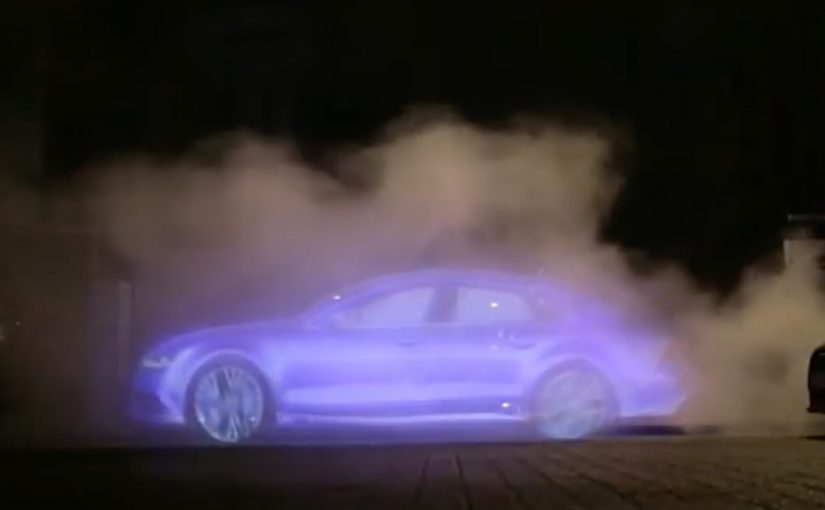
A glowing Audi A7 appears in mid-air on a city street at night. Then it fades. The “billboard” leaves nothing behind but steam.

The product truth. Zero emission, water vapour only

The Audi A7 Sportback h-tron is built using zero emission fuel cell technology coupled with a hybrid battery and an electric motor in the rear. Due to this, the car gives out nothing but water vapour from its exhaust.

The idea. Advertising that leaves nothing behind

With such an innovative product, Audi teams up with German agency thjnk to create advertising that mirrors the product promise. A billboard that also leaves nothing behind.

If the claim is “leaves nothing behind,” the medium should leave nothing behind too. The real question is whether the medium can behave like the promise, so the claim becomes self-evident.

Here, “disappearing billboard” means a timed projection onto water vapour, not a physical poster.

How it works. Projection onto water vapour

  • Water vapour is used as the surface.
  • The car and message are projected onto the vapour cloud.
  • The installation appears in busy city areas after dark, then disappears.

In European city streets, the hardest part of outdoor work is creating a memorable moment without leaving permanent media behind.

Why it works. The medium is the message

Instead of explaining “nothing but water vapour,” the execution behaves like it. It turns a technical claim into a visible moment people can experience, photograph, and talk about.

Extractable takeaway: When a product truth is hard to feel, design an execution that behaves like the claim. Let the medium do the proving.

Borrow the disappearing-surface play

  • Mirror the claim. Choose a medium that behaves like the product truth, so the message is the proof.
  • Make it legible fast. One glance should explain what is happening and why it matters.
  • Design for capture. Build the moment so people want to photograph it and share it.
  • Time-box the surprise. Appear briefly, then disappear, so the absence becomes part of the story.

A few fast answers before you act

What is the Disappearing Billboard?

An outdoor activation where Audi projects the A7 Sportback h-tron and message onto clouds of water vapour, creating a billboard that vanishes.

What is the connection to the car?

The A7 Sportback h-tron emits nothing but water vapour, so the advertising surface is also water vapour.

Where does it run best?

In busy city areas after dark, where the projected vapour image reads clearly and feels unexpected.

What is the core mechanism?

A timed projection onto water vapour that appears briefly and leaves nothing behind.

Who creates the work?

Audi with German agency thjnk.