
Toronto Silent Film Fest: Instagram trailers

Toronto Silent Film Fest: Instagram trailers

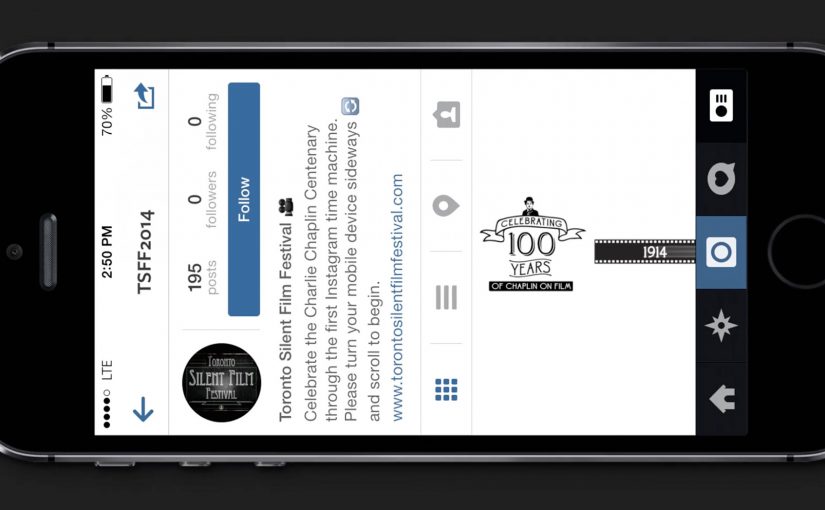
You open Instagram, land on a feed of black-and-white stills, and start scrolling fast. Suddenly the images “move” like a flipbook. It feels like a tiny silent-movie trailer hiding inside a platform that is supposed to be static photos.

The month before, Fox used Vine to mash up a Wolverine trailer and stir hype. Now the Toronto Silent Film Festival borrows the same instinct, then applies it to Instagram. It promotes the event with what it bills as a first-of-its-kind set of Instagram trailers that only really work on a smartphone.

An Instagram trailer, in this format, is a sequence of consecutive still frames posted as individual images. When you scroll rapidly, your thumb becomes the playback control and the feed becomes the projector.

In niche cultural events marketing, the fastest way to earn attention on a small budget is to turn a platform’s native behaviour into the medium.

The trick lands because the mechanic matches the subject. Silent films are built on frame-by-frame illusion. Instagram is built on frame-by-frame browsing. Put the two together and the experience feels clever, not forced.

Why this works better than a normal trailer drop

A standard trailer asks for time and attention up front. This asks for curiosity first. You discover the motion by accident, then you replay it because you want to confirm what you just saw. That discovery loop is the real distribution engine. For a social-first launch, this is a better opener than dropping a normal trailer because it earns replays before it asks for commitment. By “discovery loop” I mean the accidental motion, the immediate replay to confirm it, and the urge to show someone else.

Extractable takeaway: If you can turn a native gesture into a repeatable “did you see that?” moment, you can earn attention and sharing without asking for a click.

What the campaign is really doing

It is less about explaining the festival and more about attracting the right kind of audience. If you enjoy the hack, you are probably the kind of person who will enjoy the program. The format acts like a filter for taste.

The real question is whether your launch gives people a simple action that doubles as playback and sharing.

This work is credited to Cossette, and it later picked up industry recognition for using mobile behaviour as the creative device, which fits the strategy. Make the idea itself feel like a silent-film magic trick.

What to steal for your own social-first launch

  • Exploit a native gesture. Scrolling is a universal habit. Build around it.
  • Make discovery the hook. The best “first play” happens when people think they found something.
  • Match mechanic to meaning. Frame-by-frame browsing is a perfect metaphor for silent-film motion.
  • Keep the explanation optional. If the concept needs a paragraph to understand, it will not spread.

A few fast answers before you act

How do Instagram trailers work in this campaign?

The trailer is split into many still frames and posted as consecutive images. On a phone, you scroll quickly through the feed to simulate motion like a flipbook.

Why does this feel “right” for a silent film festival?

Silent cinema is fundamentally frame-based illusion. This mechanic recreates that feeling using modern thumb-scrolling, so the medium reinforces the message.

What is the main advantage over posting a normal video?

Discovery. People do not just watch. They figure it out, replay it, and show someone else how it works.

What kind of brands or events can use this pattern?

Anything with a strong visual identity and a story that benefits from “reveal”. Especially cultural events, launches, and limited-time programs where curiosity drives consideration.

What is the biggest risk with platform hacks?

If the experience only works in a narrow usage mode, many people will miss it. The mechanic needs to be obvious enough that first-time viewers understand what to do within seconds.
Durex Fundawear

Durex Fundawear

If t-shirts can be digitised, then why can’t underwear. Durex Australia has unveiled “Fundawear”, billed as a first-of-its-kind wearable electronic underwear concept that allows touch to be transferred over the internet while maintaining comfort, sexiness and flexibility. The idea is simple. People in long-distance relationships can tease, tickle and tantalise even when apart.

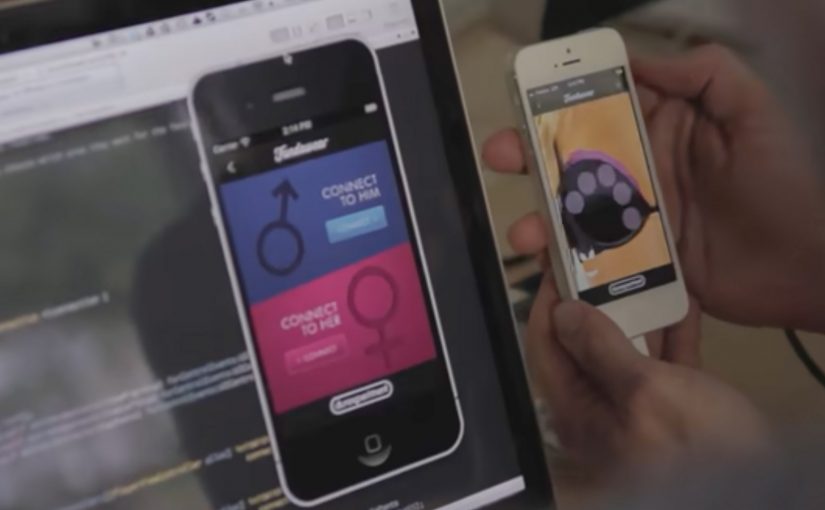
To replicate the nuances of touch, each garment houses touch technology that connects with a real-time server to communicate between touchscreen devices and the garments. Interaction happens through a smartphone interface, translating inputs into sensation on the connected wearable.

A prototype that behaves like a campaign

What makes this work stand out is the choice to launch as an experiment, not a finished product. Fundawear is framed as a prototype, which gives the brand permission to be bold, invite participation, and trigger debate, without pretending the tech is already mainstream.

Extractable takeaway: When a product concept is unfamiliar, framing it as a prototype lowers disbelief and lets curiosity do the distribution work.

The real question is whether people can understand the use case quickly enough to talk about it.

It also shifts the job of the communications. Instead of persuading people that “remote touch” is a good idea, it makes people imagine use cases. That imagination is the marketing engine.

How the technology story earns attention

The campaign leans on a clear mechanism. Touch input on a phone maps to specific zones, then the garment responds, creating a feedback loop, meaning the phone input and garment response feel connected in the same moment rather than as a delayed message.

When wearable technology is explained this clearly, it stops sounding like science fiction and starts sounding like an interface decision. That is when people share it.

In consumer innovation marketing, the leap from novelty to adoption happens when a physical interface makes a digital promise feel immediate, controllable, and consent-led.

Distribution strategy: invite the internet to co-author the idea

Fundawear is described as still in the experimental stage, with no confirmed release date at the time. But Durex uses that uncertainty as a hook. If you provide a creative reply to “How would you use Fundawear with your partner?” at the Durex Facebook page, you might win a free prototype.

That is a smart move. It turns the public into contributors, and it generates word of mouth that carries the concept further than a conventional product launch could.

What to steal if you are launching an unfamiliar product concept

  • Prototype publicly. Experiments can travel faster than “finished” products because people argue, imagine, and remix.
  • Explain the mechanism in one breath. If the audience cannot repeat how it works, they will not share it.
  • Design for participation. A prompt like “how would you use it?” converts curiosity into content.
  • Keep the tone playful, not clinical. For intimate categories, playfulness lowers the barrier to talk about it.

A few fast answers before you act

What is Fundawear, in plain terms?

Fundawear is an experimental wearable concept from Durex Australia. It pairs smart underwear with a smartphone interface so a partner can send touch inputs over the internet in real time.

What kind of technology does it rely on?

It relies on wearable haptics, meaning small actuators in the garment respond to signals from an app. A server connection synchronises inputs between two partners’ devices and garments.

Why launch a prototype instead of waiting for a finished product?

Because a prototype creates permission to experiment, earn press, and test cultural appetite. It also turns uncertainty into participation, which can generate more talk than a polished launch.

What is the biggest brand risk with intimate wearable tech?

Trust. The concept has to feel safe and consent-led, and the communication has to avoid any hint of surveillance or misuse. If trust breaks, the idea becomes a cautionary tale.

What is the core marketing lesson from Fundawear?

When the product is unfamiliar, the first job is not persuasion. It is making the mechanism and the imagined benefit instantly understandable, so people do the distribution for you.

Heineken Ignite

Heineken Ignite

Last year I had written about StartCap, the world’s first digitally enabled bottle top. Now, Heineken has created LED based “smart bottles” that put serious tech into drinking beer.

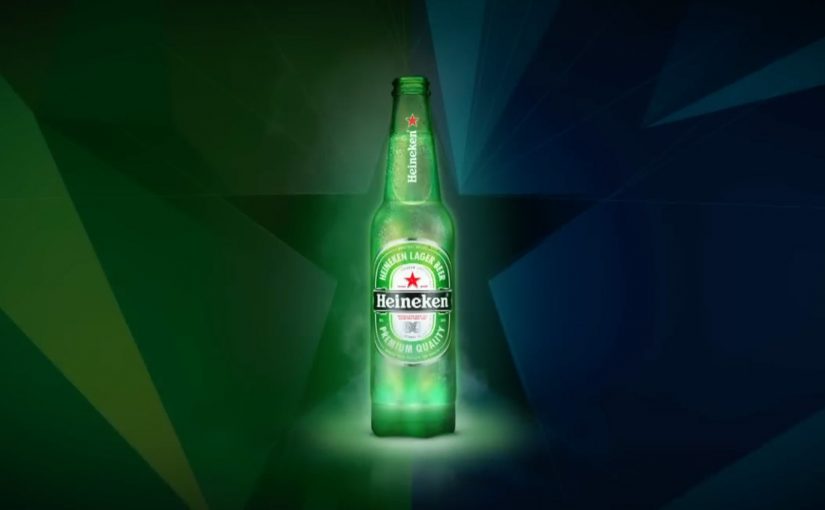
These interactive bottles are designed to react to the gestures that already define a night out. Cheer and clink bottles together and the LEDs flash. Drink and the light pattern speeds up. Put the bottle down and it shifts into an idle “breathing” mode. Here, “breathing” means the LEDs pulse slowly when the bottle is stationary. The concept also includes software control so bottles can synchronize to music cues for a coordinated light show.

Heineken Ignite is a prototype bottle module that combines LEDs, motion sensing, and wireless synchronization so the bottle becomes part of the club experience, not just the drink in your hand.

Why it lands. When the bottle becomes the signal

What separates this from a gimmick is the engineering story. Coverage around the prototype describes an Arduino based circuit board housed in a reusable 3D printed casing that clips onto the bottom of a standard bottle. The electronics include multiple LEDs, a motion sensor to detect cheers and drinking, and wireless connectivity so the “party” effect can spread across a room. Wireless synchronization matters because it scales the effect from one person’s bottle to a room level cue that people can notice together. This is not a gimmick.

Extractable takeaway: If you want a brand experience to spread in a venue, instrument the object people already hold so natural gestures trigger visible, shared feedback.

This is also why the commercial challenge is real. In prototype form, the tech sits in an external module. To reach a mass market use case, the experience needs to be cheaper, smaller, and embedded, not attached. The real question is whether the connected layer can be made cheap and embedded enough that the bottle ships as the interface, not an accessory.

In European nightlife culture, the most effective brand innovation is the kind that turns the product itself into a social signal.

Why it was shown at Milan Design Week

The concept was unveiled during Milan Design Week as part of Heineken’s future of nightlife exploration. That matters because it frames the bottle as design plus experience, not only packaging. It is a statement about how brands might use connected objects to shape atmosphere in shared spaces.

Recognition and why it matters

Heineken later reported that its Ignite bottle earned a Silver Lion at Cannes Lions 2013 for Exhibitions or Live Events, as part of a broader set of design and innovation activations. Awards do not make a product viable, but they do validate that the idea is legible as a new format for brand experience.

Steal the pattern: product-led nightlife cues

  • Use the product as the interface. When the object in hand is the experience, you do not need to fight for attention elsewhere.
  • Design for social gestures. “Cheers” is a better trigger than any forced interaction because people already do it.
  • Make synchronization the payoff. One glowing bottle is a toy. A room that reacts together is a moment.
  • Prototype in public. Early demonstrations can generate press and learning long before the supply chain is ready.

A few fast answers before you act

What is Heineken Ignite?

Heineken Ignite is a prototype “smart bottle” concept that uses LEDs, motion sensing, and wireless synchronization so the bottle lights up in response to cheers, drinking gestures, and music cues in club environments.

How does the prototype work technically?

Reporting describes a clip-on module under the bottle that houses an Arduino based circuit board, LEDs, motion sensing, and wireless connectivity. The module detects motion patterns and can coordinate lighting across multiple bottles.

Why is syncing to music the key feature?

Because it turns individual behavior into shared atmosphere. Synchronization makes the experience visible at a crowd level, which is what creates talkability and makes the brand feel “in the room”.

What is the biggest barrier to commercializing a concept like this?

Miniaturization and cost. A clip-on prototype can prove the idea, but mass market use needs the tech to be smaller, cheaper, and more seamlessly integrated into production packaging.

What is the main marketing lesson here?

If you want to own a nightlife moment, design around existing social rituals. When the trigger is already natural, the experience feels additive instead of forced.