
Hellmann’s: Recitweet

In the past, Hellmann’s has used novel ways to encourage consumers to use their mayonnaise for more than just sandwiches. Now, for their latest campaign, they team up with Ogilvy Brazil to create Recitweet.

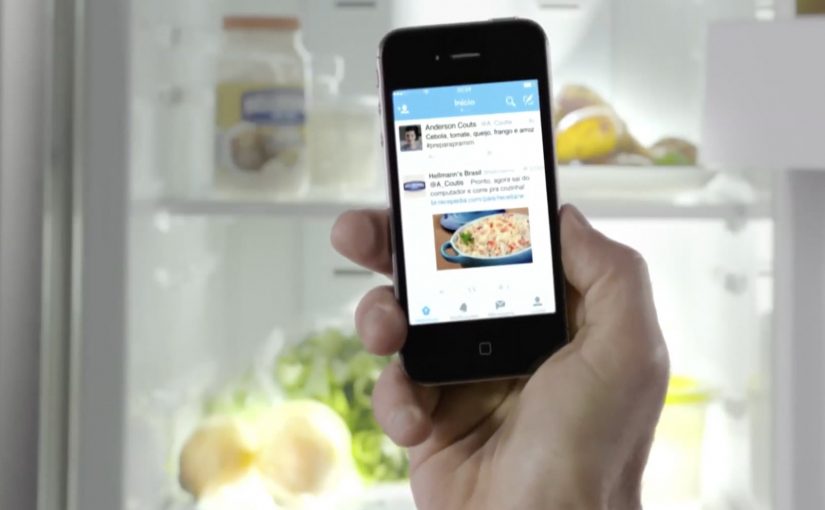
The use case is instantly familiar. You open the fridge, you see ingredients, and you still do not know what to cook. With Recitweet, consumers tweet their ingredients with the hashtag #PreparaPraMim (“prepare for me” in Portuguese). Hellmann’s replies with a recipe that is designed to use those exact ingredients.

A recipe engine built on a social reply

The mechanism is ingredient matching through a public tweet. The input is a short list of what you have at home. The output is a tailored recipe suggestion delivered back as a tweet reply, so the brand behaves like a lightweight cooking helper rather than a broadcaster.

In FMCG food brands, this utility-led social pattern turns content into a small service that appears at the exact moment the consumer is stuck.

The real question is: can a food brand reliably remove the “what should I cook” hurdle in the channel where people already ask for help. When you can answer fast and specifically, the helper role beats another round of broadcast recipes.

Why it lands

It respects the consumer’s real problem. “I have food, I lack an idea.” The campaign does not start with a product claim. It starts with a decision obstacle, then uses the brand to remove it. That makes the engagement feel earned, because the interaction produces something usable in the next 30 minutes.

Extractable takeaway: If your product is an ingredient, win by solving the “what do I do with what I already have” question. Make the brand the shortest path from inventory to action, using the channel where the consumer already asks for help.

Stealable moves for social utility

  • Constrain the input. A short list of ingredients forces clarity and makes the interaction easy to start.
  • Return a specific next step. A recipe beats a generic tip, because it includes implied quantities, sequence, and outcome.
  • Make the service feel personal, at scale. The reply is the moment of value. Treat it like customer service, not advertising copy.
  • Design for repeat behavior. The best activations are not one-off stunts. They create a habit loop people can use again the next time the fridge looks random.

A few fast answers before you act

What is Recitweet in one sentence?

Recitweet is a Twitter-based recipe helper that takes a list of tweeted ingredients and replies with a recipe designed to use them.

Why use a hashtag like #PreparaPraMim?

It standardizes the request so the brand can find, process, and respond to it consistently, while keeping participation friction low.

What makes this more effective than posting recipes on a website?

It is contextual and initiated by the consumer. The recipe arrives when the person is actively deciding what to cook, using what they say they have.

What is the minimum viable version of this idea?

A constrained ingredient input and a fast, specific reply that gives one clear next step, without forcing the consumer to leave the channel to “go search.”

What is the biggest operational risk?

Response quality and response time. If replies are slow, irrelevant, or repetitive, the “service” framing collapses and it starts to feel like a gimmick.

Giraffas: The Goal Screen

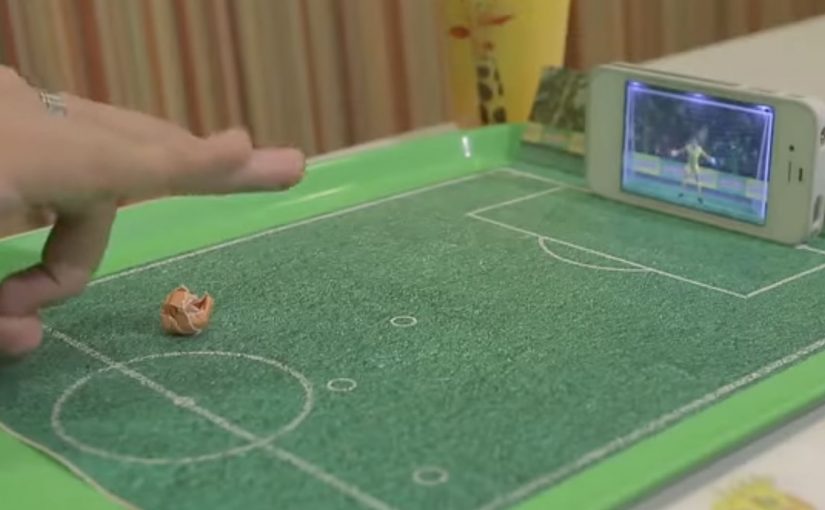
To capitalize on the lead up to the 2014 FIFA World Cup, Brazilian fast food chain Giraffas creates a mobile game that turns their tray papers into a virtual soccer field. To play, consumers rip the side of the paper tray, make a paper ball, and flick it into their mobile screens.

7 million tray papers are printed, and the game is made possible by using the smartphone camera to recognize the ball distance, the accelerometer to identify the trajectory of the kick, and the microphone to recognize the area of impact.

A game that bridges paper and screen

The mechanism is a simple physical ritual, meaning a repeatable action with objects already on the tray, that unlocks a digital experience. The tray liner provides the “pitch”. The paper ball provides the input. The phone turns sensors into a referee, translating distance, direction, and contact into gameplay.

That matters because the tray liner and paper ball remove setup friction, so the leap from noticing the idea to trying it stays almost instant.

In quick-service restaurants, the strongest interactive ideas add value during the waiting and eating moment, without requiring staff training or extra hardware at the counter.

The real question is how little effort a brand can ask of people before play feels easier than ignoring it.

Why it lands

The strongest part of the idea is not the World Cup tie-in. It is the packaging mechanic that makes play feel native to the meal. This works because it turns a disposable surface into a reason to play, and it makes participation feel immediate. It is not “download an app for later”. It is “play right now, with what you already have, while you are here”. The World Cup context supplies motivation, but the in-store simplicity supplies repeatability.

Extractable takeaway: When you want in-the-moment engagement, design a physical trigger that is already in the customer’s hands, then use the phone only as the translator. The fewer steps between curiosity and action, the more people actually try it.

What to borrow from this tray-to-screen mechanic

  • Use packaging as the interface. If your brand owns a surface (tray liners, cups, wrappers), it can become the entry point.
  • Make the first attempt effortless. Rip, roll, flick. Three verbs. No instructions wall required.
  • Exploit phone sensors, not novelty tech. Camera, accelerometer, and microphone are scalable because they are already everywhere.
  • Anchor to a cultural moment, but keep it evergreen. The event creates urgency, the mechanic creates habit.

A few fast answers before you act

What is “The Goal Screen” for Giraffas?

It is an in-store mobile game that turns Giraffas tray papers into a virtual soccer field, using a paper ball that customers flick into their phone screen.

Why does the paper tray matter to the experience?

The tray paper acts as the physical “pitch” and the trigger for play, making the game feel native to the restaurant moment.

How does the phone detect the kick?

The setup is described as using the camera for distance, the accelerometer for trajectory, and the microphone for impact area.

What is the marketing objective behind this kind of mechanic?

To make the in-store visit more entertaining and memorable, and to create a reason to interact with the brand during the meal.

What is the transferable lesson for other brands?

Turn a ubiquitous brand touchpoint into a play surface, then use the phone as a lightweight sensor hub that makes the interaction feel “magical” without added hardware.

KLM: Surprise

KLM launched a social media customer engagement idea that starts with a simple observation: waiting to board is boring, and “price messages” do not help anyone in that moment. So the brand looks for passengers who check in on Foursquare for flights or tweet about waiting to board a KLM service, then surprises a few of them to see how happiness spreads.

From check-in signal to gate-side surprise

The mechanic is straightforward. Someone publicly signals they are flying KLM or waiting at the gate. The team selects a passenger, scans what that person has publicly shared across social profiles, and chooses a small, relevant gift. Then they hand-deliver it at the airport gates.

In airline customer experience, social signals can be converted into small, high-salience service moments that strengthen loyalty without changing the core product.

Why this beats generic “engagement”

Many brands greet customers after a check-in, and that is already a best practice on location platforms. KLM Surprise goes further because it moves from acknowledgement to action. Because the team delivers the surprise at the gate while the passenger is waiting, the gesture lands as relief, not advertising. The passenger gets something real, in real time, in the same physical context where frustration often accumulates.

Extractable takeaway: When you can act on an intent signal in the same moment and place it was expressed, the interaction reads as service and earns talk value without needing a big reward.

The real question is whether public intent signals can trigger timely, human service moments that customers will retell.

Brands should treat public social signals as service triggers, not engagement bait.

The personal touch is the product

The gift is intentionally small. The point is that it is specific. That specificity tells the passenger the brand paid attention, not that the brand spent money. It also turns the interaction into a shareable story because it feels improbable. Someone noticed me. Someone acted on it. Someone found me.

What the brand is really testing

Beyond the feel-good moment, this functions as a live experiment in social CRM: can public signals help identify passengers worth surprising, and can a human-scale intervention create disproportionate talk value? Here, “social CRM” means using public social signals to choose and personalize service actions for known customers. The campaign also quietly reframes “social media” as a service channel, not only a marketing channel.

Stealable moves from KLM Surprise

  • Trigger on clear intent signals. Check-ins and “waiting to board” posts are unambiguous moments where help or delight is welcome.
  • Keep the benefit small but specific. Relevance beats value. A perfect small gift travels further than a generic large one.
  • Deliver in the same context as the pain. Airport gates are where waiting is felt. That is why the gesture matters.
  • Make it operationally repeatable. A lightweight process and a small budget lets the idea run more than once without becoming theatre.

A few fast answers before you act

What is KLM Surprise in one line?

A real-time airport activation where KLM monitors public check-ins and tweets, selects passengers, then delivers small personalized gifts at the gate.

Why does it work better than simply replying on social?

Because it converts acknowledgement into action in the physical world, creating a stronger memory and a more shareable story.

Is the gift the main value?

No. The main value is the signal of attention and timing: “you were noticed” and “it happened right now when waiting felt longest”.

What is the transferable lesson for other brands?

Use public intent signals to trigger small, context-relevant service moments that are easy to repeat and easy for customers to retell.

What needs to be true to run this more than once?

A lightweight workflow for monitoring signals, selecting passengers, choosing small relevant gifts, and delivering them at the gate, plus a modest budget and clear staffing ownership.