
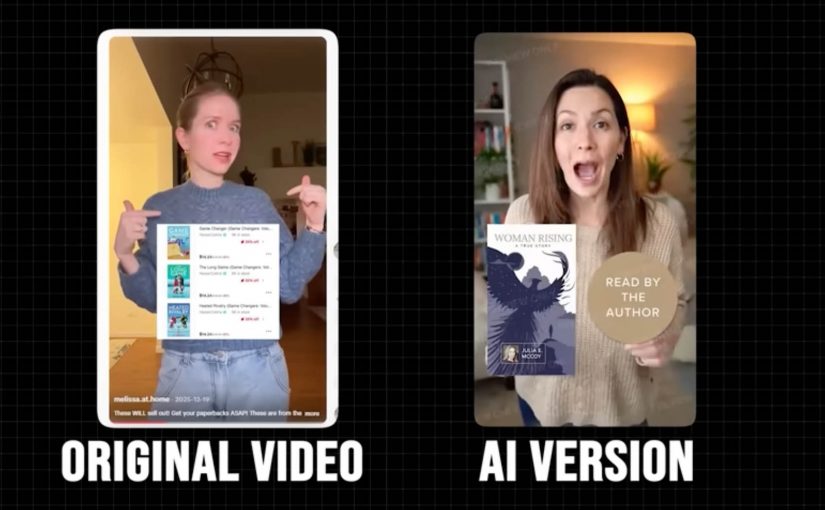
Viral Content: Clone Winning Ads in Minutes

Viral Content: Clone Winning Ads in Minutes

Viral video creation is shifting from a production task to an operating-model question, and Topview AI is a useful example.

For years, short-form performance video lived in two modes. Manual production that is slow and expensive. Or template-based generators that are faster, but still force you into lots of manual re-work.

Now a third mode is emerging: AI Video Agents, meaning systems that take a short brief plus a few inputs and generate a complete multi-shot draft you can iterate on.

The shift is simple. Instead of editing frame-by-frame, you brief the outcome. Optionally provide a reference viral video. The agent then recreates the concept, pacing, and structure for your product in minutes. Your job becomes direction, constraints, and iteration. Not timelines.

Meet the AI Video Agent “three inputs” workflow

Topview’s core promise is “clone what works” for short-form marketing.

Upload your product image and/or URL so the system extracts what it needs. Share a reference viral video so it learns the shots and pacing. Get a complete multi-shot video that matches the reference style, rebuilt for your product.

That is the operational unlock. You stop asking a team to invent from scratch every time. You start generating variants of formats that already perform, then iterate based on outcomes.

In enterprise teams, that makes this less a content toy and more a new layer in the performance-creative operating model, where briefing quality, asset governance, and measurement discipline matter more than raw production capacity.

That changes what teams need to get right. Faster generation only creates value when the workflow improves how quickly the team learns what to scale.

What “cloning winning ads” really means

This is not about copying someone’s assets. It is about cloning a repeatable pattern.

Extractable takeaway: When a workflow can reliably regenerate a proven creative structure, the bottleneck shifts from making assets to choosing angles, proof, and guardrails that improve one test at a time.

High-performing short-form ads tend to share the same backbone. A strong opening. A clear value moment. Proof. A simple call-to-action. The variable is the angle and execution. Not the structure.

AI video agents are optimized to reproduce that backbone at speed, then let you steer the angle. Because the agent reuses a proven structure, you can spend your time on angles and proof, which increases iteration velocity. That is why they matter for performance teams. The advantage is iteration velocity. The risk is sameness if you do not bring differentiation in offer, proof, and brand voice.

What to evaluate beyond the AI Video Agent headline

I would not judge any platform by a single review video. I would judge it by whether it covers the tasks that constantly slow teams down.

From the “creative tools” surface, Topview positions a broader toolbox around the agent, including: AI Avatar and Product Avatar workflows, plus “Design my Avatar”. LipSync. Text-to-Image and AI Image Edit. Product Photography. Face Swap and character swap workflows. Image-to-Video and Text-to-Video. AI Video Edit.

This matters because real creative operations are never “one tool.” They are a chain. The more of that chain you can keep inside one workflow, the faster your test-and-learn loop becomes.

The practical question is whether that workflow plugs cleanly into your brand-asset flow, approval model, paid-social activation, and testing cadence without creating new review debt.

Topview alternatives. Choose by workflow role, not by hype.

If you are building an enterprise creative stack, choose these tools by workflow role, asset control, and measurement fit, not by demo quality.

HeyGen

HeyGen positions itself around highly realistic avatars, voice cloning, and strong lip-syncing, plus broad language support and AI video translation. It also supports uploading brand elements to keep outputs consistent across projects. Compared to Topview’s short-form ad focus and beginner-friendly “quick publish” style workflow, HeyGen is often the stronger fit when avatar-led and multilingual presenter content is your primary format.

Synthesia

Synthesia is typically strongest for presenter-led videos, especially training, internal communications, and more corporate-grade marketing explainers. Compared to Topview’s short product ad focus, Synthesia is often the cleaner fit when a human-style presenter is the core format.

Fliki

Fliki stands out when your workflow starts from existing assets and needs scale. Blogs, slides, product inputs, and team updates converted into videos with avatars and voiceovers, plus a large set of voice and translation options. Use Fliki when you want breadth and flexibility in avatar and voiceover production. Otherwise, use Topview AI when your priority is easily creating short videos from links, images, or footage with minimal workflow friction.

Operating moves for AI video agents

The real question is whether your team can turn minutes-long production into a disciplined iteration system without losing distinctiveness.

My take is that viral content is no longer mainly a production problem. It is an operating-model problem, because speed only compounds value when briefs, proof, guardrails, and learning loops are already in place.

  • Brief for outcomes, not assets. Define the hook, value moment, proof, and CTA before you generate variants.
  • Constrain sameness early. Put brand voice, offer boundaries, and “do not do” rules into the brief so speed does not turn into remix culture.
  • Run a ruthless learning loop. Test fewer, better variants. Kill quickly. Scale only what proves incremental lift.

Which viral video would you recreate first. And what would you change so it is unmistakably yours, not just a remix.


A few fast answers before you act

What does “clone winning ads” actually mean?

It usually means generating new variants that reuse the structure of high-performing creatives. The goal is to speed up iteration, not to copy a single ad one-to-one.

Is this ethical?

It depends on what is being “cloned.” Reusing your own learnings is normal. Copying another brand’s distinctive IP, characters, or protected assets crosses a line. Governance and review matter.

What will still differentiate brands if everyone can produce fast?

Strategy, customer insight, and taste. If production becomes cheap, the competitive edge moves to positioning clarity, creative direction, and the quality of testing and learning loops.

How should teams use this without flooding channels with slop?

Use strict briefs, clear brand guardrails, and a limited hypothesis set. Test fewer, better variants. Kill quickly. Scale only what proves incremental lift.

What is the biggest risk?

Over-optimizing for short-term clicks at the expense of brand meaning, trust, and distinctiveness. High-volume iteration can become noise if the work stops saying something specific.
InVideo AI: Future of Ads, or Slop at Scale?

InVideo AI: Future of Ads, or Slop at Scale?

InVideo just dropped a campaign that matters less for whether you like the ad, and more for what it signals about how content production is changing.

Not because the ad itself is “good” or “bad.” But because of what it demonstrates.

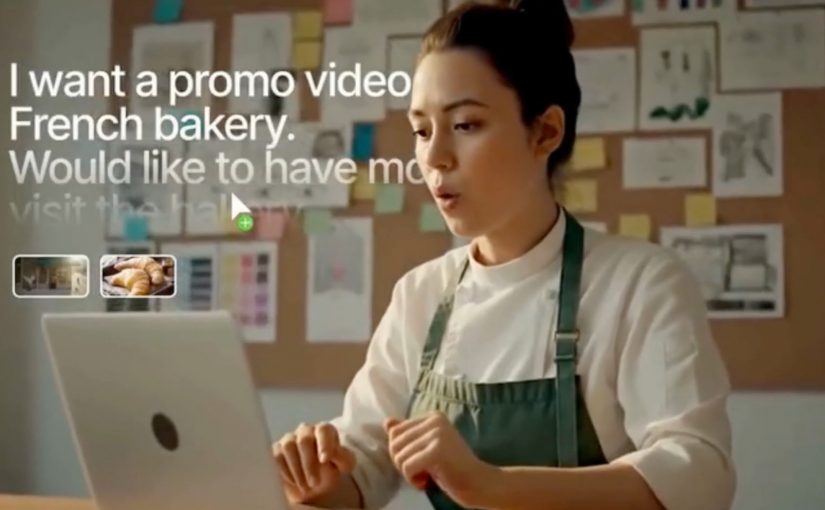
The premise is simple. A local business wants awareness and local footfall. A single prompt arrives. Then a “creative team” appears on screen. A writer, director, producer, and sound designer. They brainstorm, storyboard, pull assets, debate tone, change direction midstream, swap narrators, land a punchline, and ship a finished promo.

The twist is that the “team” is not human. It is AI agents collaborating in real time. Here, “AI agents” means role-based AI workers that each own part of the task and iterate toward a shared output.

What matters here is not whether the ad is good or bad, but that agentic production is starting to compress the path from brief to channel-ready asset.

So let’s unpack what’s actually happening here. The shift.

What this campaign is really showing

On the surface, it’s a product story.

Under the surface, it’s a proof-of-concept for a new production model. Prompt-to-video (turning a single intent into a finished video in one workflow), orchestrated by role-based agents, pulling from your assets, and iterating like a team would.

That matters because we are crossing a line:

  • Yesterday: AI helped you edit.
  • Today: AI can generate components.
  • Now: AI attempts to run the full production loop. Brief to concept to execution to polish.

If that sounds incremental, it isn’t. The bottleneck in content has never been “ideas.” It has been translation. Turning intent into something shippable, on brand, on time, and fit for a channel.

This is what changes. The translation cost collapses.

Because the work is split into roles that can iterate through decisions, the system can converge on a shippable cut faster than a single prompt that produces one draft.

The “agents” idea. Why it clicks so hard

Most AI video tooling gets described as features: text-to-video, voiceover, stock replacement, templates.

Agents are a different mental model. They mimic how work gets done.

Instead of one tool trying to be everything, you have multiple role-based systems that divide the labor:

  • Writer: Hook, script, narrative beats
  • Director: Framing, pacing, scene intent
  • Producer: Assets, structure, feasibility, assembly
  • Sound designer: Voice, music cues, timing, emphasis

The output is not just “a video.” It’s a workflow that looks like collaboration.

And that’s why the campaign is sticky. It doesn’t just show a capability. It shows an operating model.

Fast definition. What “AI agents” means in this context

AI agents are role-based AI workers that take responsibility for a portion of the task, coordinate with other roles, and iteratively refine toward a shared goal.

In practical terms, this is orchestration. Task decomposition. Decision loops. And multi-step iteration that feels closer to a real production process than a single prompt and a single output.

In enterprise marketing teams, agentic video tools compress production time while making governance, briefing quality, and brand standards the real constraints.

In enterprise environments, the real unlock is not generation alone, but connecting agentic creation to brand systems, DAM, approval workflows, localization, and performance measurement.

Why the bakery storyline matters. It’s not about video

The reason this lands is the bakery.

Extractable takeaway: When production becomes cheap and fast, advantage shifts from making assets to owning the constraints. Brief clarity, brand standards, and POV become the bottleneck.

A small business is a stand-in for every team that has historically been excluded from “premium” creative production. Not because they lacked ideas, but because they lacked:

  • Budget
  • Time
  • Specialist talent
  • Access to production infrastructure

If AI production becomes cheap and fast, a new baseline emerges.

For large organizations, the implication is different. Once production access is commoditized, content operations and control architecture become the source of advantage.

Customer expectations tend to move in one direction. Up.

We’ve seen this pattern repeatedly elsewhere:

  • Shipping went from weeks to days. Then days to “why isn’t it here tomorrow?”
  • Support went from office hours to 24/7 chat.
  • Information went from gatekept to instant.

Content is heading the same way.

When a local business can generate credible, channel-ready creative quickly, the competitive advantage shifts away from “who can produce” and toward “who can differentiate.”

So is this the future of content. Or a shortcut that kills creativity?

Both outcomes are plausible, because the tool is not the strategy.

Here are the three trajectories I think matter.

1) Creativity gets unlocked for more people

AI reduces the friction between an idea and a first draft. That can empower founders, small teams, educators, non-profits, internal comms teams, and marketers who have always had the brief but not the bandwidth.

If you’ve ever had a good concept die in a doc because production was too heavy, you know how big this is.

The upside version of the future looks like:

  • More experimentation
  • More niche creativity
  • More localized storytelling
  • Faster learning cycles

2) The internet floods with “content wallpaper”

When production becomes cheap, volume spikes. When volume spikes, attention gets harder. When attention gets harder, teams chase what performs. When teams chase what performs, sameness creeps in.

The downside version of the future looks like:

  • Infinite mediocre ads
  • Homogenized pacing and tone
  • Interchangeable visual language
  • “Good enough” content dominating feeds

That’s the fear behind “slop at scale.” Not that content exists. That it becomes meaningless.

3) Premium creative becomes more premium

There is a third outcome that’s often missed.

When baseline production becomes abundant, true differentiation becomes rarer.

Human advantages do not disappear. They concentrate around the things AI struggles with reliably:

  • Strategy and intent. What are we trying to change in the market?
  • Cultural nuance. What does this mean here, with these people?
  • Original point of view. What do we stand for that others don’t?
  • Brand taste. What is “on brand” beyond templates?
  • Ethical judgment. What should we not do even if we can?
  • Lived insight. What’s the human truth behind the message?

In that world, AI does not replace creative leaders. It raises the bar on them.

The practical question every marketing leader needs to answer

People debate whether AI can “replace creatives.” That’s not the operational question.

The real question is: Where do you want humans to be irreplaceable, and where do you want machines to be fast?

Because if AI handles production, your competitive edge moves to:

  • The quality of your briefs
  • The clarity of your brand system
  • The strength of your POV
  • The governance of your outputs
  • The measurement of creative impact
  • The speed of iteration without brand drift
  • How cleanly the workflow plugs into your content supply chain, approval model, and channel measurement

A simple maturity test you can run this week

If AI can produce at scale, the risk is not “bad videos.” It’s unmanaged systems.

Ask this:

Who owns the continuous loop of prompting, testing, learning, scaling, and deprecating AI-driven creative workflows in your organization?

If the answer is “no one,” you don’t have an AI capability. You have scattered experiments.

My take

Production is getting cheaper. Differentiation is getting harder.

So the real decision is not whether you can generate more content. It’s whether you can scale output without losing taste, brand truth, and accountability.

Is this the future of content. Or a shortcut that kills creativity? It depends on who owns the brief, who owns the guardrails, and who is willing to say no.

Operating rules for agentic video ads

  • Make ownership explicit. Assign a named owner for the prompting, testing, scaling, and deprecating loop.
  • Brief before volume. Treat brief quality as the lever, not output quantity.
  • Lock the brand system first. Define templates, tone rules, and claim constraints before you automate.
  • Measure drift, not just speed. Track time saved alongside brand drift and performance deltas.
  • Use “no” as a control. Write down what should not ship, and enforce it with review gates.

A few fast answers before you act

Can AI agents replace a creative team?

They can replicate parts of the production workflow and speed up iteration. They do not replace strategy, taste, accountability, and cultural judgment, which still need named human owners.

What does “prompt-to-video” actually mean?

It’s the ability to turn a single intent into a finished video. Script, scenes, voice, music, edit, and formatting produced in one workflow without traditional filming or manual timeline work.

Does this inevitably create “slop at scale”?

It can if teams optimize for speed and volume over differentiation. The practical antidote is stronger briefs, sharper constraints, and explicit review gates for brand and claims.

Where should humans stay irreplaceable?

Brief quality, brand standards, and the decision-making layer. What to say, what not to say, what is true, what is appropriate, and what is distinctive.

What is the first governance step before scaling AI video?

Assign ownership for the continuous loop. Prompting, testing, learning, scaling, and deprecating workflows, plus a clear approval policy for what can ship.

What is a safe pilot to run in the next 2 weeks?

Pick one repetitive internal format, lock a brand template, and run A to B tests with human review. Measure time saved, brand drift, and performance deltas before expanding to paid ads.

AEO for Brands: The New Search Operating Model

AEO for Brands: The New Search Operating Model

SEO is becoming AEO. From clicks to citations

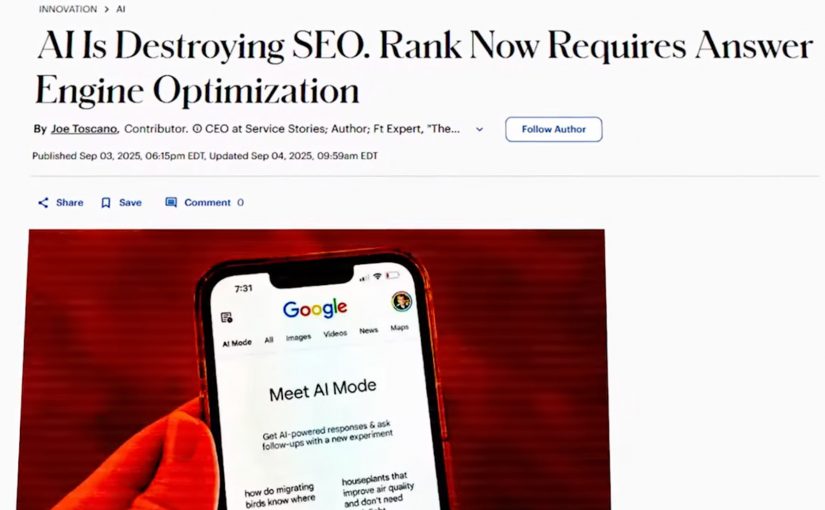
Answer Engine Optimization (AEO) is the practice of structuring content so AI-powered search experiences can extract, summarize, and cite it as the best answer to a user’s question. Traditional SEO optimizes for blue-link rankings and click-through. AEO optimizes for inclusion and citation inside the answer itself.

That is the practical difference. Traditional SEO is built to win rankings and clicks. AEO is built to win inclusion in the answer itself by making your content easy to parse, easy to trust, and worth citing inside Google AI Overviews and AI-driven search experiences.

How AEO earns citations

The real question is whether your page can be extracted, summarized, and cited as the best answer to a user’s question without the system having to guess what you meant.

If you want to “rank #1” in the AI era, stop treating search as a list of links and start treating it as an answer ecosystem. By answer ecosystem, I mean AI-driven search experiences where the interface returns answers instead of links. Publish content that is easy to extract, unambiguous in structure, and defensible with evidence. Evidence means primary sources, concrete numbers, named examples, and claims you can back up with reputable third-party references. Then reinforce it with authority signals beyond your site, because answer engines learn trust from repeated third-party validation.

In enterprise marketing organizations, this shifts content work from chasing marginal ranking gains to engineering pages that can be cited inside the answer layer.

This is not just a copywriting adjustment. It is an operating model issue spanning content templates, source governance, subject-matter expert review, and measurement.

At scale, AEO performance is constrained less by isolated writing tips and more by the platform layer. CMS structure, schema discipline, internal-linking rules, and entity consistency determine whether extractable content can be produced repeatedly across brands and markets.

Why citations beat clicks

As AI summaries appear more frequently across search results, the competitive battleground shifts upward. Visibility concentrates inside the generated answer. The winning strategy becomes “earn the citation,” not just “earn the click.”

Extractable takeaway: In answer-first search, the unit of competition is the claim, not the page. Write claims so they can be lifted and attributed without losing meaning.

The video below breaks down a practical 6-step AEO framework any brand can implement immediately. The objective is simple. Earn the citation, not just the click.

A 6-step AEO framework brands can implement now

  1. Target long-tail conversational questions
  2. Prioritize low-competition AEO opportunities
  3. Match informational intent, then design a conversion path that fits
  4. Optimize for multi-feature SERP visibility, not one placement
  5. Build brand authority through third-party mentions and citations
  6. Run an AEO gap analysis to find where competitors are cited and you are not

The winners will be the brands whose pages are consistently extractable and consistently corroborated. They become the sources AI systems cite when summarizing a category, problem, or decision. The losers will be the ones still optimizing only for yesterday’s SERP.

AEO moves worth copying

  • Declare the dominant question. Make one user question the page answers unmistakable, then align headings and copy to it.
  • Lead with answers, then depth. Put the crisp definition or decision first, then expand.
  • Make claims defensible. Use primary sources, concrete numbers, and named examples you can stand behind.
  • Engineer for citation. Write paragraphs that pass a standalone copy test without missing context.

A few fast answers before you act

What is Answer Engine Optimization (AEO)?

Answer Engine Optimization is the practice of structuring content so it can be directly extracted and used as an answer by AI systems and modern search interfaces. The goal is to be the cited, summarized, or recommended response when the interface returns answers instead of links.

How is AEO different from SEO?

SEO primarily optimizes for ranking in a list of results and earning clicks. AEO optimizes for being included in the generated answer itself. SEO still matters, but AEO focuses more on extractability, clarity, and trusted corroboration.

What is the fastest way to make a page “answerable”?

Use clear headings that match real questions, then answer each question in one concise paragraph before expanding. Define terms explicitly. Use short lists where helpful. Remove ambiguity so an AI can quote or summarize accurately.

How do you improve your chances of being included in AI answers?

Make your entity and topic signals consistent across your site. Use the same names for products, concepts, and frameworks. Support claims with specifics. Ensure the page aligns to one primary intent so the system can confidently select it.

What should you measure if clicks decline but visibility increases?

Track inclusion. Monitor whether your brand or page is referenced in AI answers for your key topics. Combine that with classic metrics like impressions, branded search lift, and downstream conversions, because the click is no longer the only proof of impact.

What is a practical starting playbook for AEO?

Pick 10 to 20 pages that already perform well or match your core topics. Add a clean question-based heading structure. Write crisp answers first, then detail. Ensure internal linking reinforces the same entity and topic cluster. Iterate based on query themes and inclusion signals. Run that as a named pilot with one accountable owner, a citation-inclusion KPI, and a downstream conversion checkpoint before scaling the model.