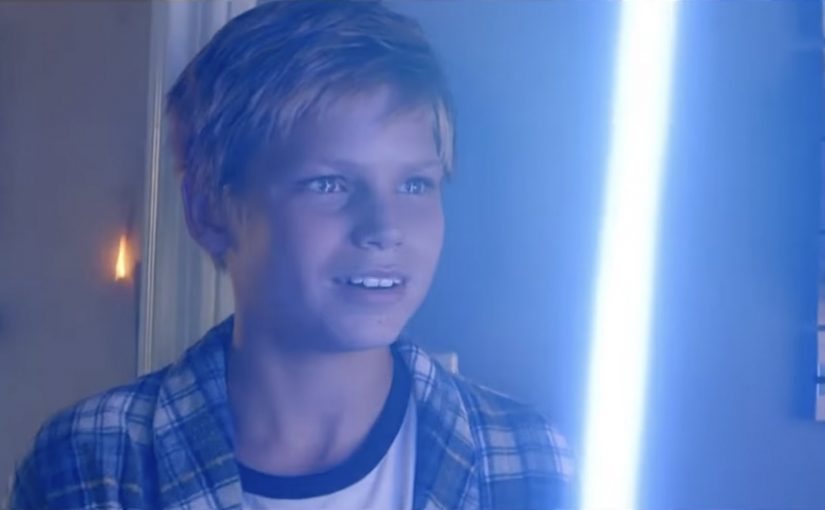
360 Videos on Facebook

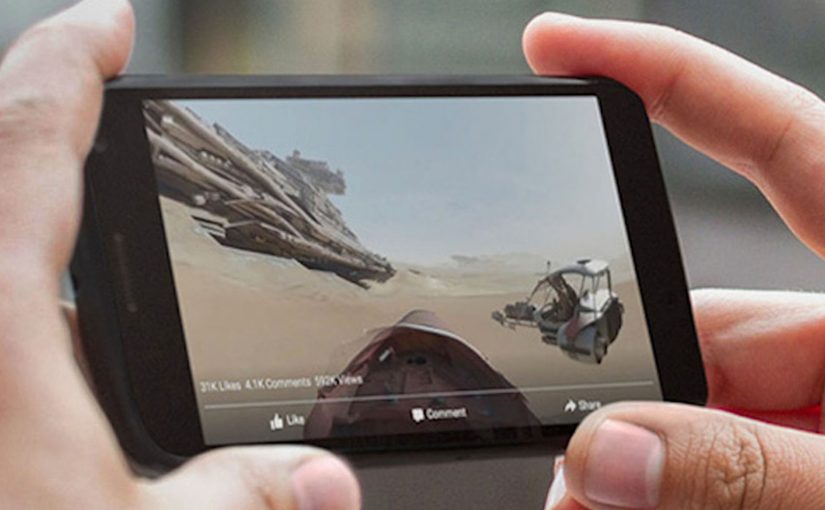
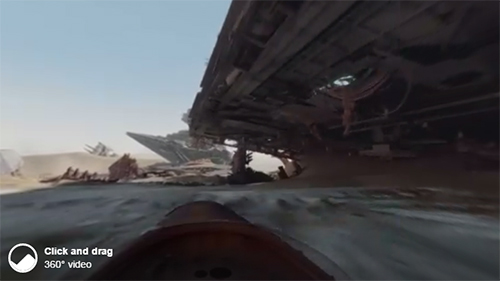
Disney drops you into the Star Wars universe. You can pan around the scene and explore the world in 360 degrees as part of the launch hype for The Force Awakens. It is one of the first big brand uses of Facebook’s new 360-degree video support.


(Note: View the video directly on Facebook by clicking on the above image.)

Next, GoPro pushes the same format into action sports. A 360-degree surf film with Anthony Walsh and Matahi Drollet lets you experience the ride in a more immersive, head-turning way than a standard clip.

gopro
(Note: View the video directly on Facebook by clicking on the above image.)

Facebook makes 360 video a native format

In September, Facebook launches 360-degree video support. That matters because it turns a niche format into a platform behaviour. Brands can publish immersive video where the audience already is, without asking people to install anything new.

Mobile rollout is the unlock

Facebook announces that 360 video support is rolling out to mobile devices, so it is no longer limited to desktop viewing. That is the moment the format becomes mainstream.

Why brands care. Distribution scale

Facebook’s own numbers underline why marketers pay attention. The platform cites more than 8 billion video views from 500 million users on a daily basis (as referenced in the Q3 2015 earnings context). If 360 video becomes part of that daily habit, it is a meaningful new canvas for storytelling and experience marketing.

Facebook supports creators with a 360 hub

To accelerate adoption, Facebook launches a dedicated 360 video microsite with resources like upload guidelines, common questions, and best practices.


A few fast answers before you act

What launches the 360 format on Facebook in this post?
Facebook adds native support for 360-degree video, and early brand examples quickly follow.

Which two examples headline the post?
Disney promoting Star Wars: The Force Awakens, and GoPro publishing a 360 surf video with Anthony Walsh and Matahi Drollet.

What changes when mobile support rolls out?
360 viewing is no longer limited to desktop, which makes the format accessible in everyday mobile usage.

What scale stats are cited to show why this matters?
More than 8 billion video views from 500 million users on a daily basis.

Where does Facebook publish creator guidance?
A dedicated 360 video microsite with upload guidelines and best practices.

Life of George

Its an exciting time for 12 year olds as they witness the first wave of electronic gaming i.e. digital-to-physical gameplay. Last year Disney announced a new line of toys called Disney Appmates that worked in tandem with the iPad. Now with “Life of George”, Lego has combined real Lego bricks with an app for your iOS and select Android devices.

In the game George shows you a picture from his travels and asks you to recreate it using Legos. You have to dig around in your box of 144 pieces to recreate the image and then take a picture of it on the dotted playmat. The app also has a brick recognition system that awards you points for speed and accuracy.

The game is pretty useful as kids don’t need to lug their entire Lego collection around. While for parents the game helps in teaching counting and hand-eye coordination as you need to find blocks as quickly as possible and then put them together.

Disney: Mickey Mouse brings magic to NYC

You step into the Disney Store in Times Square and suddenly you are “in” a Disney moment. A live screen blends you into a scene and Mickey appears alongside you, reacting in real time as the crowd watches.

Disney Parks uses the installation to celebrate Mickey Mouse’s 83rd birthday this month, turning a store visit into a small piece of theatre that people naturally photograph and share.

The mechanism is straightforward. A live camera feed captures guests, then an augmented reality layer places Disney characters and effects into the scene so it looks like the magic is happening around you, not only on a separate screen.

In flagship retail environments, live augmented reality installations convert foot traffic into shareable content by making the store itself behave like media.

Disney is also using a Twitter hashtag #DisneyMemories to track the experiences at Times Square and the campaign, so the physical moment has a simple, searchable social trail.

Why this lands in Times Square

Times Square is already a stage. The installation does not fight the noise with more noise. It creates a personal moment inside the noise, where the viewer becomes part of the story. That shift from watching to participating is what earns the stop-and-stare crowd.

Hashtag as a lightweight amplification layer

The hashtag is not the idea. It is the plumbing. It lets Disney connect hundreds of individual “I was there” posts into one visible stream, without asking people to learn a new platform or download anything beyond what they already use.

The same live AR pattern shows up elsewhere

This style of live augmented reality is showing up more often in brand-led events, because it creates instant participation without complex instructions. You have already pointed to similar executions from National Geographic and Lynx, where the screen becomes a “portal” and the audience becomes part of the scene.

What to steal for your own live-event experience

  • Make the first second readable. People should understand what is happening from across the room.
  • Design for bystanders. The crowd experience matters, because the crowd is the distribution engine.
  • Attach one simple social handle. A hashtag or keyword is enough when the moment is already worth sharing.
  • Keep the tech invisible. The audience should remember the feeling, not the hardware.

A few fast answers before you act

What is the Mickey Mouse Times Square augmented reality installation?

It is a live in-store experience at the Disney Store in Times Square that places guests into a real-time scene with Disney characters using an augmented reality layer on a live camera feed.

Why does this work as a retail activation?

Because it turns a store visit into a participatory moment. People do not just browse. They become part of a scene worth filming and sharing, which extends reach beyond the store.

What role does #DisneyMemories play?

It creates a single social thread for many individual posts, helping Disney track and aggregate the shared experiences without adding friction to the in-store moment.

How is this different from a typical photo booth?

The difference is live spectacle. The experience is designed to be watched by a crowd in real time, so bystanders become part of the energy and the story travels further.

What is the most common failure mode for live AR event installs?

Confusion and delay. If people cannot instantly understand what to do, or if the experience queues too long, the crowd dissolves and the social output drops sharply.