
Norwegian Airlines: Red Cab Remote Taxi

A shopper in an Oslo mall steps up to a big screen and “hails” a cab in New York City. Seconds later, they are effectively riding along in real time, steering what they see and getting a guided tour from someone inside the taxi.

Remote sightseeing as a route launch

Norwegian Airlines creates an interactive experience that lets visitors in an Oslo shopping mall control a New York City taxi in real time. A tour guide inside the cab helps participants discover New York while building awareness of Norwegian’s direct long-haul destinations from Oslo to New York, Miami, LA, San Francisco, and Bangkok.

The mechanism: viewer control, live feed, human guide

The activation is built like a two-way window. A live camera setup in the taxi transmits the streets of New York back to the mall installation, and mall visitors can influence what they are seeing while talking with the person in the cab who keeps the “tour” moving. Here, viewer control means the participant can steer the camera’s attention and request what the cab shows next. That matters because even light control makes the experience feel personal, which turns passive watching into active participation.

It is also described as an M&C Saatchi Stockholm idea with production support from Stopp, using a 360-degree style camera approach to make the feed feel explorable rather than like a fixed livestream.

In European airline marketing, real-time remote experiences can make new long-haul routes feel tangible before anyone commits to a flight.

Why this lands

This works because it turns a schedule update into a lived moment. People do not just hear “we fly direct.” They experience the destination, live, in a way that creates an instant story to tell. The red cab visual also keeps the brand present throughout the interaction without needing heavy-handed messaging.

Extractable takeaway: When you are launching access (routes, coverage, delivery zones, service areas), design a live, controllable preview that lets people feel the place or outcome, then attach the brand benefit as the enabler of that experience.

What Norwegian is really buying

The stunt earns attention like an event, but it is strategically a conversion tool. It reduces psychological distance to long-haul travel by giving people a low-friction “trial,” and it reframes the airline as a bridge between cities rather than as a price-and-seat product.

The real question is whether a route launch can make distance feel emotionally short before the first booking happens.

What to steal from Red Cab

  • Turn claims into access. If your promise is reach, let people sample the reach.
  • Use a human guide. A live host makes the experience coherent, warm, and watchable.
  • Design for the crowd. Make the installation entertaining for bystanders, not just the participant.
  • Make the brand a prop. The red cab functions as an always-on brand cue without interrupting the experience.

A few fast answers before you act

What is Norwegian Red Cab?

It is a mall-based interactive installation where people in Oslo can explore New York City through a live taxi connection, with a guide inside the cab.

What does “control the taxi” mean here?

It refers to viewer control over the live viewing experience, such as directing the camera perspective and interacting with the person in the cab, rather than physically driving the vehicle.

Why is real-time important to the idea?

Because “live” removes doubt. It makes the destination feel present, which strengthens the message that direct long-haul routes bring far-away places closer.

What makes this more than a livestream?

The combination of viewer control and a human tour guide turns passive watching into an experience people can participate in and retell.

What’s the main operational risk with this pattern?

Reliability. If latency, audio, or camera control fails, the magic breaks quickly, so technical robustness matters as much as the creative concept.
Toyota: Try My Hybrid

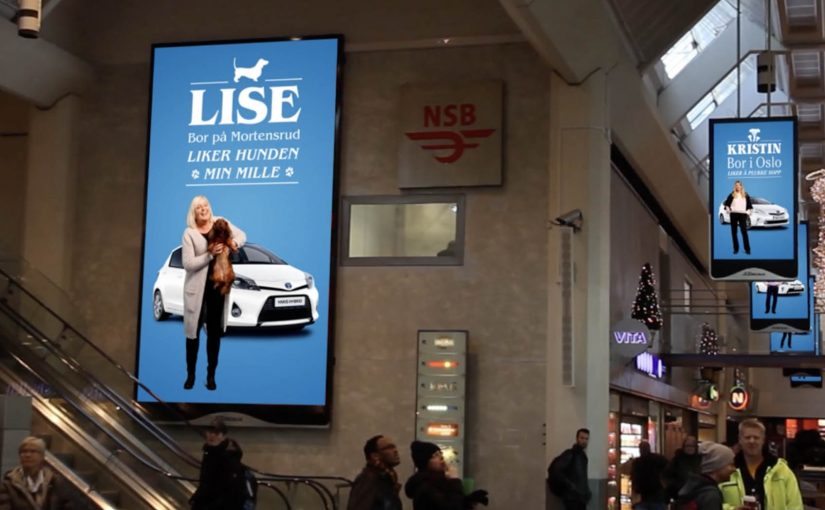
Toyota in Norway is doing really well on loyalty and customer satisfaction, but it is struggling to recruit new customers.

So instead of having salespeople persuading new buyers, Toyota lets satisfied Hybrid owners offer test drives to prospects. A web and mobile service makes it easy for owners. For no money. To let strangers, neighbours and friends, and friends of friends via Facebook test drive their Hybrid.

Turning owners into the dealership

The mechanic is simple and trust-led. That means the trust comes from the owner-host relationship rather than from Toyota’s sales script. Prospects find nearby Hybrid owners and request a test drive. Owners opt in, schedule, and host the drive. The conversation is the product, because it is grounded in lived experience rather than sales script.

In automotive marketing where trust is the bottleneck, peer-to-peer test drives can outperform sales-led persuasion.

Why it lands

It removes the two biggest barriers to a first drive. Social friction and credibility. The prospect gets a low-pressure introduction, and the owner gets to play the proud expert. That dynamic changes what the test drive feels like. It becomes a neighbourly recommendation, not a pitch. The social graph component also matters, because “friend of a friend” is often the sweet spot where curiosity meets safety.

Extractable takeaway: If your current customers are genuinely satisfied, build a structured way for them to host the first experience. Let trust carry the conversion, and let technology simply remove coordination friction.

What Toyota is really solving

This is an acquisition problem disguised as a community service. Toyota already has strong satisfaction. The real question is how that satisfaction becomes low-friction acquisition before a prospect ever enters a showroom. Toyota is right to treat owner advocacy as the front end of acquisition, not as a soft loyalty add-on. The challenge is that satisfaction does not automatically translate into new buyers at scale. This service turns satisfaction into a repeatable, measurable funnel step. Discovery, booking, drive, and then consideration. Without needing more showroom persuasion.

What brands can steal from Try My Hybrid

  • Make the first experience owner-led. Use real users as the proof layer.
  • Design for “near me”. Proximity is the simplest trust signal after reputation.
  • Use social adjacency carefully. Friends of friends can unlock trial without feeling like a cold lead.
  • Keep incentives optional. Pride and helpfulness can outperform cash when satisfaction is real.
  • Instrument the pipeline. Treat hosted trials as a trackable acquisition channel, not PR.

A few fast answers before you act

What is “Try My Hybrid” in one sentence?

A web and mobile service that lets prospective buyers book test drives with real Toyota Hybrid owners instead of salespeople.

Why does the owner-led test drive feel more persuasive?

Because it is grounded in lived experience. The host can answer questions with real usage context, which increases credibility and reduces sales resistance.

What makes the social layer important?

It helps prospects find a trustworthy host through proximity and social adjacency, which lowers hesitation versus a fully anonymous test drive.

What is the biggest operational risk?

Reliability and safety. If scheduling fails, hosts no-show, or the process feels risky, trust breaks and the program collapses.

How can a non-automotive brand apply the same model?

Turn your happiest customers into opt-in hosts for the first experience, then build a lightweight system to match prospects to hosts and remove coordination friction.

The Snapchat Pitch

Its been a while (2011) since I came across an innovative Social Media recruitment campaign. In this latest example Norwegian ad agency DDB Oslo has tapped the growing trend of chat apps to attract talent to its agency.

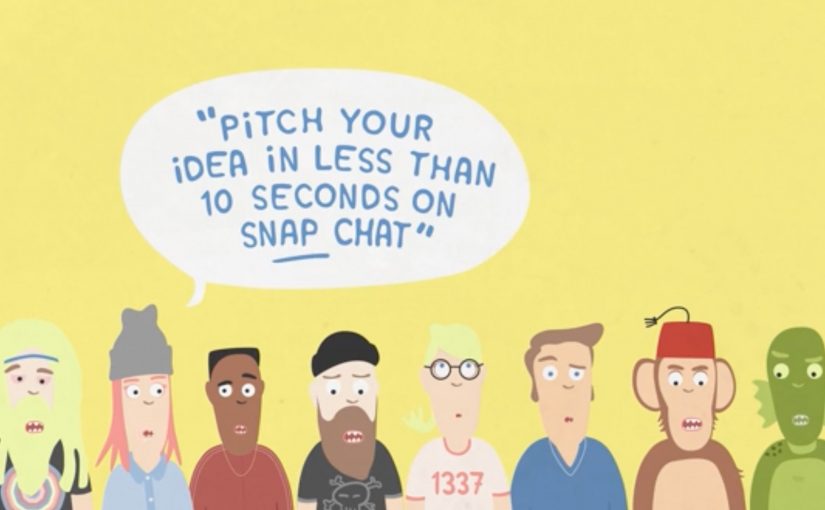
To seek out new talent they created “The Snapchat Pitch”. Interested job seekers had to sum up their concept in 10 seconds or less via video, drawing or song and send it over to DDB Oslo via Snapchat. If the DDB creative department liked the pitch, they would fly the job seekers over to their office for a final interview.

Why Snapchat was the right medium for this recruitment idea

The constraint is the feature. Ten seconds forces clarity. It pushes candidates away from long explanations and toward an idea that lands instantly. That is a useful filter for creative roles, because the pitch is not only the message. It is also proof of judgment under pressure.

Extractable takeaway: When the format itself forces the behavior you want to assess, the application becomes a live demonstration instead of a claim on a CV.

Snapchat also shapes the tone. It is informal, fast, and personal. That lowers the barrier to submit, and it signals that DDB Oslo is looking for modern creators who can think in native mobile formats, not just traditional portfolio pieces. Here, native mobile formats means short, informal creative communication built for the phone screen, not adapted from a longer presentation. Snapchat is not a gimmick here. It is the right screening tool because the medium tests the same creative compression the job demands.

In agency recruitment, where portfolios often reward polish more than immediacy, that makes the channel itself part of the assessment.

What makes it different from typical agency recruitment

Most recruitment campaigns ask for credentials first and creativity second. This flips it. The creative output is the entry ticket. The interview is the reward. That sequencing matters because it makes the selection criteria visible and fair. Everyone starts with the same brief. Communicate an idea in 10 seconds.

The real question is whether the first application step can reveal creative judgment before the interview begins.

What DDB Oslo is really optimizing for

For DDB Oslo, the business intent is not just to look different. It is to widen the top of the funnel while screening for candidates who can already work inside a mobile-first creative constraint. That makes the application mechanic do two jobs at once. It attracts attention and improves fit.

What to borrow if you want to attract talent

  • Use a format-native challenge. Pick a platform where the format itself tests the skill you care about.
  • Make the first step lightweight. Low friction increases the number and diversity of submissions.
  • Reward the best with a real-world next step. A flown-in interview makes the upside tangible and shareable.

A few fast answers before you act

What is “The Snapchat Pitch”?

It is a recruitment idea by DDB Oslo where job seekers pitched a concept in 10 seconds or less via Snapchat using video, drawing, or song.

What did candidates have to submit?

A short concept pitch that fits into 10 seconds, sent to DDB Oslo through Snapchat.

What happened if the pitch was good?

If the DDB creative department liked the pitch, they would fly the job seeker to the office for a final interview.

Why use Snapchat for recruiting?

The platform enforces brevity and rewards clarity. It also tests whether candidates can think and communicate in a modern mobile-native format.

Why does the 10-second limit matter?

It turns the application itself into a filter. Candidates have to show judgment, clarity, and creative compression before they ever reach the interview stage.