
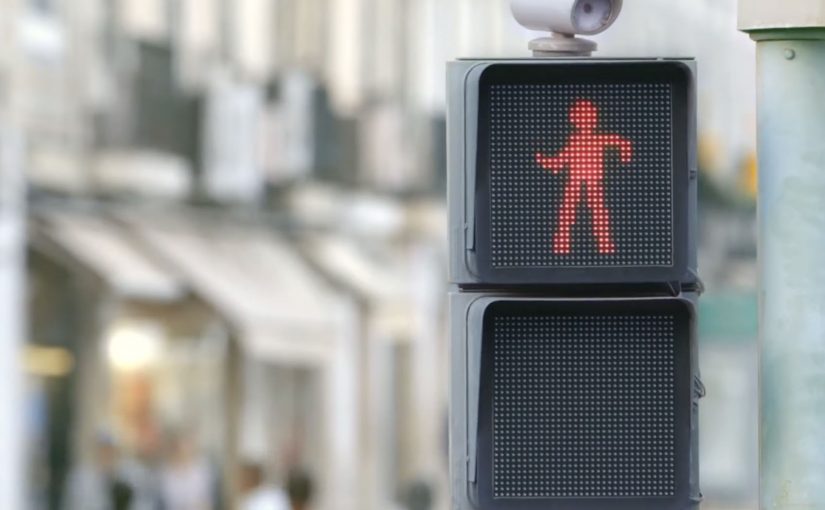
smart: The Dancing Traffic Light

smart: The Dancing Traffic Light

Traffic lights can be dangerous for pedestrians, especially for those who do not like to wait for the light to change. So the Smart team from Mercedes-Benz created “The Dancing Traffic Light”, where a person’s dance moves were brought to a traffic light in real time. As a result, 81% more people stopped at that red light.

A red light that earns attention

The mechanism is simple. Put a person’s live dance into the “don’t walk” figure so waiting becomes entertainment rather than dead time. The red signal stays red, but the moment changes from friction to curiosity.

In busy cities, pedestrian safety interventions work best when they change what people do in the waiting moment, not when they rely on warnings people already ignore.

Why it lands

This works because it does not moralize. It redirects impatience. By turning the red figure into live motion, it converts passive waiting into anticipation, which is why people keep their attention on the signal instead of acting on impulse. People stop because they want to see what happens next, and because the signal feels like it is doing something for them instead of only restricting them.

Extractable takeaway: If your goal is compliance in a repeated micro-moment, do not just increase instruction. Add a small, repeatable reward that makes the safer choice feel like the more interesting choice.

What the brand is really demonstrating

The real question is how to make waiting at the curb feel better without weakening the rule itself.

The installation is framed as a safety idea, but it also functions as a brand proof point. “Smart” city thinking is expressed as an everyday behavior fix, not a futuristic gadget.

The stronger idea is not the choreography. It is the use of delight as a safety mechanism.

What to steal from this crossing

  • Design for boredom. Most unsafe shortcuts happen when people are impatient. Solve the impatience.
  • Keep the rule intact. The light still means stop. Only the experience changes.
  • Use real-time participation. Live input creates social magnetism and makes the system feel alive.
  • Measure behavior, not buzz. The strongest metric here is stopping behavior at the crossing, not views.

A few fast answers before you act

What is “The Dancing Traffic Light”?

It is an interactive pedestrian signal concept where a red “don’t walk” figure mirrors a nearby person’s dance moves in real time to make people more willing to wait.

What problem does it solve?

It reduces risky crossing behavior driven by impatience, by making the waiting phase more engaging.

Why does real-time motion matter?

Because it creates unpredictability and social attention. People watch longer when the content is live and human.

What kind of metric should you track for ideas like this?

Behavior change at the location, such as stopping and waiting rates, plus any reduction in unsafe crossing incidents.

How can another brand adapt this pattern?

Find a repeated safety or compliance moment, keep the rule unchanged, and add a small live reward that makes the safe choice feel like the better choice.
Castello: Eat the Art

Castello: Eat the Art

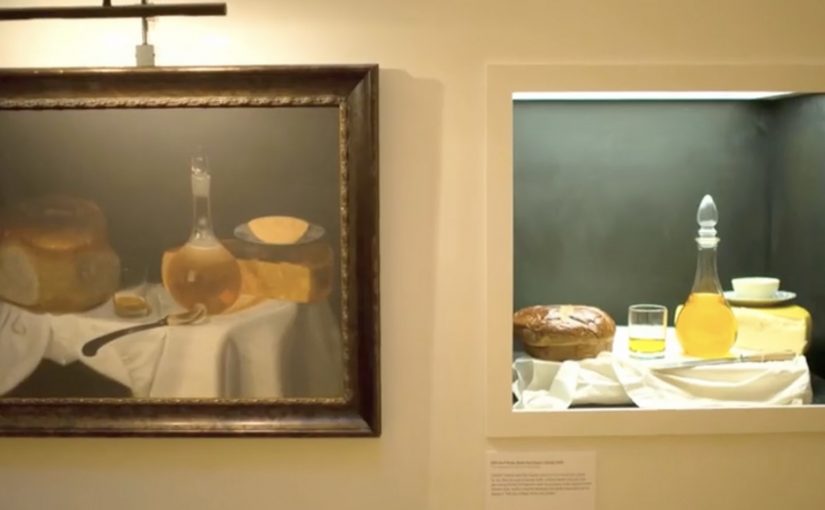
Cheese brand Castello teams up with ad agency Duval Guillaume to give New Yorkers the opportunity to taste their cheese in a very original way. A pop-up museum is set up at Grand Central Terminal, where famous still-life paintings that contain cheese are reproduced with great precision using real Castello cheeses. The difference is simple. You can smell and eat the copied works of art.

Over the course of two days, more than 500,000 visitors reportedly pass through the exhibition, and around 40,000 people actually taste the cheese.

Turning “look” into “taste”

The mechanism is sensory sampling disguised as culture. Borrow the credibility of recognizable art, rebuild it with the product itself, then let the audience complete the experience by tasting the thing they are looking at.

In urban retail environments where people are overloaded with visual messages, multisensory experiences create disproportionate stopping power because they feel like a break from advertising, not another ad unit.

Why it lands

This works because it turns product trial into a story people want to repeat. A free sample is forgettable. “I ate a painting made of cheese at Grand Central” is social currency, which means it is a simple story people want to pass on. It gives the brand an earned reason to be talked about without needing heavy branding on every surface.

Extractable takeaway: If your category wins on taste, do not hide behind claims. Build a public moment where trying the product feels like participating in something bigger than a sample.

What the business intent looks like

The real question is how to turn food sampling into a public moment people actively choose and then talk about. Castello gets scale and relevance in one move. Grand Central delivers footfall. The art framing delivers permission to pause. And the tasting converts attention into the only proof that matters for food. “It is good”. This is a stronger food-marketing move than standard sampling because it makes trial memorable.

What food brands can steal from this

  • Wrap sampling in a reason to stop. People do not queue for “try this”. They queue for a moment.
  • Use a familiar cultural code. Still-life paintings are instantly legible, even at walking speed.
  • Let the product be the medium. When the product is literally the artwork, the message cannot be missed.
  • Design for retellability. If the experience can be summarized in one sentence, it travels further.

A few fast answers before you act

What is Castello “Eat the Art”?

It is a pop-up museum experience where still-life paintings featuring cheese are recreated using real Castello cheeses, and visitors can smell and taste the “art”.

Why stage it in Grand Central Terminal?

Because high footfall increases reach, and a transit setting makes the surprise feel bigger. You find a museum moment in the middle of a commute.

Is this advertising or sampling?

It is sampling, delivered through an ambient, cultural format that makes the trial feel special rather than transactional.

What makes the concept effective for food brands?

It converts attention into taste. Food marketing becomes more persuasive when it gets people to try the product quickly, in a memorable context.

What is the simplest way to adapt the pattern?

Pick a familiar cultural frame your audience already respects, then embed product trial directly into that frame so trying the product feels like participation.

KLM: Live High Five

KLM: Live High Five

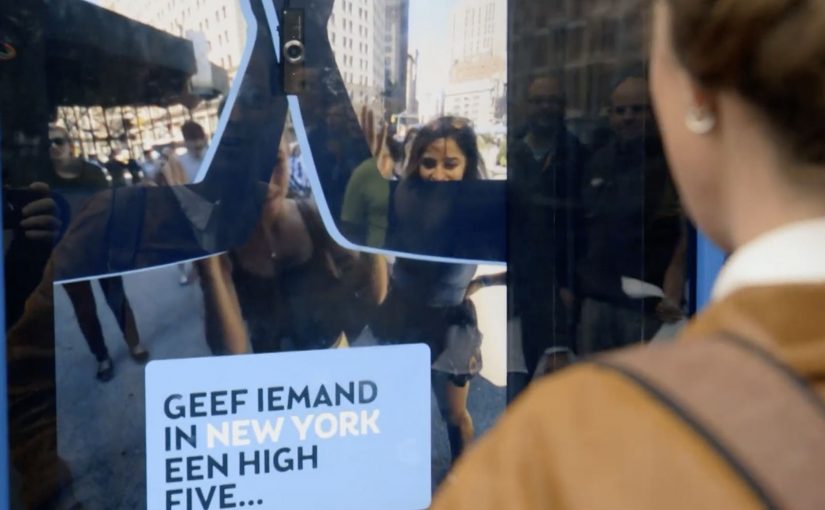
On 28 August, KLM connects hundreds of people in Amsterdam and New York via a live interactive video display, letting strangers on the streets of two cities come face to face.

It echoes the kind of “city to city” street connection seen before, such as the French railway (SNCF) linking Lyon and Brussels.

How the high five contest works

The twist is competitive: the connected pairs are asked to high five each other through the screens. For every successfully timed high five, participants win two tickets to New York or Amsterdam.

In global travel marketing, adding a clear participatory mechanic, meaning a simple action anyone can attempt without instruction, turns a “nice moment” into a repeatable behavior people recruit others into.

Why a high five is the right interaction

A high five is universally understood and visually obvious at distance. It is also time-bound, which creates tension. People lean in. They coordinate. They try again. That retry loop, the quick cycle of attempt, miss, adjust, and try again, is where energy builds and the crowd becomes part of the content.

Extractable takeaway: Pick an interaction that is instantly readable to bystanders, time-bound, and designed to invite visible retries. That is how the crowd becomes the amplification.

What KLM is really buying here

This is a route brand idea, meaning a story that makes a specific connection between two places feel tangible, disguised as play: KLM makes the transatlantic connection feel immediate, human, and winnable. The real question is whether your activation makes distance feel collapsible in under five seconds. This is the right kind of public interactivity when your promise is connection between places. The prize is valuable, but the real asset is the public proof that the brand can engineer connection between two cities in a way passers-by can instantly grasp.

Patterns to borrow for your own city-scale activation

  • Use one gesture everyone knows. The simpler the action, the more strangers will attempt it without instruction.
  • Add a timing challenge. Time-based coordination creates drama and repeat tries.
  • Make the reward match the story. Here, tickets reinforce the “two cities” premise.
  • Design for crowds. The best interactions are legible to bystanders, not just participants.

A few fast answers before you act

What is KLM Live High Five in one line?

A live video street installation connecting Amsterdam and New York where timed high fives between cities unlock travel tickets.

What is the key mechanism?

Two public screens link strangers in real time, then convert the connection into a simple, repeatable contest action.

Why does the high five mechanic work so well?

It is universal, physical, and instantly readable. The timing requirement creates suspense and encourages repeated attempts.

What is the biggest execution risk?

If timing feedback feels laggy or unclear, people stop retrying. The interaction needs instant, visible confirmation so the crowd stays invested.

What is the transferable lesson?

If your idea is “connection”, make people physically coordinate across distance and reward the moment with a prize that matches the narrative.