

Obra do Berço: The SOS SMS

Obra do Berço: The SOS SMS

Street children begging for food and money near busy traffic stops are a common sight in metropolitan cities like Rio de Janeiro. Accustomed and tired of this routine, drivers often shut their car windows to ignore the children and avoid any contact.

To raise awareness and trigger more donations, “Obra do Berço”, a day care for underprivileged children in Brazil, found a way to make the children’s voices heard through those closed windows.

Bluetooth antennas were hidden near traffic signals where large groups of children tended to gather. When drivers stopped at the lights, the antennas sent an SOS SMS to nearby phones.

A message that slips past the closed window

The mechanism is a proximity-triggered interruption. Drivers can shut out the street by rolling the glass up, but they still carry one open channel with them. Their phone. The campaign uses that channel to deliver a short, unavoidable nudge at the exact moment the social problem is physically present.

In dense urban commuter settings, the hardest part of fundraising is breaking habitual avoidance without escalating the intrusion.

The real question is how you interrupt a learned act of avoidance without making the intervention feel more invasive than the problem itself.

Why this lands

This works because it reframes the “ignore” reflex. The driver’s default action is to reduce discomfort by closing the window. The SMS reopens the reality in a different place, and it does it at a moment when the person has time. Waiting at the red light. That works because the channel change breaks the driver’s avoidance pattern without forcing face-to-face contact. The intervention is also personal. It arrives one-to-one, not as a public shaming message blasted at everyone.

Extractable takeaway: If your audience has learned to tune out a problem in a specific physical context, move the prompt to a channel they still keep open in that context, and time it to a pause moment where action is possible.

What the campaign is really doing

It is converting location into relevance. Instead of asking for empathy “in general,” it triggers the ask at the exact place where indifference usually happens. That makes the message harder to dismiss as abstract, and it gives the NGO a fighting chance to turn a routine stop into a micro-decision to help.

This is smart low-budget fundraising because it uses context and timing to create relevance instead of relying on guilt alone.

What to steal from this roadside trigger

  • Target a repeatable micro-moment. Red lights create predictable dwell time.
  • Use a channel people already carry. You do not need new hardware in the user’s hands.
  • Keep the prompt short. The first goal is attention, not a long explanation.
  • Link the ask to immediate context. Relevance beats persuasion when budgets are small.

A few fast answers before you act

What is “The SOS SMS”?

It is a charity activation where hidden Bluetooth antennas near traffic lights sent an SOS SMS to drivers’ phones to raise awareness and prompt donations.

Why use traffic lights as the media placement?

Because drivers are stopped, attention is idle, and the social issue is physically present in the same moment, making the message feel relevant.

What problem does this solve versus traditional street fundraising?

It bypasses the closed-window barrier and reduces the face-to-face avoidance loop by moving the first contact into a private phone message.

Is this more effective than posters or billboards?

It can be, because it is timely and personal. The message arrives when the audience is already in the situation, not hours later.

What’s the main risk with proximity-triggered messaging?

If it feels spammy or unclear why the message arrived, people may react negatively. The copy and consent expectations need to feel respectful and transparent.
Maes: A Barrel for Every Maes

Maes: A Barrel for Every Maes

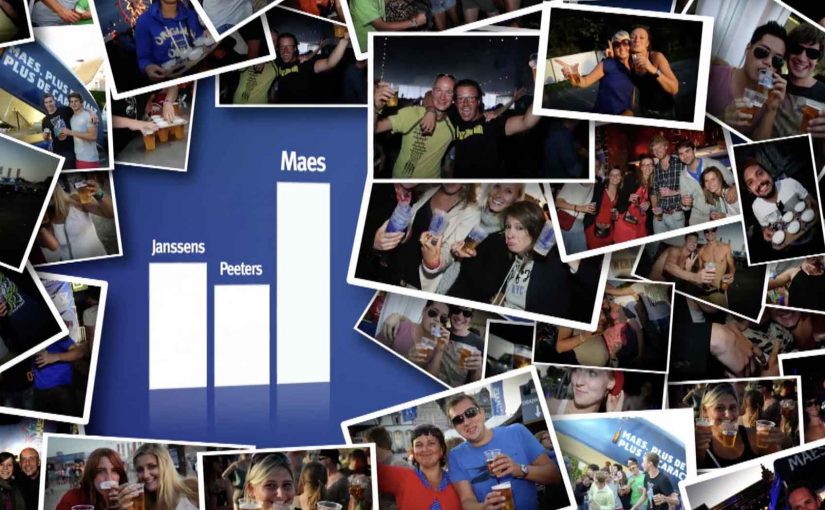
Maes is described as Belgium’s second most popular beer, and “Maes” is also described as the country’s third most common surname. With the market leader said to be outselling Maes by roughly 4 to 1, the brand looks for leverage where it can actually own something. The name.

So Maes decides to rally the Maes families of Belgium by giving them a free barrel of beer, and turning that offer into a reason to gather, invite, and celebrate publicly.

The mechanism: a surname offer with a social booking loop

Eligible families sign up through a custom Facebook app to claim the barrel. The same flow lets them book a pub for a chosen date and invite friends, so the reward is designed to be shared rather than quietly consumed.

In Belgian FMCG marketing, turning a broad brand problem into a narrow community identity can create disproportionate participation and talk value.

Why this lands

This works because it converts a discount into status. You are not “getting a deal.” You are being singled out because of who you are, and the campaign immediately pushes you into a social moment where other people experience the brand alongside you. The pub booking is the smart part, because it transforms redemption into an event.

Extractable takeaway: If you need advocacy, attach the reward to an identity trigger and force the payoff into a shared setting, so the benefit becomes a gathering people naturally document and retell.

What the brand is really doing

The real question is how a challenger beer brand turns a shared surname into a social growth loop that scales beyond the free barrel itself.

Maes is using a surname as a distribution engine. The name creates a defined audience, the free barrel creates urgency, and the “book a pub and invite friends” flow turns each participant into a micro-host who does recruitment for you.

What to steal from the Maes mechanic

  • Exploit a unique ownership angle. If you can credibly “own” a name, place, ritual, or identifier, build the campaign around that.
  • Design the share into the redemption. Booking a pub and inviting friends is a built-in amplification mechanic.
  • Reward the group, not just the individual. Group rewards create social proof and higher perceived value.
  • Keep eligibility simple. One clear rule beats a complicated promo code maze.

A few fast answers before you act

What is “A barrel for every Maes”?

It’s a promotion that offers a free barrel of Maes beer to people with the surname “Maes,” turning surname identity into a social recruitment mechanic.

How do people redeem the offer?

By signing up through a custom Facebook app that also lets them book a pub date and invite friends.

Why is the pub booking part important?

It converts redemption into an event, which increases sharing, attendance, and the number of people who experience the brand in a social setting.

What problem is this trying to solve?

It’s designed to build advocacy and attention for a challenger brand by mobilising a defined community rather than competing only on mass advertising.

What is the key risk with identity-based offers?

If eligibility or verification feels unfair or confusing, it can backfire. The rule has to be clear, and the experience needs to feel welcoming rather than exclusionary.

Renault Clio: A Test Drive Takes a Sexy Turn

Renault Clio: A Test Drive Takes a Sexy Turn

TNT’s “A dramatic surprise on an ice-cold day” meets Pepsi MAX’s “Jeff Gordon test drive prank” in this latest test drive video for the all new Renault Clio.

In the video a couple of guys are seen taking the Renault Clio for a spin. After a regular beginning, the salesman shows off the “va va voom” button, a prank trigger that flips the drive into a choreographed romantic scene.

This is a staged test-drive prank, not a feature demonstration. The “va va voom” button is the trigger that flips an everyday drive into a choreographed French fantasy.

And here is a version for the ladies.

The button as a narrative trigger

The mechanism is a single, irresistible cue. A salesman introduces a mysterious button. The driver presses it. The world outside the windows transforms into a set-piece built from instantly recognizable signals, so the passenger can “feel” the promise without a single spec sheet.

In automotive marketing, test drive formats often double as shareable entertainment that reaches far beyond the dealership.

The real question is whether the launch gives people a story worth retelling once the drive is over.

Why it lands

This works because it turns a low-drama ritual into an event with a clear before-and-after. The joke is simple enough to follow in seconds, and the escalation is visual enough to hold attention without context. Most importantly, it makes the test drive itself the content, not the car brochure. The stronger creative move is the trigger-led transformation, not the flirtation itself.

Extractable takeaway: If you can attach a single, obvious trigger to a dramatic “world change”, you turn a routine product interaction into a personal story. Personal stories are easier to retell, and harder to forget, than feature lists.

What to borrow without copying the exact gag

  • One trigger, one transformation: keep the entry point unmistakable and the payoff immediate.
  • Design for first-time viewers: someone should understand the premise even if they start watching mid-scene.
  • Let the participant stay authentic: the strongest moments are the unscripted reactions, not the actors.
  • Use stereotypes carefully: shorthand can make an idea legible fast, but it can also age poorly if the tone tips.
  • Make the edit do the persuasion: pace and escalation matter more than how many “surprises” you add.

A few fast answers before you act

What is the Renault Clio “va va voom” test drive video?

It is a staged test-drive prank where pressing a “va va voom” button triggers a choreographed romantic, Paris-themed scene around the car.

Why does this format work for car launches?

Because it makes the test drive itself feel like an event. That creates watchable reactions and gives people a reason to share the experience, not just talk about the vehicle.

What’s the key mechanic to reuse?

A single, easy-to-understand trigger that causes an immediate, visible change in the environment. The trigger creates curiosity. The transformation creates the story.

Is the “va va voom” button a real product feature?

No. In this context it functions as a storytelling device that kicks off the prank and reframes the test drive as a fantasy sequence.

What’s the main risk with this style of stunt?

Tone control. If the surprise feels awkward, intrusive, or relies on stereotypes in a way that offends, the conversation can flip from “fun” to “cringe” fast.