
Burger King Truckvertising

Burger King Truckvertising

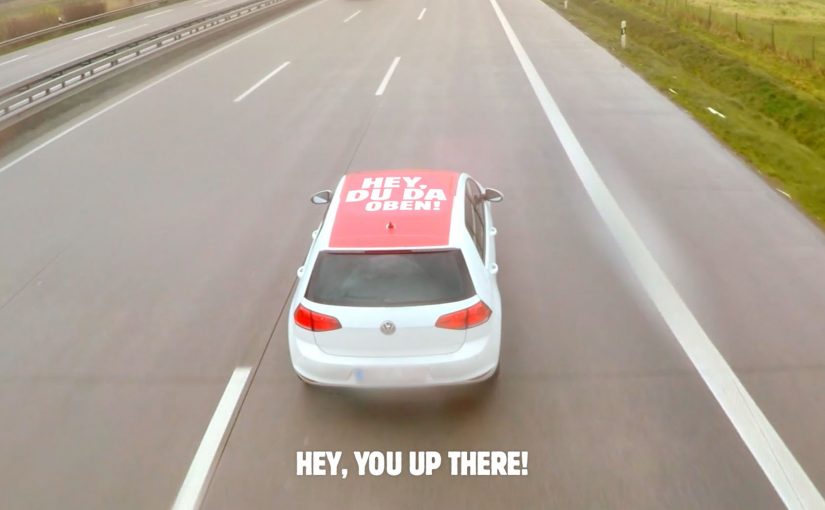
Due to strict laws, reportedly around 13,000km of the German motorway network is ad-free. So to convince truckers in Germany to buy freshly grilled Whoppers, Burger King and agency Grabarz & Partner create ads that only truckers can see. The ads sit on the roof of multiple cars that take turns overtaking trucks.

The cars do not just show an ad. They run a sequence of messages that feels like a conversation from the road:

  • “Hey, you up there!”
  • “You look hungry!”
  • “Why don’t you try out the Whopper?”
  • “Fresh and flame grilled”

Once the first few cars get the truckers’ attention, the remainder guides them to the next Burger King, turning the motorway into a moving funnel:

  • “If yes, then wink”
  • “Follow me to Burger King”

As a result, many truckers give in to temptation and follow the cars to the next XXL Burger King Drive-In.

The constraint that forces the creativity

The starting point is the limitation. Large parts of the German motorway network are ad-free, so the classic roadside billboard play is unavailable at scale.

The execution is “roof media” plus choreography

Here, “roof media” means ads mounted on the roofs of overtaking cars so truck drivers can read them clearly from above.

Burger King turns overtaking cars into a media surface and a delivery system. Roof placements ensure the message is visible from the truck cab. A rotating set of cars keeps the sequence going long enough to land.

The craft is the choreography. It is not one clever line. It is a paced interaction that escalates from attention, to appetite, to direction.

Why this works as shopper marketing in motion

The strength of this idea is that it turns media, message, and route into one conversion system. It works because the format, the sequence, and the physical route all point to the same next action: pull in at the next drive-in.

Extractable takeaway: When the audience is already moving toward a purchasable moment, the strongest creative system is the one that removes the need to interpret the ad and simply guides the next step.

In roadside retail and travel-heavy categories, the scalable advantage often comes from linking visibility, direction, and store access in one uninterrupted journey.

The real question is not how to make drivers notice the message, but how to turn that moment of notice into a low-friction detour.

The business aim is immediate drive-in visits from truckers who are already on the road and close to a Burger King location.

It also respects context. Truckers are not asked to scan, click, or search. They are asked to notice, react, then follow.

What to steal from Truckvertising

  • Turn constraints into the brief: Start with a hard constraint and treat it as a design brief, not a blocker.
  • Match the format to the moment: Use a format the audience cannot ignore in their context, in this case overhead visibility from a cab.
  • Design a behaviour sequence: Build a sequence that moves from attention to action, not a single punchline.

A few fast answers before you act

What is “Truckvertising” in one line?

Car-roof ads overtake trucks on ad-free motorways, deliver messages to truckers, then guide them to the next Burger King drive-in.

Why put the ad on the roof?

The roof is the placement truck drivers can reliably read from the higher truck cab as cars overtake them.

What is the conversion mechanic?

A staged sequence of overtaking cars gets attention, builds appetite, then provides directions to the next Burger King.

Why does the sequencing matter?

The idea is not one static message. Repeated overtakes let the campaign move from attention, to appetite, to direction.

What is the underlying business aim?

The goal is immediate local store visits and Whopper purchase intent from a high-propensity audience already in transit.
Volvo Concierge Services

Volvo Concierge Services

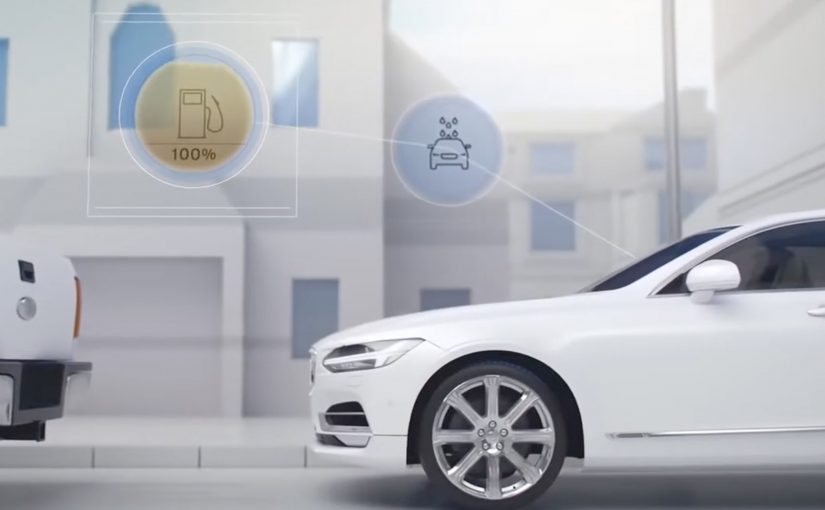
Volvo is actively experimenting with moving beyond simply building and selling cars. With Volvo Keyless Cars and Volvo In-Car Delivery, the direction is clear. Build a service layer around the vehicle. Volvo’s latest effort creates a concierge-style service ecosystem that gives customers access to third-party service providers who can remotely refuel the car, run a car wash, handle servicing, and more. Here, “concierge” means services happen while the car is parked, without the owner being present.

The heart of Volvo Concierge Services is the digital key. A one-time-use, location- and time-specific key that gives an approved service provider access to the vehicle. That matters because it keeps the car secure and removes the need for the owner to meet someone and physically hand over keys. Whether the supplier is a refuelling company, a valet parking attendant, or Volvo itself for maintenance, the provider uses an app to remotely unlock the car and allow the engine to turn on.

The Volvo Concierge Services are currently being tested in the San Francisco Bay Area with owners of the new Volvo XC90 SUVs and S90 sedans.

The digital key is the unlock. The services are the business model

This is not just about convenience. It is a structural shift. Once access becomes software, it can be controlled precisely. Who gets access. For how long. Where. For what purpose. Because access can be time-bound, location-bound, and single-use, you can reduce handover friction without opening the vehicle to broad, persistent access. That is the foundation you need to turn a connected car into a platform for partners and post-sale services.

In connected-car programs, the hardest step is making third-party access both permissioned and low-friction for owners.

The real question is whether you treat the digital key as a convenience feature, or as the control plane for a partner service layer.

Why “remote access without handover” changes behaviour

Traditional servicing and add-on services create friction. Scheduling. Meeting. Waiting. Key logistics. Concierge Services reduces that friction by making the car addressable when it is parked, and by making access safe enough to involve third parties.

Extractable takeaway: If you can grant narrowly scoped, auditable access without coordination, a parked asset becomes an addressable surface for services.

What to pressure-test before you scale a service ecosystem

  • Trust and governance. Who qualifies as an approved provider. What is logged. What can be revoked instantly.
  • Edge cases. What happens if something goes wrong mid-service. What support paths exist for customer and provider.
  • Consistency of experience. If third-party services vary in quality, the brand still owns the perception.
  • Security by design. One-time, time-bound, location-bound access is powerful. It has to be implemented rigorously.

A few fast answers before you act

What is Volvo Concierge Services?

A service ecosystem around Volvo cars that enables approved third-party providers to refuel, wash, service, and handle other tasks with controlled remote access to the vehicle.

What enables the service providers to access the car?

A one-time-use, location- and time-specific digital key that unlocks the vehicle through an app without physical key handover.

Where is it being tested?

The service is being tested in the San Francisco Bay Area, with owners of Volvo XC90 SUVs and S90 sedans.

What is the core strategic takeaway?

When access becomes software, the car can support a partner service layer that keeps creating value after purchase.

Crafted By My Heart

Crafted By My Heart

A ring becomes more than a ring when the pattern is literally yours.

“Crafted By My Heart” is an app launched by DDB Group Hong Kong that lets you customize jewelry with your own heartbeat. You place a finger over the smartphone’s camera and flash. The app detects subtle changes in finger coloration, measures your heartbeat, then translates its intensity and rhythm into a unique digital rendering. That rendering becomes the basis for a one-of-a-kind ring.

From pulse to pattern

Turn a biometric signal into a personal design language, then manufacture it as a physical object. By “biometric signal,” I mean a measurable body output, like heart rhythm, captured directly from the user.

How the experience works

The flow is intentionally simple. The mechanism matters because it converts an invisible, emotional idea (“this is us”) into visible proof that feels undeniably personal.

  1. Capture
    You use the phone’s flash and camera to read your heartbeat through small changes in skin coloration.
  2. Translate
    The heartbeat becomes a digital rendering that is unique to your rhythm.
  3. Craft
    That rendering is used to create a ring. It is not a generic engraving. It is a form generated by your own signal.

In premium gifting categories, the story attached to the object often matters as much as the object itself.

The product choices are clear and bounded

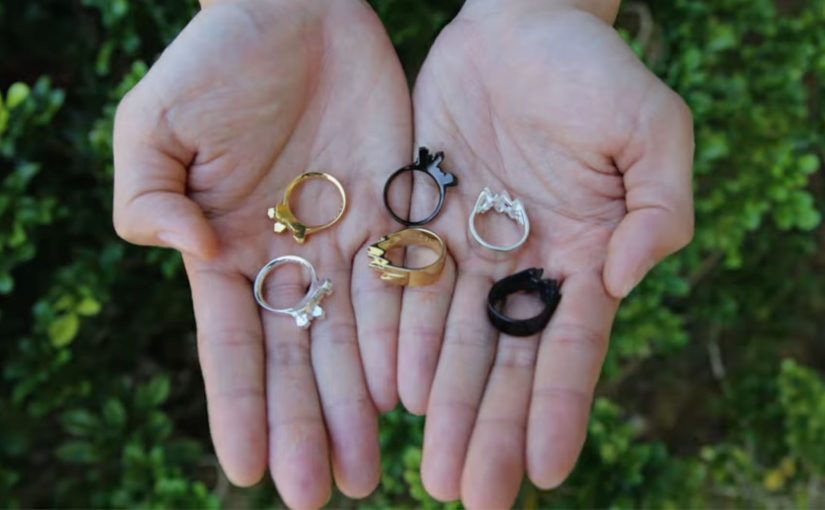
The app offers two base designs, Surge and Sierra, with three finishes: gold, silver, or black silver. Rings cost between HK$1,198 and HK$1,588 (listed as US$155 to US$205), and take around 15 to 20 working days to complete.

Why a heartbeat beats engraving

Most “personalization” is decorative choice. This is structural personalization, where the customer input generates the form, which raises perceived meaning and makes the purchase easier to justify.

Extractable takeaway: If the customer’s input does not change the form of the product, you are offering decoration, not personalization, and it will be competed away by more options and lower price.

Personalization is structural, not cosmetic

A lot of customization is color, text, or surface. Here, the customer input generates the form. That feels materially more personal.

Technology removes the intimidation barrier

Biometrics and jewelry-making sound complex. The interaction is not. One finger. One phone. A result you can explain in one sentence.

The story is built-in

The product carries a narrative you can repeat instantly. It is your heartbeat, turned into a physical object. That makes it inherently giftable.

The deeper point

The real question is: how do you turn personalization from “more choices” into emotional proof people will pay for?

Meaningful personalization rarely comes from expanding menus. It comes from finding a signal that matters emotionally, translating it into a design system, and making the creation process easy enough that people actually do it.

What to steal

  • Start with a signal, not a style. Pick an input customers already value emotionally (not just data you happen to have).
  • Translate the signal into form. Make the input change geometry or structure, not just surface decoration.
  • Keep choices bounded. Offer a small set of base options so the “unique” part stays legible.
  • Design for retellability. If the owner cannot explain it in one sentence, it will not travel socially.

A few fast answers before you act

What is the core mechanic behind Crafted By My Heart?

The phone’s camera and flash detect heartbeat via subtle changes in finger coloration, then translate the rhythm into a digital rendering used to craft a ring.

What does the customer actually customize?

They select a base design and finish. The unique part is the heartbeat-generated rendering that drives the final piece.

What are the available designs and finishes?

Two base designs, Surge and Sierra. Three finishes, gold, silver, and black silver.

What are the price and production timelines?

HK$1,198 to HK$1,588 (US$155 to US$205). Around 15 to 20 working days.

What is the transferable lesson for other categories?

If you can capture a personal signal that people care about and make it visibly change the product’s form, you turn “customization” into meaning, not configuration.