
McDonald’s Sweden: Happy Goggles

McDonald’s Sweden: Happy Goggles

Today’s kids are growing up with smartphones and tablets as everyday objects, so for the 30th anniversary of the Happy Meal in Sweden, McDonald’s decides to move with the times without making radical changes.

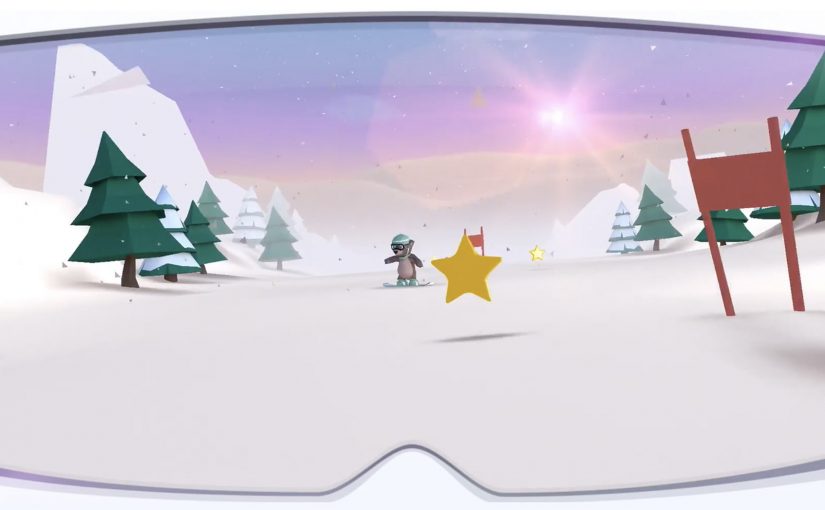
With a bit of ripping, folding, and sliding, the Happy Meal box becomes Happy Goggles. A simple VR viewer made from the box itself, designed to work with a smartphone.

The limited edition Happy Goggles are available from March 5th along with a virtual reality skiing game called “Slope Stars.” The game is positioned as a 360° ski experience that aims to blend fantasy and fun with basic slope-safety learning.

A physical build step that makes the tech feel like play

The mechanism is the point. Kids do not just receive a headset. They assemble it from something familiar, which turns the product into an activity and makes the “VR moment” feel earned rather than handed out.

In family-focused quick-service restaurants, packaging is one of the few branded touchpoints kids hold long enough to become a lasting brand memory.

The real question is whether a kids-facing tech idea can feel like play for children while still feeling bounded and acceptable for parents.

Why it lands with parents as well as kids

The idea works because it keeps the novelty lightweight and frames it as a bounded experience. A simple viewer, a themed game, and a message that leans toward safe behaviour on ski slopes rather than pure screen time. This is a smart family-facing tech layer because it adds interactivity without asking parents to accept an open-ended new device ritual.

Extractable takeaway: If you want families to accept a new tech layer inside a kids product, make the first interaction tactile and time-boxed, then tie the content to a clear parent-friendly benefit.

What the brand is really doing here

This is packaging as media, and packaging as product. By “packaging as media,” I mean the box itself becomes the channel that carries the experience. McDonald’s turns the most iconic part of the Happy Meal into the delivery vehicle for a digital experience, while keeping the core ritual intact.

What to borrow from Happy Goggles

  • Make the build part of the value: A small assembly step turns the moment into an activity, not just a handoff.
  • Use an owned touchpoint as the “device”: When the packaging is already in-hand, it can do distribution and storytelling at the same time.
  • Time-box the novelty with a parent-friendly frame: Keep the experience simple, themed, and clearly bounded so it feels acceptable, not addictive.

A few fast answers before you act

What are Happy Goggles?

Happy Goggles are a VR viewer made by folding the Happy Meal box into a headset-style form, designed to hold a smartphone for a simple virtual reality experience.

What is Slope Stars?

Slope Stars is a ski-themed VR game released alongside Happy Goggles, positioned as a 360° experience that mixes play with basic slope-safety messaging.

Why make the viewer out of the box instead of adding a toy?

Using the box removes distribution friction because every Happy Meal already includes it. Turning the box into the device also makes the experience feel like a clever transformation rather than an extra plastic object.

What makes this kind of packaging innovation shareable?

Happy Goggles are instantly legible because the build step and the reveal are the story. The transformation can be demonstrated in a single photo or short clip.

What is the transferable principle behind this idea?

The transferable principle is to make the first interaction tactile and contained, so the digital layer feels earned. A simple physical step can convert “new tech” into “play,” while a clear boundary makes it easier for parents to accept.

Volvo Keyless Cars

Volvo Keyless Cars

You land at Gothenburg airport, walk up to your car. There is no key handover. No kiosk. No awkward “where did I put it?”. You unlock the door with your phone, start the engine, and drive off. That is the behavioral shift Volvo is putting on the table as it pilots a Bluetooth-enabled digital key. The physical key stops being the default. The car starts behaving like a shareable service.

Volvo’s plan is straightforward and bold. Replace the physical car key with a mobile app that acts as a digital key. It locks and unlocks doors and trunk. It also allows the engine to be started. Volvo intends to roll this out to a limited number of commercially available cars in 2017, with real-world testing beginning in spring 2016 via Sunfleet at Gothenburg airport in Sweden. Physical keys remain available for people who want them.

What “keyless” really changes

Most coverage of keyless cars focuses on convenience. That is real, but it is not the headline. The headline is that the key becomes software, and software is shareable, revocable, time-bound, and measurable.

Once the key is an app, a car can be:

  • Shared without meeting up. You can grant access remotely, without physically transferring anything.
  • Granted for a window of time. A key can expire after a set period, or be limited to a specific day.
  • Revoked instantly. Access can be removed without changing locks or reissuing hardware.
  • Audited. Digital access can create a clean trail of who had access, when, and potentially under what conditions.

Those are not just UX improvements. They are the primitives of “car as a platform,” meaning a vehicle where access and entitlement are programmable.

The real question is whether turning the key into software makes sharing trustworthy and reversible, without adding friction in everyday edge cases.

In mobility services and car-sharing operations, making access software is the quiet foundation for scalable sharing, service models, and trust.

The strategic unlock for car sharing and new mobility behavior

Volvo is not positioning this as a novelty feature. The real-world test through Sunfleet is the tell. Keyless is a missing piece for car sharing because physical keys create friction at exactly the moment you need trust and speed.

Extractable takeaway: When an entitlement becomes software, the hard problem shifts from logistics to permissions, which is why sharing can scale without constant handoffs.

When access is digital:

  • You can share your own car more safely, because you do not need to hide a key or coordinate handoffs.
  • You can operate fleets with lower operational drag, because key logistics shrink.
  • You can start designing new use cases that are impractical when keys are physical.

This is where brand storytelling gets interesting. Volvo is not “marketing an app.” It is marketing an engineered shift in how the product behaves. The brand moves from sheet metal and safety features to a designed system of access, trust, and mobility.

What the digital key needs to get right

Moving the key to a phone is a promise. It must hold up in the messy reality of travel days, dead batteries, and edge cases.

A credible keyless experience typically needs clear answers to:

  • What happens if the phone battery dies? (Fallback options matter, including a physical key for those who want it.)
  • How does identity and authorization work? (Who can issue a key. Who can revoke it. What is the recovery path.)
  • How secure is the handoff? (Bluetooth is convenient. It also raises expectations around encryption, pairing, and spoofing resistance.)
  • How does it work for families and multi-driver households? (Multiple keys, multiple devices, and different permissions.)
  • How does it behave when connectivity is weak? (Airports and parking structures are not always friendly environments.)

None of these are reasons to avoid keyless. Keyless is worth doing, but only when fallbacks and recovery are designed as first-class features.

The marketing lesson hiding inside the engineering

This is a strong pattern in modern innovation storytelling. A brand earns attention when the innovation is tangible and legible. Not “we are digital.” Instead, “a thing you used to do physically becomes software, and your behavior changes.”

For Volvo, the narrative is easy to grasp:

  • The key becomes an app.
  • Access becomes shareable.
  • Mobility becomes more flexible.

That is the kind of product story that travels well. It is engineering that people can feel.

Steal the pattern: access becomes software

  • Reframe the benefit. Lead with “the key becomes software,” then show sharing, revocation, and time-bounding as the real unlock.
  • Design trust into the edge cases. Dead batteries, weak connectivity, and recovery paths decide whether the behavior shift sticks.
  • Make sharing operationally cheap. When keys stop being objects, handoffs and key logistics stop being the bottleneck.
  • Use auditability to increase confidence. If access is trackable, it can support clearer accountability and faster issue resolution.

A few fast answers before you act

What is a digital car key?

A digital car key is a phone-based key that can replace the physical key for core actions like locking, unlocking, and starting the car.

Why does keyless matter beyond convenience?

Because access becomes programmable. You can share it, time-limit it, revoke it, and potentially audit it. That changes how ownership and sharing can work.

What is Volvo actually proposing here?

A Bluetooth-enabled app that replaces the physical key, with a real-world test through Sunfleet at Gothenburg airport, and a limited rollout planned for 2017. Physical keys remain available.

What is the immediate business implication for mobility services?

Lower friction. Less operational overhead around key handling. More flexible sharing models for fleets and individuals.

What must be true for this to feel trustworthy?

Clear fallbacks and recovery paths, secure authorization and revocation, and a user experience that holds up in real-life edge cases like dead batteries and poor connectivity.

NIVEA Creme: Second Skin Project

NIVEA Creme: Second Skin Project

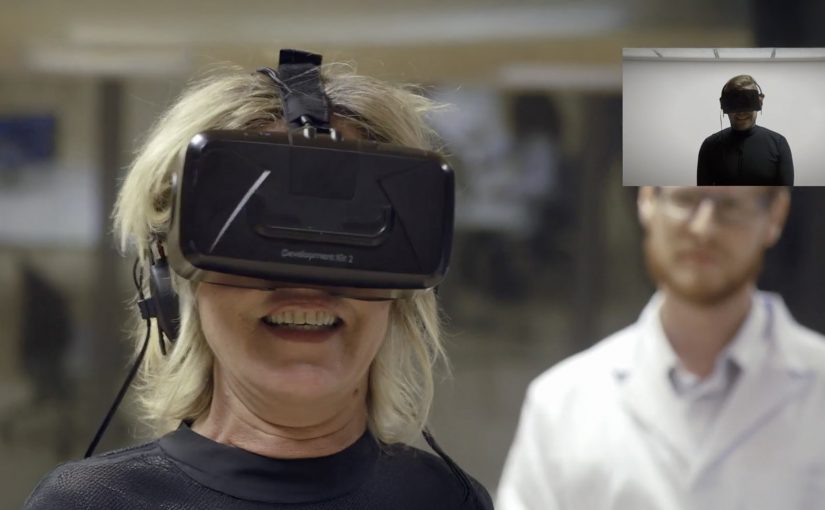
A mother puts on a headset and a skin-like suit. Her son does the same, thousands of kilometres away. The promise is simple. If they cannot be together for Christmas, technology will let them feel a hug anyway.

That is the set-up in NIVEA Creme’s “Second Skin Project” with Leo Burnett Madrid. The film introduces Laura in Madrid and her son Pablo, who is away volunteering in Paraguay. They are invited to test a “Second Skin” garment that is presented as a high-tech fabric designed to simulate human skin and transmit the sensation of touch at distance, paired with virtual reality headsets.

The story then pivots. What looks like a tech demo is used to make a point about touch, not technology. The most persuasive moment is not the suit. It is the human reunion that follows, designed to underline NIVEA Creme’s belief that nothing beats skin-to-skin contact.

The “Second Skin” mechanism that pulls you in

The film borrows credibility from advanced-sounding materials and VR. That framing creates anticipation, because the viewer wants to know whether the experiment can actually work. The suit and headset are the narrative engine that earns attention for long enough to land the real message.

In global consumer brands where heritage products compete with endless alternatives, emotional proof often carries more weight than functional claims.

The real question is whether the tech is the story, or whether it is just a credible pretext for the brand to own the value of touch.

The twist that protects the brand meaning

There is a risk with tech-led emotion. The technology can become the hero and the brand becomes a sponsor. This script avoids that by using the tech as a decoy. The reveal shifts the spotlight back to the product truth. A hug is still the best “gift” and NIVEA Creme wants to be associated with that intimacy.

Extractable takeaway: When you borrow a shiny mechanism to earn attention, make the emotional payoff explicitly restate what the brand believes, or the gadget takes the credit.

How to use “purpose + tech” without losing the human truth

  • Use technology as the hook, not the conclusion. Let it earn attention, then pay it off with a human truth.
  • Make the brand stance explicit. Here the stance is clear. Technology can be amazing, but touch matters more.
  • Cast real stakes. Distance, holidays, and family history make the outcome feel earned.
  • Keep the product role emotional, not technical. NIVEA Creme is not “the innovation”. It is the comfort cue that frames the story.

A few fast answers before you act

What is the NIVEA Creme Second Skin Project?

It is a Christmas-season film and experiment setup where a mother and son test a VR-led “Second Skin” suit that is presented as transmitting the feeling of touch at distance, then the story reveals the value of real human contact.

Why does the campaign use VR and a “second skin” suit?

Because it creates a believable question the audience wants answered. Can technology replicate a hug? That curiosity holds attention long enough for the campaign’s real point to land.

What is the core message NIVEA Creme is trying to own?

That skin-to-skin contact matters. The work uses technology to highlight that, even in a world of advanced tools, nothing replaces human touch.

What makes this more than a generic emotional video?

The narrative structure. It starts as a tech experiment, then pivots into a human reunion. That contrast makes the conclusion feel stronger than a straight sentimental story.

What is the biggest risk with “tech-as-story” campaigns?

Audience misattribution. People remember the gadget and forget the brand meaning. The fix is to ensure the emotional payoff clearly belongs to the brand stance, not the device.