
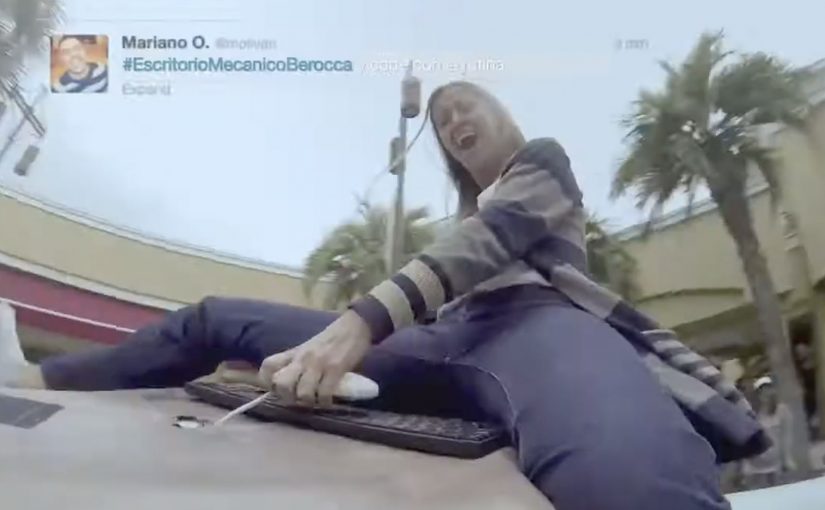
Berocca: Mechanical Desk

Berocca: Mechanical Desk

A survey by TNS Gallup in Argentina reported that 5 out of every 10 Argentinians suffer from stress, and that many expressed a need for a 5 to 10 minute break during the working day. Berocca, vitamin tablets manufactured by Bayer, turns that tension into a public challenge.

They set up a “Mechanical Desk” and dare passersby to send a tweet within 24 seconds of sitting on it. It sounds easy. Until you try.

A desk designed to sabotage your “quick break”

The mechanic is a simple constraint. Sit down. Compose. Hit send. Do it in 24 seconds. The desk itself makes the act of tweeting unexpectedly difficult, forcing your attention away from autopilot and into the moment.

In workplace energy and wellbeing marketing, turning “I need a break” into a short, physical interruption can make the message feel earned rather than preached.

Why this lands

This works because it dramatizes a truth people already recognise. When you are stressed, even a small task can feel harder than it should. The Mechanical Desk turns that feeling into a playful, watchable experience, and the tweet timer creates instant stakes without needing a long explanation.

Extractable takeaway: If your product promises focus or renewal, create a micro-challenge that makes everyday friction visible, then let your brand sit as the “reset” people reach for after the disruption.

What the brand is really doing

Berocca is positioning itself as the ally of the mid-day reboot, the short moment when people want to reset their energy and focus during the workday. Not a medical claim. A cultural cue. The activation turns “stress break” into something public and shareable, with Twitter functioning as both proof of participation and a distribution layer.

The real question is how to make an invisible feeling like workday stress visible enough for people to notice, attempt, and share.

The stronger move here is to stage the problem in public, not explain it in copy.

What to steal from this stress-break activation

  • Use a tight constraint. A clear time limit makes the idea instantly legible.
  • Make it observable. If bystanders can see the struggle, the experience becomes content.
  • Keep the action familiar. Tweeting is normal. The environment is what changes.
  • Let the brand be the release. Build the story so the brand naturally maps to “reset.”

A few fast answers before you act

What is the Berocca Mechanical Desk?

It is a public activation where people sit at a specially designed desk and attempt to send a tweet within 24 seconds.

Why a 24-second tweet challenge?

A short timer creates urgency and makes a “quick break” feel like a game, which increases participation and watchability.

What is the campaign trying to communicate?

That stress is common during the workday, and that small breaks matter. The stunt turns that need into a tangible moment people can experience and share.

What role does Twitter play?

Twitter is both the challenge output and the distribution mechanic. The act of tweeting becomes proof, and the post can travel beyond the physical installation.

What’s the main risk with this kind of activation?

If the challenge is too frustrating or unclear, people drop out. The difficulty has to feel playful, not punishing.
Zappos Thanksgiving Baggage Claim

Zappos Thanksgiving Baggage Claim

Thanksgiving Eve is one of the most stressful days to travel. So Zappos shows up in a place most people associate with impatience. The baggage claim carousel.

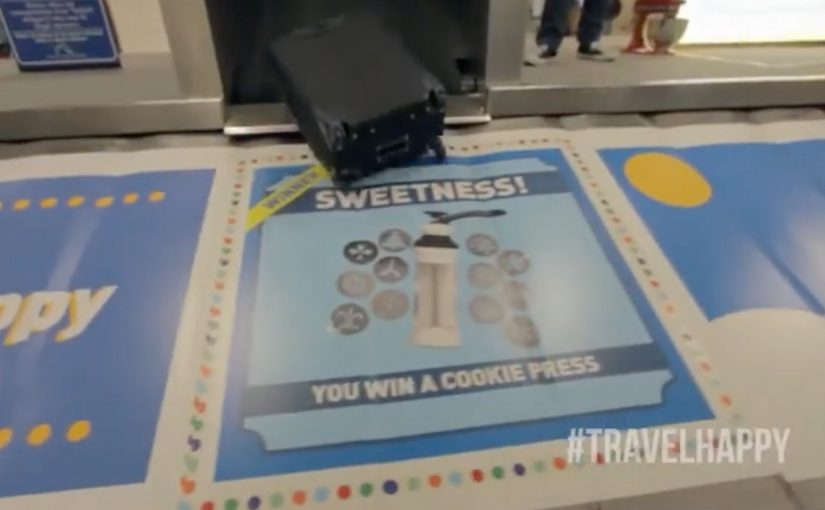
At Houston’s George Bush Intercontinental Airport, Zappos turns sections of a baggage carousel into a roulette-style game. Parts of the moving belt are marked with prizes and slogans. When your suitcase arrives and lands on a prize square, you win what it lands on. That can be a product prize or a gift card. Suddenly, the worst part of the journey becomes the most watchable part.

Why the idea works

The real question is how you turn captive waiting into a brand moment without adding any extra steps. The activation flips the emotional context. Baggage claim is pure friction. Zappos turns it into anticipation. Here, “activation” means a brand experience that reworks an existing touchpoint rather than creating a new destination. People are already looking at the carousel. They are already waiting. By making the outcome visible and immediate, the same waiting behavior becomes suspense. This is smart experience design because it changes the feeling of the wait without adding friction.

Extractable takeaway: When attention is guaranteed, you do not need more messaging. You need a simple mechanic that changes what the same behavior feels like.

The CX mechanics are simple by design

  • No app. No instructions. You just wait as usual.
  • Instant feedback. Your bag lands. You know if you win.
  • Social energy. People around you start watching your outcome too, because it is a shared moment.

In enterprise retail and travel environments, the biggest CX wins often come from redesigning unavoidable waiting, not adding steps.

Design moves worth copying

  • Pick a real pain point where attention is already guaranteed, then redesign the emotion of that moment.
  • Make participation automatic. If people must opt in, you lose most of the crowd.
  • Use a reward that is immediate and credible, so the surprise feels real, not promotional.

A few fast answers before you act

What is the Zappos Thanksgiving baggage claim activation?

A roulette-style baggage carousel game at an airport on Thanksgiving Eve where travelers win prizes based on where their luggage lands.

Why is baggage claim such a strong place for this?

It is a high-friction moment with captive attention. Everyone is already watching the belt and waiting.

What is the core experience design principle?

Reduce friction by changing the emotion of the same behaviour. Waiting stays the same, but it becomes suspense and delight instead of irritation.

How does it work without an app or instructions?

Participation is automatic. You wait for your bag as usual, and the belt markings tell you instantly whether you won.

What is the minimum you need to replicate the pattern?

A captive-wait moment, a visible game mechanic, instant feedback, and an immediate, credible reward.

Burger King: Anti Pre-Roll Pre-Roll

Burger King: Anti Pre-Roll Pre-Roll

Turning the internet’s biggest annoyance into the idea

The smartest digital work often starts with a blunt truth the audience already feels. Burger King’s take on pre-roll irritation is a clean example of that approach.

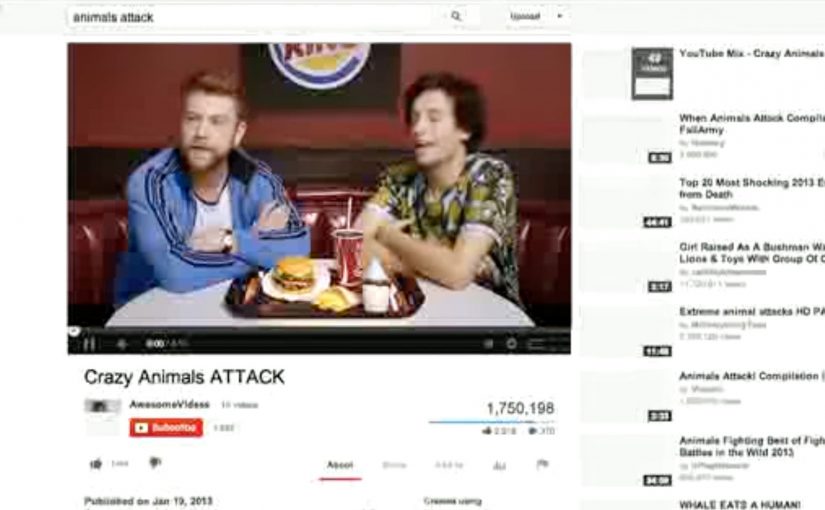
Pre-rolls on YouTube are considered as one of the most annoying things on the internet. Here, “pre-roll” means the ad that plays before a video starts.

It is a fact that even Burger King acknowledges, even though they profit enormously from them.

So for their campaign in New Zealand they decided to take a slightly different approach. They created 64 videos that made fun of the annoying pre-rolls and then tailored it to the video that was about to be watched.

How 64 tailored pre-rolls made interruption feel relevant

The mechanism was contextual creative at scale.

Instead of running one generic pre-roll, Burger King produced a library of short spots designed to match the viewer’s intent. The pre-roll referenced the type of content about to play, making the interruption feel less random and more like a commentary on the moment. By “contextual creative,” I mean variants that change based on the content about to be watched.

That shift matters because it changes the viewer’s question from “how fast can I skip?” to “what are they going to say about this one?”

The real question is: can you turn the skip reflex into a moment of curiosity.

In global consumer brands buying always-on video, contextual creative is the simplest way to make paid interruption feel earned.

Why self-aware interruption can win attention

Pre-roll is hated because it steals time and breaks flow.

Extractable takeaway: If you cannot remove an interruption, acknowledge it and pay it back with relevance.

This idea reduced that emotional tax by acknowledging the annoyance and using humor to create alignment with the viewer. When a brand says what people are already thinking, it earns a small amount of trust. Tailoring the message to the next video adds a second reward: relevance.

In other words, it does not remove the interruption. It makes the interruption entertaining enough to tolerate.

The business intent behind mocking the format

The intent was to keep the media advantage of pre-roll while reducing the brand penalty that comes with it.

By turning the format itself into the joke, Burger King aimed to increase watch time, reduce skip reflex, and improve brand sentiment. The audience still gets interrupted. But they feel understood, and that changes how the brand is remembered.

If you have to run pre-roll, self-aware contextual creative is a cleaner play than pretending the format is not annoying.

What to steal for your next video campaign

  • Start with a shared frustration. If the audience already dislikes the format, acknowledge it instead of pretending it is fine.
  • Make relevance the reward. Contextual tailoring can turn an interruption into a moment of curiosity.
  • Scale with a clear template. A creative system. Many variants. One consistent joke structure.
  • Earn seconds, not impressions. In pre-roll, attention quality is the real KPI.

A few fast answers before you act

What did Burger King do differently with pre-roll in New Zealand?

They created 64 pre-roll videos that mocked the annoyance of pre-roll and tailored the message to the video the viewer was about to watch.

What was the core mechanism?

A library of contextual creative variants designed to match viewer intent, making the interruption feel relevant and humorous.

Why does self-aware humor work in an interruptive format?

Because it aligns the brand with what viewers already feel, reducing irritation and increasing willingness to watch.

What business goal did this support?

Improving attention quality and sentiment while still benefiting from the reach and placement of pre-roll media.

What is the main takeaway for brands?

If you cannot remove an interruption, redesign it so the audience gets a payoff. Relevance and humor are two of the fastest payoffs available.